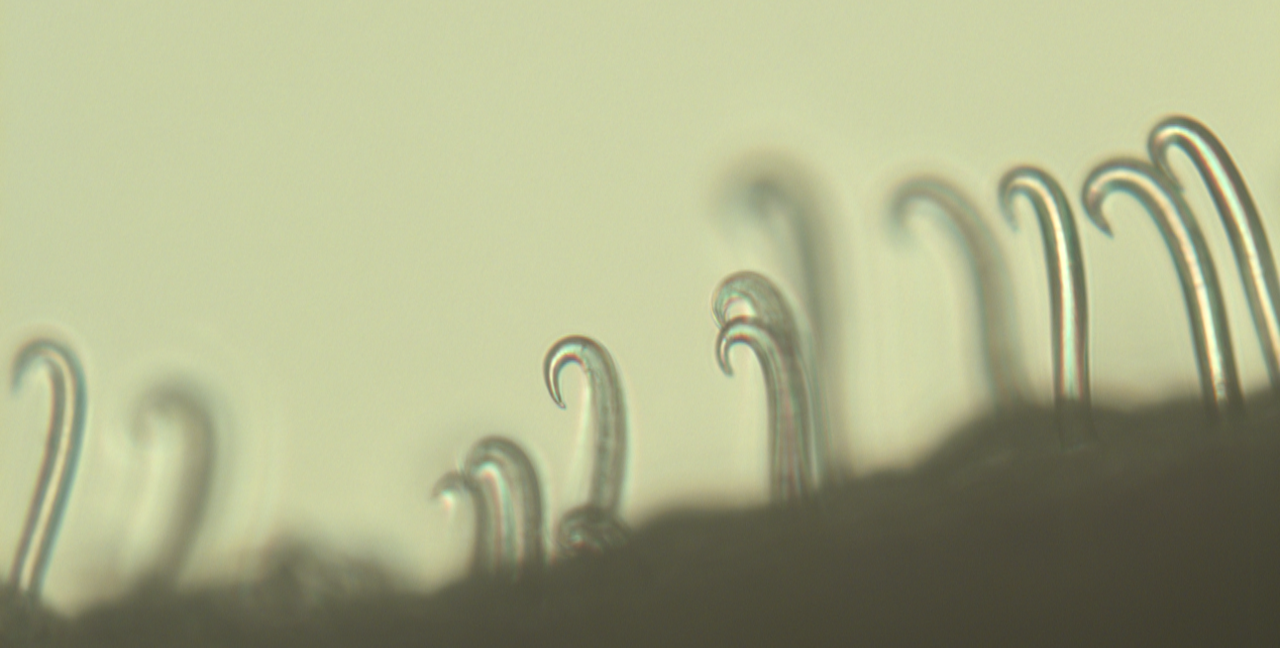
Unveiling a Hidden Cell Type: A New Hope for Climate-Resilient Crops
In a significant breakthrough, scientists have discovered a new type of cell on the roots of common beans. This microscopic feature could pave the way for developing crops that withstand harsh climates and reduce reliance on fertilizers.
These cells, named “hooked hairs” in a recent Science Advances study, form tiny structures that assist young plants in surviving in nutrient-deficient and drought-prone soils even before their root systems are fully developed.
Common beans, which include varieties such as green beans and dried beans like pinto, black, and red, are globally significant as a source of plant-based nutrients. In 2024 alone, the production of dry beans reached around 28.9 million metric tons.
The early days after germination are crucial for these crops, as Alexander Bucksch, an associate professor at the University of Arizona School of Plant Sciences, points out. “A young plant is highly susceptible to drought, pests, and nutrient starvation while the seedling establishes,” he noted.
The loss of seedlings can range from 5% to 20%, posing a significant economic burden for farmers. “As drought and heat increase, seedling mortality can be much higher,” Bucksch explained.
Breaking the Barrier of Soil Opacity
Bucksch emphasized that understanding root development has been difficult due to the opaque nature of soil, which limits the use of conventional imaging techniques. “Soil is opaque. You simply cannot look through it by eye or with a standard camera,” he said, noting the interference caused by iron-rich soil.
To overcome this, Bucksch’s team used a combination of lab-based growth systems and a unique microscopy software called DIRT/μ, designed to detect subtle variations in root structures.
A microscopy image of hooked hair exhibiting phosphatase activity, visible as green fluorescence, demonstrating its role in acquiring phosphorus from the soil during early growth.
The team’s approach allowed them to identify a new growth pattern and examine the cellular details with high accuracy. These hooked hairs, unlike regular root hairs that appear later, emerge within three days of germination, challenging existing notions about plant development.
Bucksch highlighted that these structures have a wax-like coating due to an active suberin pathway, helping seedlings manage water retention and withstand high soil temperatures.
“The study is important in demonstrating that neither genetics nor phenotyping alone can determine a cell type, they need to be considered in combination,” said Sergio Alan Cervantes Pérez, a postdoctoral research associate leading the bioinformatics aspect of the project.
This research underscores the complexity in defining cell types, with an increasing focus on integrating morphology, gene expression, and function. Bucksch emphasized the irreversible nature of the suberin pathway, marking a distinct difference from typical root hairs.
Beyond nutrient absorption and water management, the hooked morphology might also protect against pests. Similar above-ground structures, known as trichomes, defend plants against insects.
“We suspect that these underground pointy hooked hairs might be able to latch onto and kill harmful nematodes, one of the largest causes of crop loss in the U.S.,” Bucksch added.
The research team plans to further explore this defensive potential and understand the evolution of hooked hairs across different plant species. “We’re particularly interested in understanding why the common bean evolved hooked hairs and why these are absent in crops like soybeans. This could be the key to leveraging this adaptation to help develop more climate-resilient crops,” Bucksch said.
Read More Here