
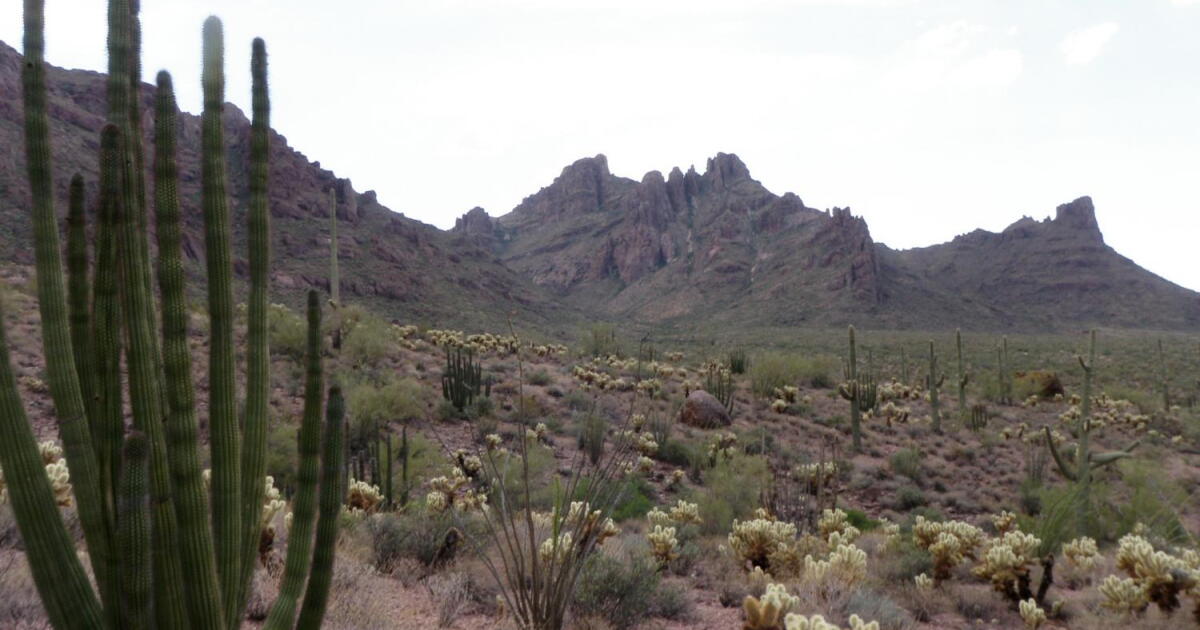
A sprawling national monument in the Arizona desert is once again losing some of its most iconic residents — and this time, the damage may be permanent. New video footage reveals that construction crews building a second border wall through Organ Pipe Cactus National Monument, southwest of Tucson, are clearing large stretches of native vegetation, including towering saguaro cacti that have stood for decades.
Russ McSpadden, southwest border conservation advocate for the Center for Biological Diversity, captured the footage on September 23. In it, a massive saguaro lies toppled on the ground, its pale green trunk and thick roots tangled in a pile of downed brush and vegetation. McSpadden says contractors were clearing the land in preparation for a second 30-foot steel bollard wall — a parallel structure to the one already built.
This is not the first time these cacti have faced destruction. Thousands of saguaros were uprooted in 2020 during construction of the original 30-foot steel wall. While some were transplanted at that time in an effort to preserve them, most did not survive the process. Now, McSpadden says the few that managed to pull through have been torn out once more to accommodate the new wall.
McSpadden described the grim math of repeated transplanting:
“The few that did survive are being transplanted again, so exponentially less chance of survival for those saguaros.”
The destruction extends beyond federal land. Earlier this month, the Tohono O’odham Nation announced that wall contractors had informed them thousands of additional saguaros would also be removed from tribal land. The saguaro holds deep cultural significance for the Tohono O’odham people, making the removals particularly impactful for the community.
The Trump administration’s broader border plan calls for lining more than 200 miles of the Arizona-Mexico border with two parallel steel walls. That ambitious construction push is driving the accelerated clearing of vegetation across some of the Southwest’s most environmentally sensitive landscapes.
Related Coverage from the Arizona Border
Border wall construction is just one of several flashpoints along the Arizona-Mexico boundary. The Fronteras Desk has been tracking multiple developments in the region. Alisa Reznick reports that CBP says officers carried out more fentanyl seizures of smaller quantities in Arizona this year, with local Customs and Border Protection officers addressing reporters in Tucson about drug interdiction efforts covering fiscal year 2026, which ended September 30.
Meanwhile, Lauren Gilger of The Show investigated how federal agencies are blocking aid groups from leaving water near the U.S.-Mexico border. For decades, the humanitarian organization Humane Borders has placed water along remote stretches of the border where migrants often perish. Federal agencies are now denying the group the permits required to continue that work legally.
On the activist front, Reznick also covered how an AZ border encampment ended, with activists saying they’ll keep going with the ‘energy of the 4 grandmothers’. Protesters had occupied a cottonwood tree since late July, camping on private land in an effort to prevent its removal ahead of wall construction. In a related development, the last tree-sitter arrested in the Lochiel anti-border wall encampment has been released. That standoff began October 5, when Border Patrol agents moved in on a protest camp centered around a cottonwood tree estimated to be up to 250 years old.
On the trade side, Nina Kravinsky reports that live cattle imports into Arizona from Mexico have doubled since the August border reopening. Approximately 1,500 cattle per day are expected to cross into Arizona from Mexico starting next week, even as active cases of New World screwworm exceed 100 in the Mexican state of Sonora.







Comments are closed.