
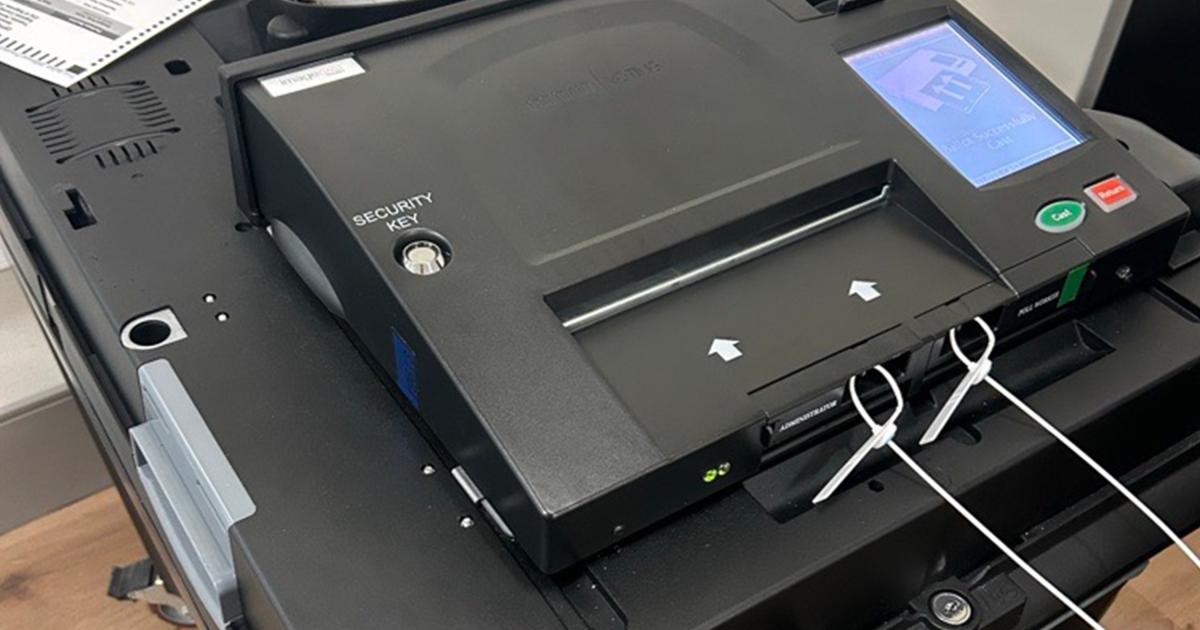
With a major election on the horizon in Michigan, questions about whether voting machines work correctly are on many voters’ minds. Local election officials across the state are taking a transparent, public approach to answering those questions — by testing their equipment before a single ballot is cast.
Michigan voters face a packed ballot in 2026, with races for governor, U.S. senator, attorney general, and secretary of state all up for decision. As election day approaches, the spotlight on election security has intensified — and local officials are responding by opening their voting machine accuracy tests to public observation.
What Happens Before Votes Are Counted
Before any election in Michigan, local election officials are required by law to test their vote tabulators — the machines that read and count ballots. The goal is simple: confirm that the machines produce accurate results and haven’t already recorded any votes before the election begins.
In Saginaw, one of these public accuracy tests took place on Tuesday, October 13, 2026. At the start of the test, the tabulator printed what’s known as a “zero tape” — a printout that confirms no votes have been counted yet. It’s a foundational safeguard, and one that election observers and members of the public are invited to witness in person.
Reporter AJ Jones from WCMU Public Radio attended the Saginaw test to document the process firsthand, bringing listeners an on-the-ground account of how this layer of election security actually works in practice. His reporting is part of Between the Lakes, WCMU’s podcast covering news across central and northern Michigan.
Why Public Testing Matters for Voter Trust
At a time when concerns about election integrity are widespread, these pre-election machine tests serve a dual purpose: they verify that equipment is functioning correctly, and they give the public a chance to see the process with their own eyes. Transparency in election administration is widely recognized as one of the most effective ways to build — and maintain — public confidence in election outcomes.
Michigan’s requirement that these tests be open to observation reflects a broader principle in American election law: that the process of counting votes should be verifiable and accountable. The zero tape printed at the start of the Saginaw test is one small but meaningful example of the checks built into the system to ensure that every vote cast on election day is counted accurately — and only once.
For voters who want to understand more about how their local elections are run, resources like WCMU’s coverage offer a window into the day-to-day work of election administration that often goes unseen. You can subscribe to the Between the Lakes newsletter for ongoing coverage of issues affecting voters in central and northern Michigan, delivered every Saturday morning.
Local journalism plays an important role in keeping communities informed about these processes. If this kind of reporting matters to you, consider making a gift to WCMU to support the work. You can also find more stories and learn how to listen to your local WCMU radio station by visiting their site. For questions or feedback, the WCMU team is available through their contact page. Additional information about the station’s operations is available through their Privacy Policy, Transparency and Financial Reports, and Public File. Those looking to support public media can visit the Support page, and readers interested in learning more about the university behind the station can Explore CMU.










Comments are closed.