Transitioning between tasks seamlessly is a common challenge for workers, whether they’re accountants or public relations writers. However, when the stakes are as high as they are for astronauts or surgeons, even minor errors can have disastrous consequences.
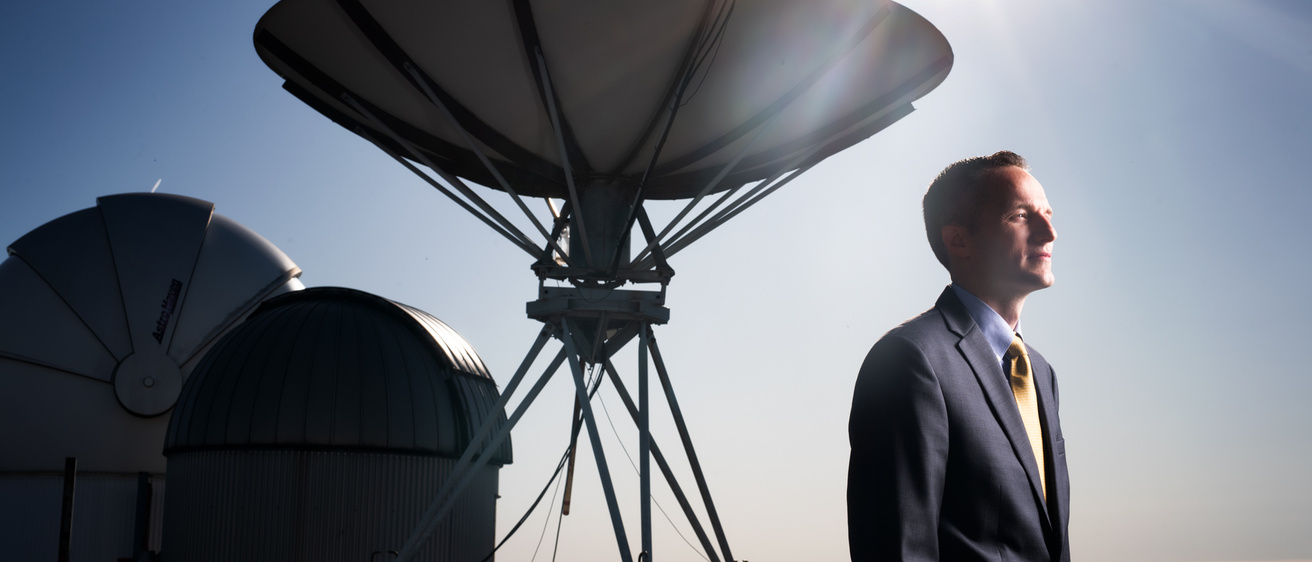
Daniel Newton, an assistant professor of management and entrepreneurship at the University of Iowa’s Tippie College of Business, emphasizes this difference: “With most of us, if we don’t transition super cleanly, it’s no big deal,” he says. “But in some jobs, it could be disastrous.”
Newton collaborates with NASA to develop strategies that help astronauts refocus their attention as they move between tasks, especially during critical missions like the Artemis moon shots. Supported by a $900,000 NASA grant, his research examines the work engagement of astronauts on the International Space Station (ISS) and crews in isolation facilities in Houston and Moscow.
According to Newton, the concept of residual engagement explains why individuals sometimes carry thoughts from one task into the next, potentially causing mistakes. This is particularly concerning in a space capsule, where even simple tasks could be compromised by inattention.
Newton’s insights are vital for the planning of long-duration space missions, such as the projected two-year journey to Mars. “It takes a lot of really smart people to put an astronaut in space,” Newton states. “What we’re looking at is, once you get them in space, how do you keep them functioning effectively and staying motivated on a long-duration mission.”
His research involves unique inquiries that aren’t typically addressed in business studies, like how astronauts transition from a spacewalk or manage routine tasks like wastewater disposal. These insights have broader implications beyond space missions.
Newton’s findings also benefit office workers, suggesting they tackle more engaging tasks at the start of their day when energy levels are high. Many start their day with emails, a low-energy activity, but Newton proposes engaging tasks can boost performance and engagement in subsequent activities.
Newton notes, “Our findings suggest that when individuals invest their energies in an engaging task, they not only experience positive feelings but are also more engaged in a subsequent task and perform that task more effectively.”
Media contact: Tom Snee, 319-384-0010 (o); 319-541-8434 (c); tom-snee@uiowa.edu
Read More Here