
University Senate Tackles Logistics, AI Concerns, and Network Innovations
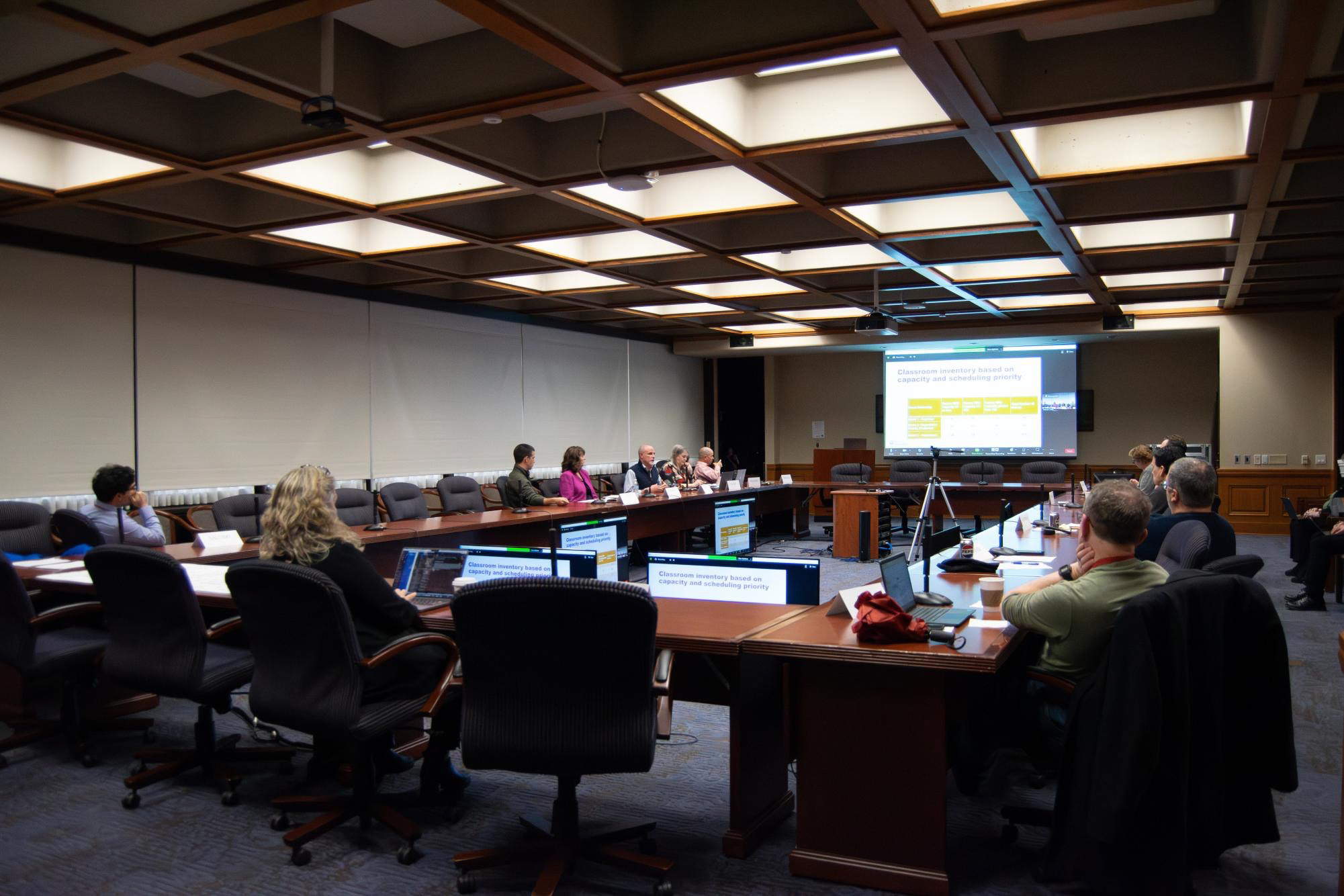
The University Senate convened on April 16 to discuss several pressing issues, including the logistics for the upcoming NFL Draft, the implications of artificial intelligence in academic settings, and a potential shift to a subscription-based network system. These discussions were part of the Faculty Assembly meeting.
University Senate President and political science professor Kristin Kanthak highlighted the Senate’s collaboration with the Pitt Staff Council and other stakeholders. They collectively urged the administration to permit faculty and staff to work remotely during the NFL Draft to alleviate potential disruptions.
The draft is anticipated to draw over 500,000 attendees to Pittsburgh, leading to significant traffic congestion. While student-facing staff are required to be onsite, other faculty and staff are encouraged to consider remote work. “Oftentimes, it’s faculty who have the most flexibility about where they work, so please consider staying the heck out of Dodge,” Kanthak advised.
John Stoner, a history teaching professor and member of the Education Policies Committee, raised concerns about an article that reported students using AI services to circumvent Canvas and complete quizzes.
Pitt, in collaboration with Pitt IT and the Senate Computing and IT Committee, is developing guidelines for AI use. Mark Henderson, vice chancellor and chief information officer, emphasized the need for faculty input: “How we secure the environment and the implications [is by] looking to the provost and the faculty to inform us on how best do we utilize these tools and technologies going forward.”
In other discussions, David Salcido, chair of the Campus Utilization, Planning and Safety Committee, talked about engaging with public safety partners and Pittsburgh Regional Transit regarding ongoing construction on Fifth Avenue. He also stressed the importance of private spaces for faculty to address personal matters on campus, noting, “We value dignity and respect across the institution, and part of dignity is privacy.”
Furthermore, Henderson discussed the potential implementation of Network as a Service (NaaS) in administrative buildings. This model, which uses an external provider to manage network infrastructure, could be more cost-effective and sustainable. Henderson noted the growing costs associated with maintaining Pitt’s current hardware, adding, “We have aging hardware in our network. The actual life expectancy of [administrative] network equipment is between three and five years.”
The University already uses NaaS at several locations, including the School of Computing and Information and the Petersen Events Center, benefiting from modernized network environments. “The benefits of modernizing our aging fleet of network equipment [is] having a simplified environment, much like we have at home,” Henderson stated.
Kanthak concluded by announcing John Stoner’s election as vice president of the University Senate and reminding faculty of the upcoming committee elections from April 28 to May 12, in which all faculty are eligible to vote.
Read More Here







Be First to Comment