
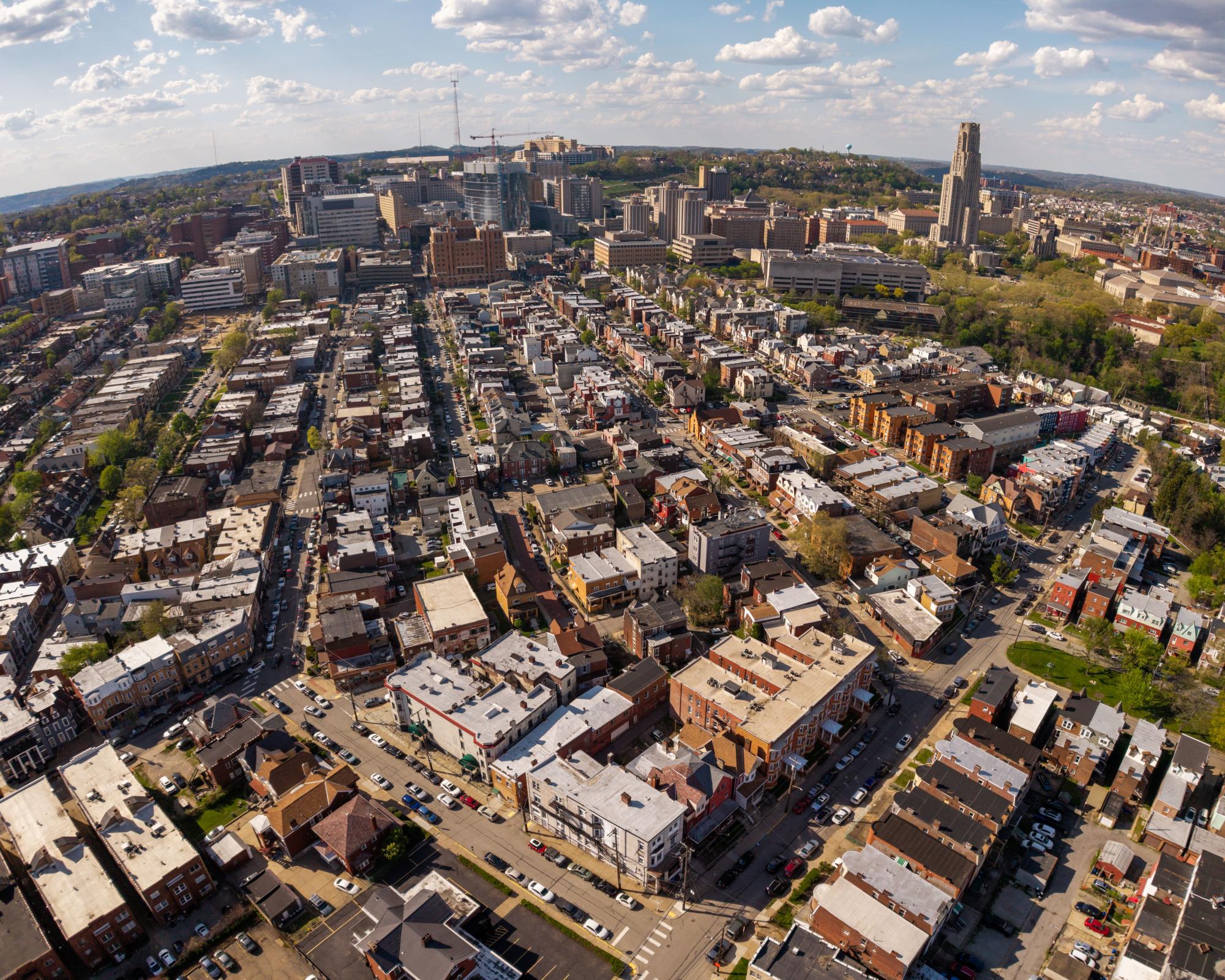
Recent data indicate a slight population decrease in the Pittsburgh region for 2025, continuing an ongoing trend. This information, sourced from the U.S. Census Bureau, reveals that the population of the Pittsburgh Metropolitan Statistical Area declined by 3,160 residents from July 2024 to 2025. The University Center for Social and Urban Research (UCSUR) analyzed this data in a new report published on March 26.
Christopher Briem, the economist behind the UCSUR report, attributes the population decrease primarily to natural population decline, a long-standing issue in the area. Although there is an increase in migration to Pittsburgh, it is offset by a negative natural change of nearly 8,000 people.
“The Pittsburgh region, in the 1990s, became the first large metropolitan area in the country to start to experience natural population decline — more deaths than births — and that’s been shaping population change here for what is now 30 years,” Briem noted.
Historically, Pittsburgh experienced significant out-migration, particularly during the decline of the steel industry. However, the trend has stabilized, with minor fluctuations in population numbers. Despite the population drop in 2025, the region saw a net increase in both international and domestic migration.
“People tend to presume when they see these numbers every year that all these people are leaving, and then they skip even farther and say, ‘All these young people are leaving,’” Briem explained. “At least this year, there are more people moving into the region than are moving out.”
Among the eight counties in the Pittsburgh Metropolitan Statistical Area, only Allegheny County recorded a decline in domestic migration, a phenomenon attributed to suburbanization, according to Briem.
“When people started to have cars and were able to move, [they] didn’t need to live where they worked,” Briem said. “Allegheny County, being the urban core of the region, continues to experience that.”
Migration changes in the region are largely driven by retiree and economic migration, with Briem estimating that students make up 40% of the resident population aged 18-35. This demographic significantly influences migration trends post-graduation.
“A lot of migration happens, as you’ll probably experience, [as] young adults, especially as they graduate college or enter the workforce,” Briem said. “Once we get older, we get stuck in the mud and tend not to move as much.”
In 2021, the Allegheny Conference on Community Development highlighted that nearly half of Pittsburgh’s college graduates leave the area annually due to job scarcity or inadequate cultural infrastructure.
Pittsburgh Mayor Corey O’Connor has expressed a commitment to retaining graduates from local universities, as discussed during a recent visit to Pitt.
Rose DiPaolo, a senior biology student, plans to remain in Pittsburgh post-graduation, working with the Turcotte Lab of Experimental Evolutionary Ecology. She believes job opportunities heavily influence graduates’ decisions to stay or leave.
“I love Pittsburgh — that’s part of the reason why I’m staying. But I think the other part is out of necessity — in that, if you have a job, you need to keep it until you can have a concrete offer somewhere else,” DiPaolo said.
Helena Bohmann, a senior in human resources management, intends to spend a gap year near Philadelphia for financial reasons before likely attending law school there.
“I would love to stay in Pittsburgh, but I think I’m going to stay in Philly because it’s going to be cheaper,” Bohmann mentioned. “I would end up living at home instead of having to pay for tuition and an apartment.”
Bohmann is keen on returning to Pittsburgh eventually, appreciating the city’s diverse neighborhoods.
“There’s always something to do here, and there’s always something to learn about the City,” Bohmann added. “I think it’s a great city for young adults to have some independence but also feel safe.”
Marin George, a senior chemistry major, is open to job opportunities post-graduation, looking broadly but willing to stay in Pittsburgh if the right position arises.
“I think trying to get a job right after graduation is kind of hard, and it’s especially hard for forensic science,” George acknowledged. “If something popped up [in Pittsburgh], I’d probably apply for it. There just doesn’t seem to be much for forensic science.”
George is accustomed to relocating and is ready for new experiences post-graduation.
“Right now, I’m open to anywhere,” George said. “I think graduation is kind of a changing point, and I’m ready to move and try being somewhere new.”
Read More Here






Be First to Comment