
Carnegie Mellon Student Explores the Intricate Link Between Gut and Heart Health
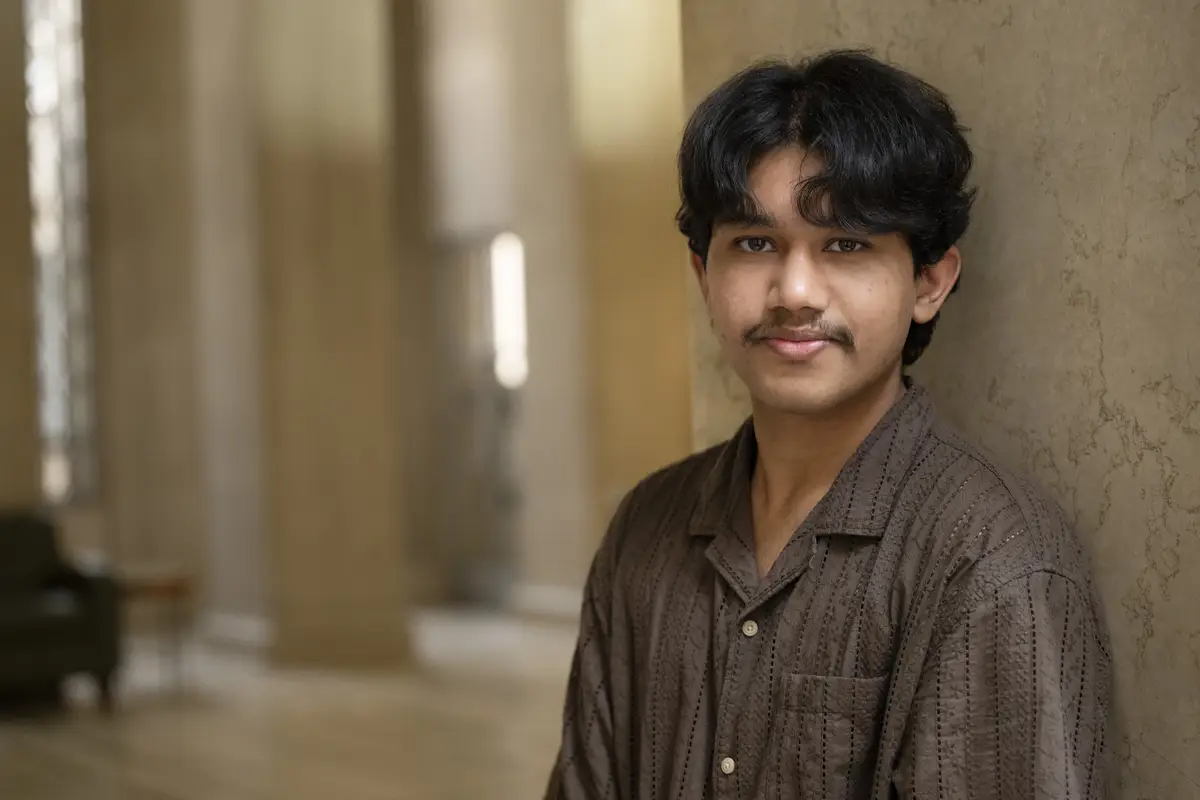
At Carnegie Mellon University, Suman Biswas’s journey into the world of biological sciences took an unexpected detour from his initial interest in cardiology to intriguing research on the gut. This shift happened thanks to his involvement in a unique research project that examines the connection between gut bacteria and heart health.
Biswas, who is enrolled in the Mellon College of Science, became part of Zheng Kuang’s laboratory in January. Kuang, the Eberly Family Associate Professor of Biological Sciences, leads a team investigating the interplay between the gut and heart health.
“They were working on how the gut and the heart are related and how gut bacteria can influence heart health,” Biswas explained. “That immediately interested me because of my long-term goal of becoming a doctor.”
With the help of a Student Undergraduate Research Fellowship (SURF), Biswas dedicated his summer to studying how gut-related biological processes might affect cardiovascular disease. His research centered on a protein named HDAC3, believed to play a crucial part in fat metabolism, biological rhythms, and maintaining the gut’s protective barrier.
Findings from the research suggest that HDAC3 could contribute to cardiovascular disease via various pathways. The team observed changes in activity levels, plaque formation, and gut barrier function, indicating a comprehensive link between gut biology and heart health.
According to Kuang, the study highlights the necessity of diverse perspectives in tackling complex health issues like cardiovascular disease. “Complex health problems like cardiovascular disease require us to look beyond a single organ. In our lab, we study how gut bacteria regulate daily rhythms in metabolism and immunity, including how the intestine absorbs nutrients and protects us from infection and inflammation,” Kuang stated. “Understanding these connections could open new ways to improve health by working with the bacteria that already live in our gut.”
Biswas’s work has already generated ideas for future research into how related biological pathways might affect cancer development and treatment. This experience has also deepened his appreciation for the research process, from mastering lab techniques to addressing questions that could enhance human health.
Carnegie Mellon’s strong commitment to undergraduate research attracted Biswas to the university. “CMU is giving me the opportunity to apply my knowledge and help to build the foundation that will make me a good doctor,” he remarked.
He plans to continue his research until graduation before attending medical school. There, he hopes to merge clinical practice with scientific exploration to further understand and treat diseases.
Kuang noted Biswas’s significant contributions to the lab, including developing a new method for assessing intestinal barrier integrity and studying how gut bacteria assist in regulating daily rhythms disrupted by conditions such as jet lag. “These are important questions about how our microbes help maintain our health,” Kuang said. “For an undergraduate student, the opportunity goes beyond learning laboratory techniques. Suman is learning how to ask scientific questions, design experiments, and interpret results, while contributing to research that could eventually inform human health and medicine.”
Read More Here




Comments are closed.