
NASA Extends TRACERS Mission, Enhancing Understanding of Solar-Earth Interactions
The complex dance between the sun’s charged particles and Earth’s magnetic shield is set to be explored in greater depth, thanks to NASA’s extension of the University of Iowa-led TRACERS mission until spring 2027. This extension allows scientists more time to gather crucial data, furthering our understanding of the dynamic interactions that shape space weather.
Why It Matters
The TRACERS mission is pivotal in uncovering how solar energy influences Earth’s magnetic field. These interactions can impact satellites and various technologies, highlighting the importance of this research. The mission extension not only continues the University of Iowa’s legacy in space research but also provides scientists with valuable time to collect essential data.
The mission’s extension was prompted by technical difficulties with one of the two spacecraft, Space Vehicle 1, which encountered a power subsystem issue shortly after its summer 2025 launch. This led to intermittent communication problems. However, the TRACERS team has since restored contact, enabling the spacecraft to resume data collection operations.
David Miles, an associate professor in the Department of Physics and Astronomy at Iowa and the mission’s principal investigator, emphasized the importance of the extension for achieving the mission’s goals. “I’m extremely proud of the TRACERS team. They executed a difficult mission with care and skill, and I’m excited to see what the next observations will yield,” Miles stated. “It keeps Iowa in the forefront of space physics and space weather and furthers our decades-long legacy in space science instrumentation and observation.”
The Tandem Reconnection and Cusp Electrodynamics Reconnaissance Satellites (TRACERS) mission, backed by $171.6 million in NASA funding, focuses on the potent interactions between the sun and Earth’s magnetic fields. It stands as the largest externally funded research project in the University of Iowa’s history.
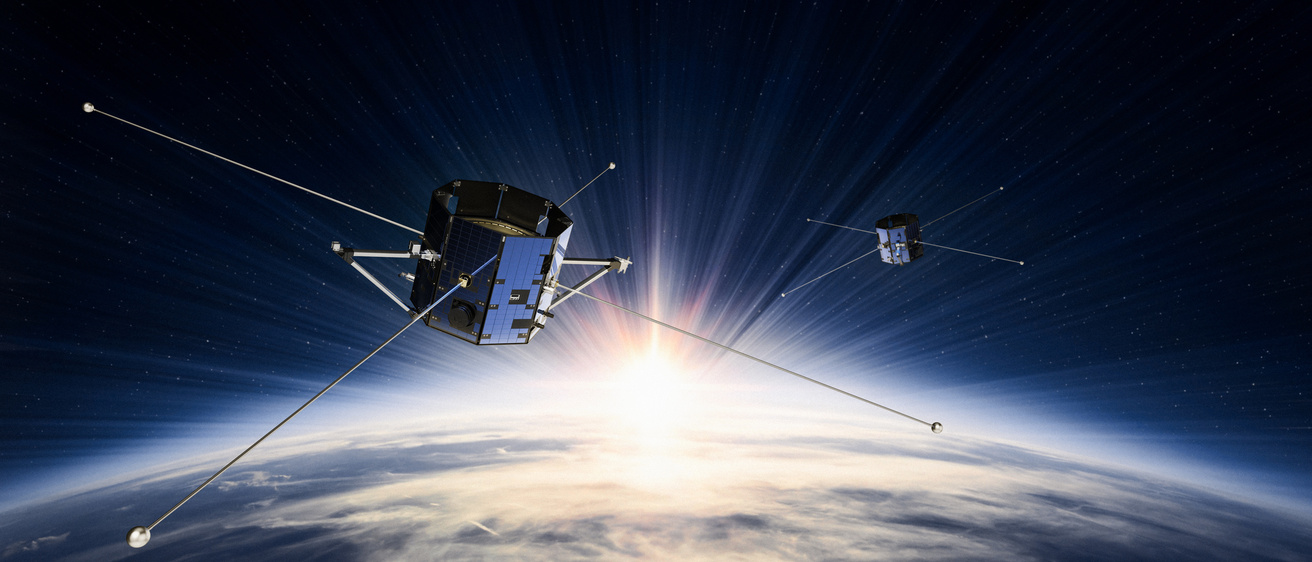
The mission began with its highly anticipated launch from Vandenberg Space Force Base in California in July 2025. The twin spacecraft were placed into orbit around Earth, flying in tandem into cusps that allow the solar wind direct access to the atmosphere. Each satellite is equipped with five instruments, meticulously developed by scientists from Iowa and collaborating institutions.
TRACERS was first proposed by Craig Kletzing, a UI physicist, in October 2016. After securing initial funding to develop the concept in 2017, NASA awarded the mission to Iowa in 2019.
Managed by NASA’s Explorers Program Office, the TRACERS mission is part of the Heliophysics Division, which delves into the effects of the sun on space and planetary environments.
Read More Here







Comments are closed.