Beyond Radiocarbon: Unraveling Ancient Histories with Amino Acid Geochronology
Radiocarbon dating has long been the preferred method for determining the age of archaeological and paleontological finds. However, it falls short when it comes to analyzing much older fossils. This limitation has led researchers to explore alternative techniques, such as amino acid geochronology, to delve deeper into Earth’s ancient past.
Darrell Kaufman, a Regents’ professor at Northern Arizona University’s School of Earth and Sustainability, emphasizes the need for different dating methods for older fossils. “Radiocarbon dating can bring you back 30,000 or 40,000 years, so it’s great for a lot of paleoecology and archaeology,” Kaufman explains. “But to get at the ages of older materials, you need other techniques.”
Kaufman’s lab is among the few in the world specializing in amino acid geochronology. This method allows scientists to date fossils from the last several ice ages, extending into hundreds of thousands of years. “This technique picks up where radiocarbon dating leaves off,” Kaufman says. “We can date things back hundreds of thousands of years—maybe even 1 million years, if they’re from somewhere cold like the Arctic.”
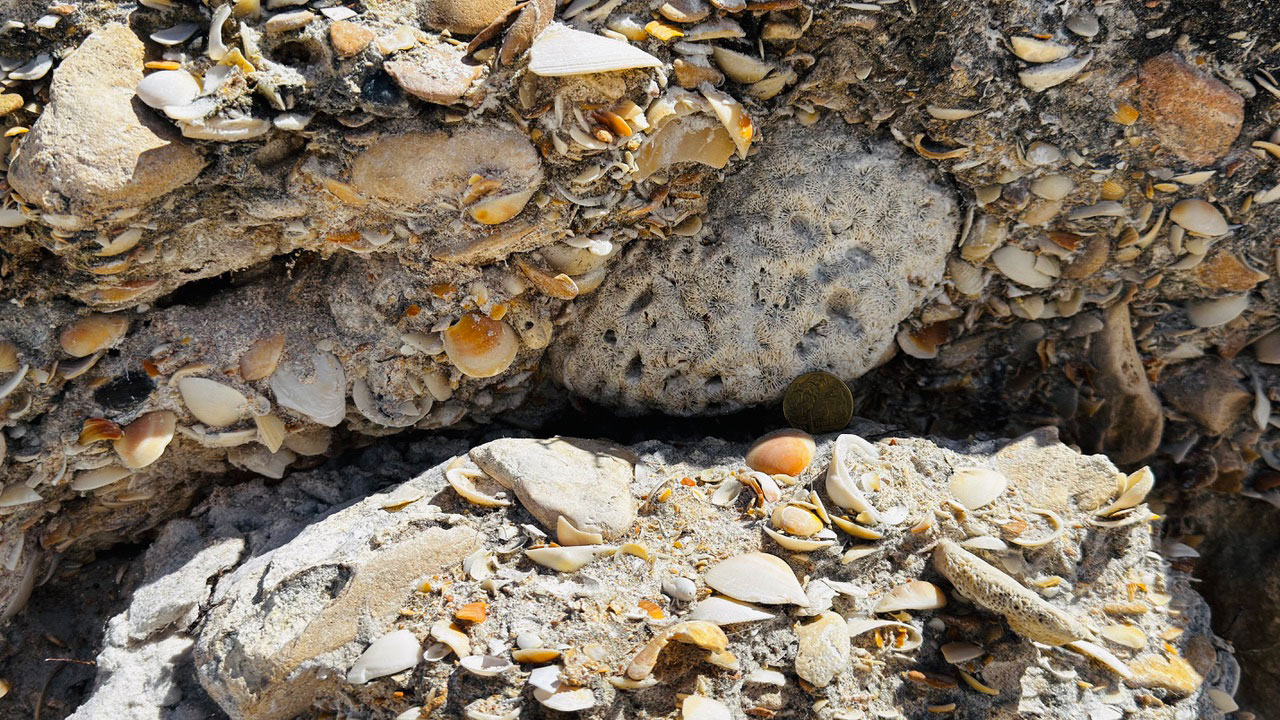
With support from a $358,360 grant from the National Science Foundation, Kaufman is refining this technique to develop a standardized dating tool. By analyzing shells from various coastal locations, his research aims to clarify sea levels during the last interglacial period, some 125,000 years ago, which could offer insights into current climate conditions.
Understanding Amino Acid Dating
Unlike radiocarbon dating, amino acid geochronology focuses on the racemization of amino acids within fossilized materials. After collecting shell samples, Kaufman dissolves them to isolate proteins and amino acids. These are then analyzed to determine their geometric form. “In a living organism they’re essentially all left-handed. After death, they start flipping at random into the right-handed version,” Kaufman explains.
This flipping process does not occur at a constant rate and varies with environmental temperature. Kaufman is working on a formula that incorporates temperature data to provide more precise dating. By analyzing enough samples across temperature ranges, amino acid ratios can be converted into numerical ages, allowing for predictions about ancient seashells.
Implications for Climate Research
Kaufman’s research is critical for understanding past climate conditions and their resemblance to today’s warming trends. “Greenland’s ice sheet was substantially smaller than it is today,” Kaufman notes. “Sea levels were about 20 feet higher than they are today.” Such historical parallels can validate climate models predicting future conditions.
Additionally, Kaufman plans to create an interactive map detailing geochronological data and temperature histories. This tool could enhance understanding of ice-sheet stability and coastal changes, offering valuable insights for addressing contemporary climate challenges.
Given the scarcity of amino acid geochronology labs, Kaufman aims to promote the technique and share data to support broader research efforts, providing a crucial window into Earth’s climatic past.
Kaufman’s work is funded by NSF grant #2536604.
Read More Here