El Niño Intensifies: Insights from Coral Studies Reveal Climate Impact
As the Pacific Ocean braces for a historically significant El Niño, recent research published in Science reveals that the intensity of these climate phenomena has surged by nearly 40% over the past four decades compared to pre-industrial times.
Using coral samples from the Galápagos Islands, scientists uncovered that recent El Niño events are unprecedented in their strength over the last millennium. The University of Arizona’s computational models further explored whether El Niño’s inherent variability alone could explain this intensification.
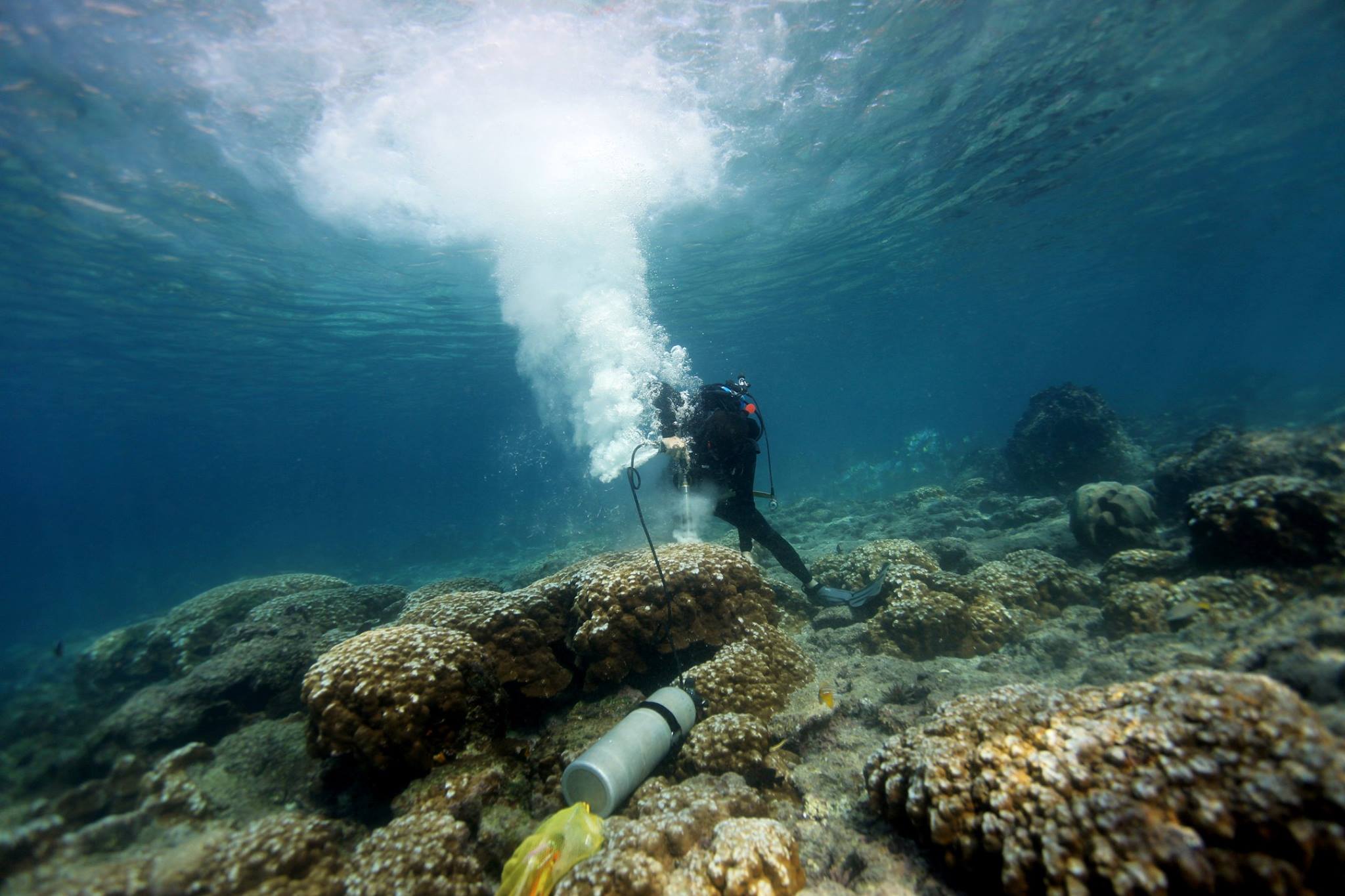
The team sampled living corals underwater as well as coral boulders on land. Here, Diane Thompson takes a sample from an ancient coral, along with Andrea Lema formerly of Charles Darwin Research Station.
Julia Cole, University of Michigan
“We don’t see a time in the past where El Niños have been as strong as today, and we show that the strength of El Niño changes in parallel with the warming of global temperature,” stated Julia Cole, lead author and professor at the University of Michigan. She emphasized that recent El Niño events are not typical when viewed against the backdrop of the past thousand years.
El Niño is a natural climatic cycle, occurring every few years, causing warming in the tropical Pacific. Normally, trade winds blow warm water from South America to Australia, but during El Niño, weakened winds allow warm water to drift back eastward, triggering widespread weather changes.
This phenomenon alters weather patterns globally, leading to shifts in rainfall and drought conditions. In the U.S., it brings rain to the southwest while reducing precipitation in the northwest, causing various environmental and health challenges.
“The question is not whether the current El Niño is going to happen, but how bad is it going to be, and how bad will the impacts be?” Cole remarked, highlighting the potential exacerbation of global warming effects, which could push temperatures to 1.7 or 1.8 degrees Celsius above pre-industrial levels.
A Historical Record Encoded in Coral
Study co-author Cameron Tripp (left) and Diane Thompson extract a core sample from a coral boulder in the Galapágos. By taking the samples to the lab and analyzing the ratio of the elements strontium to calcium, researchers can gather clues about the temperature at which the coral grew.
Cameron Tripp, University of Michigan
Researchers, led by Cole, collected coral cores from both living and ancient corals in the Galápagos. These corals record ocean temperatures through their growth, offering a historical perspective on El Niño fluctuations.
Diane Thompson from the University of Arizona noted the study’s importance in understanding El Niño’s spatial dynamics, stating, “As the world’s largest ocean basin, the Pacific has an oversized impact on the Earth’s climate.” She emphasized the importance of studying regions like the Galápagos.
The analysis revealed a marked increase in El Niño intensity over the last 40 years, compared to prior patterns of lower intensity.
Deciphering Climate Change’s Role
Thompson explained the challenges of linking El Niño variations to climate change, as the phenomenon naturally exhibits variability over centuries. “Sometimes it’s strong, sometimes it’s weak, all of that is normal,” she commented.
Using climate models, Thompson and Marcus Lofverstrom isolated El Niño’s natural variability from external factors like volcanic activity and fossil fuel emissions. Their findings suggest the recent intensification is exceptional.
Thompson observed, “What we’re seeing is the last few decades being pretty exceptional relative to what we’d expect if El Niño was just behaving as it has in the past.”
“We believe global warming is supercharging El Niño,” Cole added, warning of increased climate extremes that could amplify ecological, infrastructural, and human losses. She emphasized the need to reduce reliance on fossil fuels.
The study received support from the U.S. National Science Foundation, the UK Natural Environmental Research Council, the Galápagos National Park, and the Charles Darwin Research Station.
Read More Here