California’s redwood forests, often enveloped in a mystical gray fog, are a natural wonder cherished by many. The interplay between these iconic trees and the coastal fog is now the focus of an innovative research project at Northern Arizona University (NAU), where scientists are delving into how climate change may affect this delicate balance.
NAU researchers are leveraging machine learning to study the relationship between redwoods and fog. Camelia Mosor, an undergraduate at NAU, explains that fog serves as a crucial water source for coast redwoods, scientifically known as Sequoia sempervirens. These trees absorb moisture from the fog through their leaves and roots, enhancing their growth efficiency during summer nights.
“We also know,” Mosor notes, “that the frequency and intensity of summer fog has declined due to climate change, which has the potential to exacerbate drought sensitivity in coastal plants” like the coast redwood.
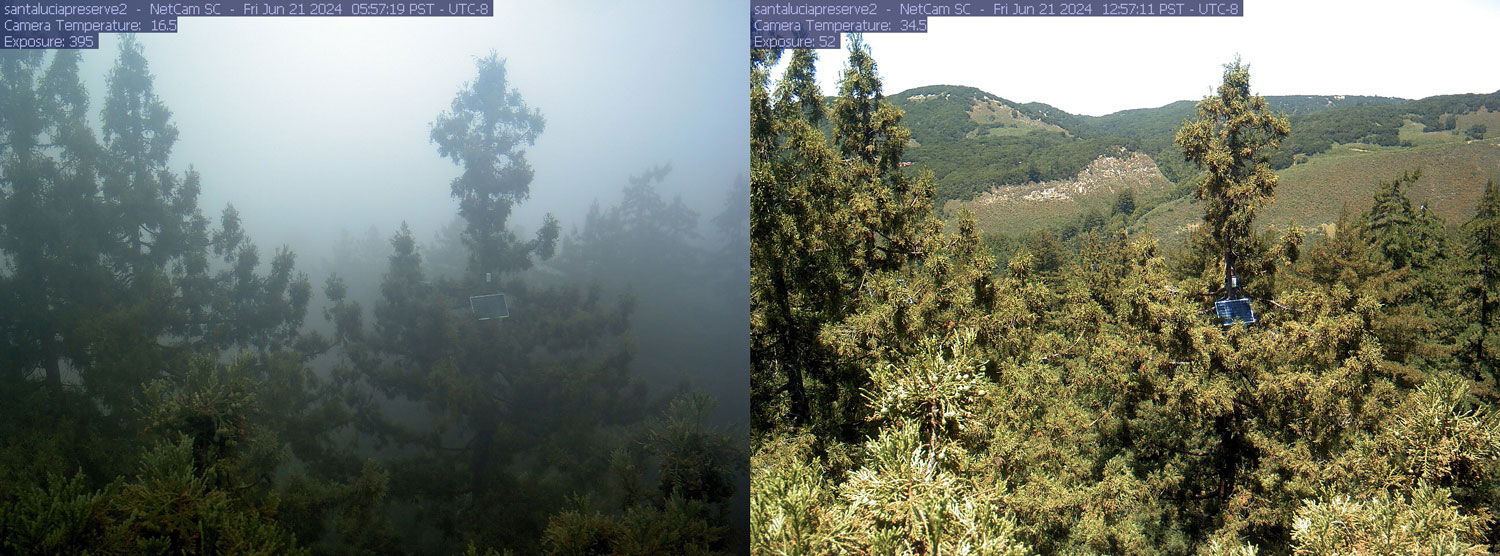
With support from Save the Redwoods League, Mosor is employing machine learning techniques to analyze fog levels in images captured in a redwood forest located in Monterey County, California. These images are part of the PhenoCam Network, a project spearheaded by NAU Regents’ professor Andrew Richardson, which documents changes in natural landscapes through phenology cameras.
Mosor points out that analyzing this vast collection of images manually would take centuries, but machine learning can achieve this in a fraction of the time. “By training a machine learning model to analyze and automatically detect fog in redwood forest PhenoCam images, I’m providing a new and efficient method of detecting fog,” Mosor said. This technology aims to facilitate further research into the role of fog in redwood ecosystems.
Upon developing a reliable model for fog detection, Mosor plans to extend its application to other foggy redwood forests equipped with PhenoCams, such as those in Sonoma, Santa Cruz, and Del Norte counties.
The Climate Change Impact
Mosor’s endeavor is part of a broader initiative at NAU led by Richardson and George Koch, a professor at the Center for Ecosystem Science and Society. This research seeks to comprehend how warming temperatures are altering fog patterns in Northern California and the implications for coast redwoods.
NAU scientists are also recording various environmental parameters, including temperature, relative humidity, visibility, leaf wetness, tree water stress, and redwood trunk diameter, with data streaming back to NAU facilities. Koch emphasizes understanding how atmospheric moisture influences tree growth, noting that trees dehydrate and shrink during the day and rehydrate at night, a process vital for producing new wood cells.
“We know that trees grow primarily during the spring through early fall period,” Koch said. “We are testing the hypothesis that, within this period, growth is greater during foggy episodes because the plants are able to rehydrate more fully.”
If this hypothesis holds true, reduced fog could pose challenges for redwood forests not receiving adequate moisture. Research from the Pacific Coastal Fog Research project indicates a 33% decline in fog in Monterey County and other coastal regions over the past century, potentially impacting redwood growth rates.
However, with insights from the NAU PhenoCam Network and Mosor’s machine learning models, early detection and intervention strategies can be developed. “Government agencies, nonprofits, and others can use this data to inform policy on conservation and identify the redwood forests most in need of conservation efforts,” Mosor stated. Furthermore, understanding changes in fog presence could aid in predicting future coastal fog patterns, benefiting weather forecasting and climate change studies.
Jill Kimball | NAU Communications
(928) 523-2282 | jill.kimball@nau.edu
Read More Here