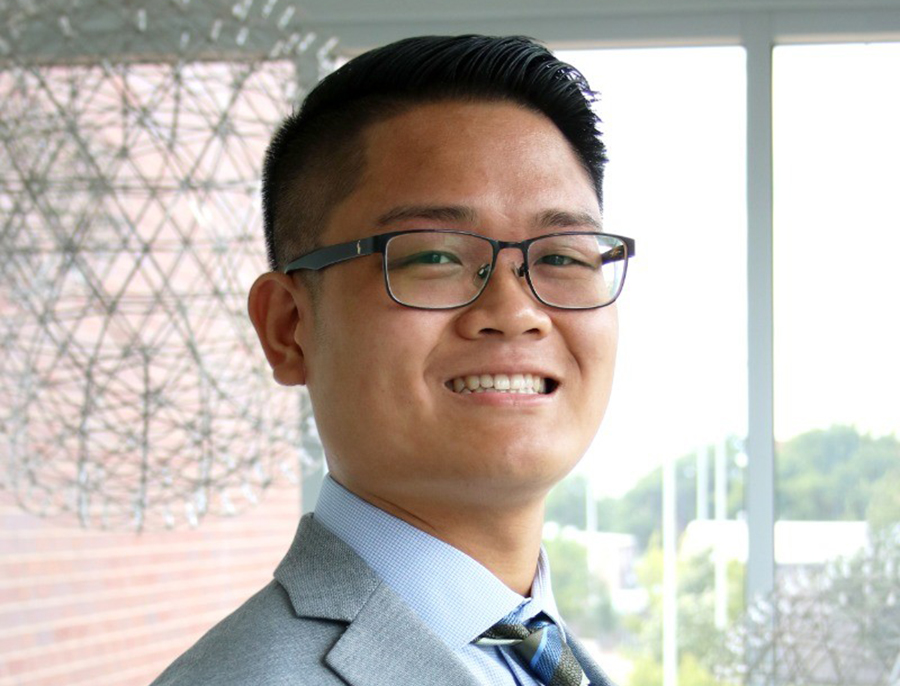
Jackson Truitt, a dedicated Ph.D. student, is channeling his early experiences into groundbreaking research aimed at enhancing the independence of children with cerebral palsy through innovative robotic technology.
Truitt’s commitment to developing assistive devices is rooted in personal experience, having grown up with a brother affected by muscular dystrophy and cerebral palsy. Witnessing the challenges firsthand, he was inspired to pursue a career in designing mobility solutions for individuals with movement-based disorders.
“My experience growing up with my brother and caring for children with neuromuscular disorders fostered a deep love of serving and working with children with these conditions,” Truitt remarked.
This year, Truitt was among five Northern Arizona University (NAU) students awarded the prestigious National Science Foundation’s Graduate Research Fellowship Program (GRFP). This accolade offers him three years of research funding and the freedom to advance his project—a robotic device designed to assist children with cerebral palsy by supporting their arm movements.
“Jackson is a remarkably talented and creative robotics engineer with a deep motivation for designing solutions to assist people with disabilities,” said Zach Lerner, associate professor in the Department of Mechanical Engineering and director of the Biomechatronics Lab at NAU. “We are absolutely thrilled to have someone of his caliber in our lab.”
Truitt’s Research Endeavors
In his inaugural year at the Biomechatronics Lab, Truitt contributed to a hip exoskeleton project. With the GRFP funding, he is now developing a mobile robotic device for children with cerebral palsy. This device aims to enhance their range of motion and promote more natural arm movements, aiding in daily tasks like eating and dressing by compensating for gravity’s effects and reducing fatigue.
The device, which Truitt envisions as both predictive of and responsive to a user’s movements, will be lightweight and wearable, making it suitable for children to use while moving freely.
“The participant will train the device with these tasks, then repeat to determine if the device can correctly predict the user’s intention and assist in their desired movements,” Truitt explained. “The overall goal is to develop and validate a novel upper extremity robotic arm device to aid children with cerebral palsy and expand the understanding of how these devices can improve and promote independence in children with these conditions.”
Background and Experience
Truitt’s journey at NAU is driven by his mission to assist children. At Wichita State University, while earning his bachelor’s degree, Truitt led teams in the Go Baby Go program, which customized electric cars for children with movement disorders. He also received a certificate in assistive technology and accessible design.
His collaboration with a professor at WSU led to the creation of a communication device for children with cerebral palsy, facilitating interaction with their families and peers. Additionally, Truitt’s hands-on experience includes working as a respite care provider and volunteering at camps for children with neuromuscular disorders.
“By investigating how upper extremity exoskeletons can increase mobility and range of motion for these individuals, my research will open the door to a new category of rehabilitation in the emerging field of wearable robotics technologies,” Truitt stated. “This research will not only broaden the greater scientific understanding of the implementation of wearable robotics, but it will also have an ongoing impact on the future outcomes for individuals with neuromuscular disorders in our society.”
Read about NAU’s other GRFP winners:
Heidi Toth | NAU Communications
(928) 523-8737 | heidi.toth@nau.edu
Read More Here