
Unraveling a Stellar Mystery: The Unusual Case of Supernova SN 2026gzf
Astronomers around the world have been captivated by the recent discovery of a peculiar supernova, SN 2026gzf, which defies typical expectations. This stellar explosion, initially detected by China’s Einstein Probe space telescope, presents a unique case that challenges existing theories about how massive stars end their lives.
In March 2026, a brief flash of X-rays was observed from a galaxy located 500 million light-years away. This signal, labeled EP260321a, was identified as a “shock breakout,” marking the initial light emitted when a shock wave breaches a star’s surface. Despite being a common occurrence in supernovae, such shock breakouts are rarely observed due to their fleeting nature.
Within hours of the detection, a global campaign spearheaded by Carnegie Mellon University commenced. Telescopes worldwide, both space-based and terrestrial, began monitoring the phenomenon. The observations revealed SN 2026gzf to be a broad-lined Type Ic supernova, a class often linked with gamma-ray bursts, yet this particular supernova did not produce the expected gamma-ray burst.
Brendan O’Connor, a McWilliams Postdoctoral Fellow at Carnegie Mellon, noted, “SN 2026gzf looks remarkably similar to other energetic supernovae that have been previously linked to gamma-ray bursts, yet follow-up observations found no evidence for a relativistic jet or the afterglow that is typically seen in those events.”
To investigate further, O’Connor employed NASA’s Chandra X-ray Observatory to search for any faint X-ray emissions that would indicate a jet. Despite the observatory’s high sensitivity, no X-ray source was detected, suggesting the absence of a typical powerful jet.
This unexpected result positions EP260321a/SN 2026gzf as the first high-energy breakout flash associated with a broad-lined Type Ic supernova without a relativistic jet. “The Chandra data show that SN 2026gzf did not produce a normal, powerful relativistic jet,” O’Connor explained. “Instead, one possibility is that the jet was ‘choked,’ either by the surface of the star or by circumstellar material surrounding the star.”
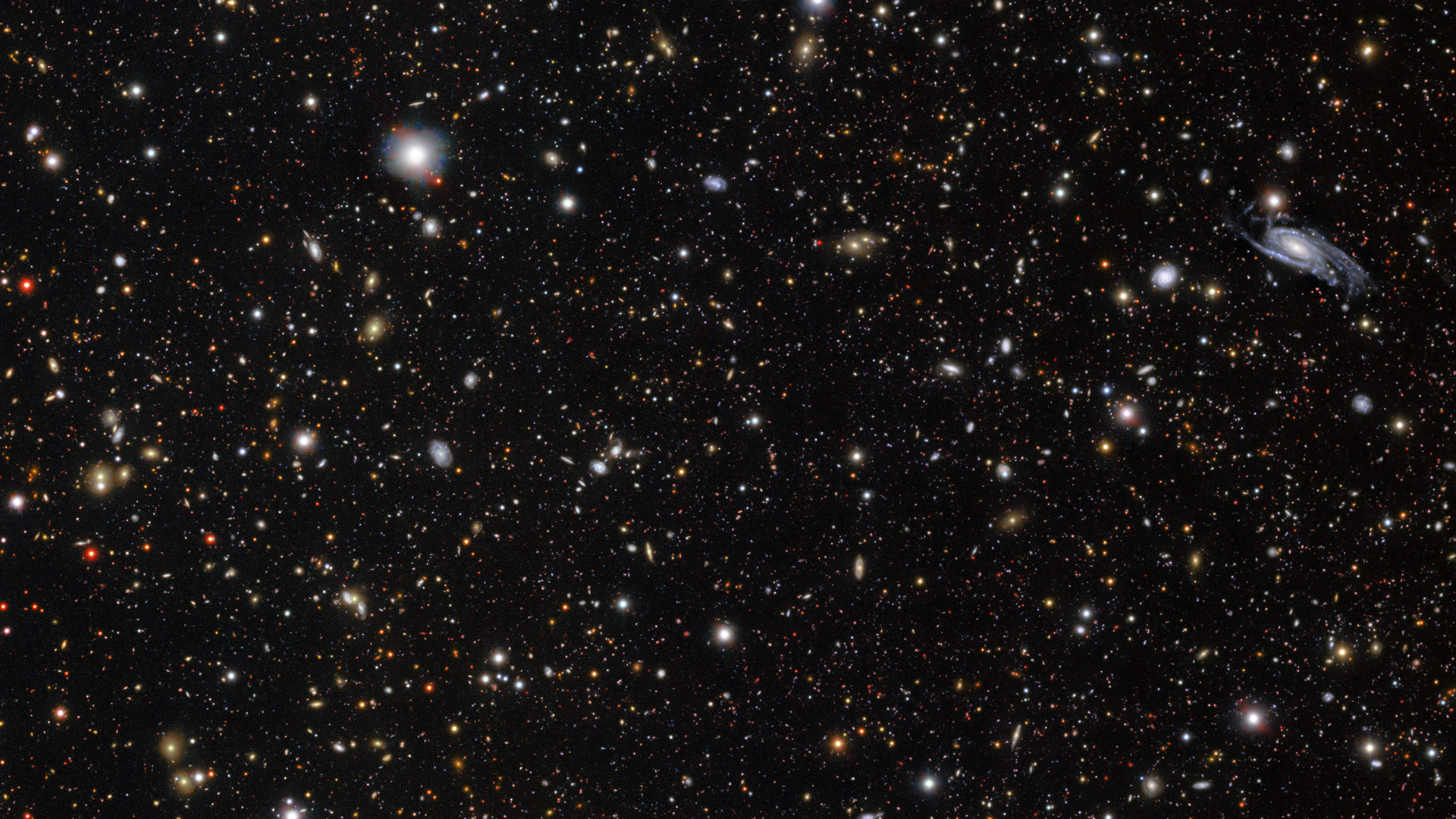
To gather a complete picture of SN 2026gzf, the research team utilized various observatories and instruments, including the Dark Energy Camera and the Vera C. Rubin Observatory. These facilities provided detailed imagery and data, unveiling unexpected activity in the star system prior to the supernova and enabling long-term tracking of the explosion’s evolution.
Antonella Palmese, an assistant professor of physics at Carnegie Mellon, emphasized the importance of collaborative efforts in time-domain astronomy. “With the start of the Rubin LSST, smaller wide-field imagers on smaller aperture telescopes may seem obsolete. Yet, these observations demonstrate, possibly for the first time, how powerful the synergies between DECam and Rubin can be,” Palmese stated.
Further contributions came from the Dark Energy Spectroscopic Instrument (DESI) and additional telescopes like the Hobby-Eberly Telescope and the Southern African Large Telescope. These resources provided early observations and comprehensive spectral data, which were crucial in classifying the supernova.
This discovery not only reveals a new method by which massive stars can end their lives but also exemplifies the growing capabilities of time-domain astronomy. By pooling resources and expertise, astronomers can capture fleeting cosmic events with unprecedented precision, deepening our understanding of the universe.
Read More Here







Comments are closed.