Bird Collisions in Urban Areas: A Growing Concern
On a chilly March afternoon, two friends, Chris and I, stumbled upon a tragic scene on 22nd Street and Pennsylvania Avenue in Philadelphia. A delicate American woodcock, distinguished by its elongated bill and striking blend of brown, gray, and black feathers, lay lifeless in a storm grate. This bird, typically found in young forests, had met its end upon flying into a building. This incident raises questions about why birds often collide with buildings.

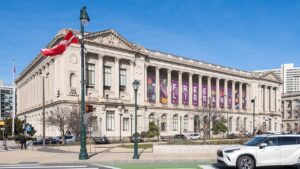
Upcoming on Saturday, August 2, 2025, at 2:00 p.m., the Parkway Central Library will host an event presented by the Print and Picture Collection. Keith Russell, Program Manager for Urban Conservation for Audubon Mid-Atlantic, will lead a discussion on this very issue. He will explore why these collisions are problematic and share insights into preventive measures. Based in Philadelphia, Russell is dedicated to enhancing conditions for the city’s avian population.
Philadelphia’s history with bird collisions dates back over a century. Between 1894 and 1986, City Hall was Philadelphia’s tallest building. In August 1897, shortly after the William Penn statue was illuminated with electric lights, reports emerged in the Philadelphia Inquirer and Philadelphia Evening Bulletin about a rare bird found dead below the lights. This caught the attention of William L. Baily, a Delaware Valley Ornithological Club founder, who, alongside Charles H. Slaughter from City Hall’s electrical department, began documenting bird deaths. During the 1897 fall migration, 30 birds collided with City Hall. By the following year, the number of collisions varied, with significantly fewer in spring when the lights were turned off.

However, in the fall of 1899, the city’s illumination for the Grand Army of the Republic’s reunion led to a tragic spike in bird deaths. Between late August and October, 452 dead birds were collected around City Hall, prompting the Philadelphia Inquirer to headline the issue with “City Hall Electricity a Death-Trap for Many Birds.” Baily’s findings were later published in “Migration Data on City Hall Tower”, documenting the extensive bird casualties over several migration seasons.

In the present day, bird populations are dwindling globally. In North America alone, bird numbers have dropped by 29% since 1970. Collisions with buildings, particularly during migration, are a significant contributor to this decline. Studies estimate that between one to five billion birds fall victim to window collisions annually in the United States.

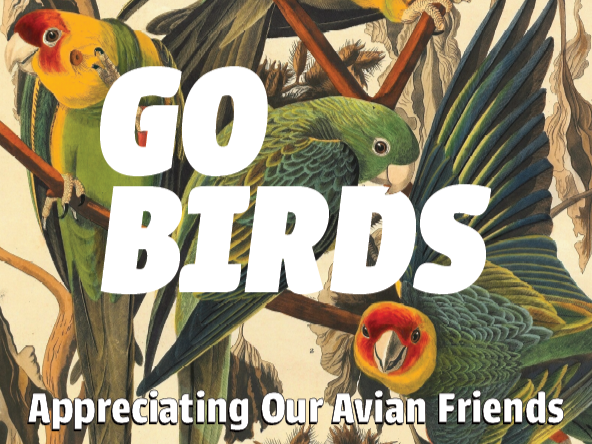
The talk titled Why Do Birds Collide With Buildings? A Talk by Audubon’s Keith Russell is part of the Go Birds: Appreciating Our Avian Friends exhibition. This special exhibit is held at the Second Floor West Gallery of Parkway Central Library. It’s a collaboration involving the Children’s Literature Research Collection, the Government Publications Department, the Map Collection, and the Print and Picture Collection. The exhibition is open to the public through August 30, 2025.
For inquiries, you can reach the Free Library staff via the Ask a Librarian page, where responses are provided within two business days.
Read More Here