Detroit Launches Major Initiative to Transition Families from Homelessness to Housing
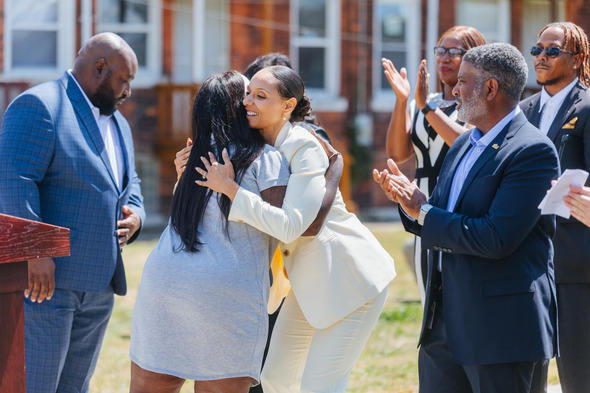
In a bold move to provide stability and independence for Detroit’s unsheltered families, Mayor Mary Sheffield has announced the “Homeless to Housed” initiative. This $9.2 million program, set over three years, aims to transition families from emergency shelters to stable housing, significantly increasing the city’s investment in homelessness programs by over 500% compared to previous years. The initiative is expected to benefit around 140 families, or approximately 500 individuals, each year, with a focus on those with minor children.
“Every family deserves a safe, stable place to call home,” stated Mayor Mary Sheffield. “By pairing rental assistance with intensive case management, we are helping families stabilize, strengthen, and eventually become fully self-sufficient.” The initiative emerged from policy discussions involving city staff, shelter providers, and residents experiencing homelessness, pinpointing a need to facilitate transitions from temporary shelters to permanent housing.
Components of the Initiative
The “Homeless to Housed” initiative integrates two proven housing programs:
- Rapid Rehousing (RRH): Supported by City general funds and Emergency Solutions Grant (ESG) funding, RRH offers short-to-medium term rental assistance, security deposits, and case management. This component is anticipated to aid 78 households, equating to 296 individuals, by the end of 2026, continuing support for 78 households every 6-12 months through June 2028.
- Tenant-Based Rental Assistance (TBRA): Funded by HOME-ARP, this program provides tenants with rental assistance and case management, making housing more affordable in the private market. It is expected to support 60 households, or 227 individuals, by the end of 2026.
These programs offer 6 to 12 months of rental support along with extensive case management to ensure families transition successfully into permanent housing.
Collaborative Efforts and Expected Outcomes
The city’s Department of Human, Homeless, and Family Services has reallocated Federal Emergency Solutions Grant funding to expand these programs under Mayor Sheffield’s directive, focusing on families with minor children in emergency shelters. Partnering agencies, including the Neighborhood Services Organization and Wayne Metro Community Action Agency, will aid in finding housing, negotiating with landlords, and providing ongoing case management.
“Rapid rehousing is a great program because it gives families the opportunity to build a future for their families,” shared Malika Betey, a program participant. Research supporting these initiatives highlights their success in reducing homelessness and increasing stability. For instance, a study in the Journal of Urban Economics found a 25% reduction in homeless service use among families receiving Rapid Rehousing assistance.
Dr. Luke Shaefer, Chief Executive of Health, Human Services, and Poverty Solutions, noted that the initiative “exemplifies innovative, results-driven, and person-centered policymaking,” aiming to realize a vision of long-term stability for Detroit families.
Community Involvement and Testimonials
Agencies involved are enthusiastic about the potential impact. “Neighborhood Service Organization believes every child deserves the opportunity to grow up in a safe, stable home,” stated Linda Little, CEO of NSO. John Stoyka, President of Community & Home Supports Inc., emphasized that the programs simplify a complex system, helping more individuals secure permanent housing.
Wayne Metro CEO Louis Piszker expressed pride in partnering with the city, stating that the expansion of these services is a crucial step toward helping more Detroit residents find stability and a place to call home.
About the Partner Organizations
Neighborhood Service Organization: A Detroit-based agency providing community-based services and holistic programs for vulnerable populations, addressing barriers to housing, health, and well-being.
Wayne Metropolitan Community Action Agency: Serving approximately 75,000 residents across Wayne County, this non-profit operates over 100 programs focused on quality housing, family stability, and economic opportunities.
Community & Home Supports, Inc.: Founded in 2008, this organization addresses poverty and homelessness, advocating for fair, affordable, and equitable housing solutions.
Read More Here