
The Innovative Approach of Regenerative Agriculture at UVA’s Morven Farm
At the University of Virginia’s Morven Farm, a transformative approach to agriculture is taking root. By integrating cattle grazing into the landscape, the Morven Sustainability Lab aims to rejuvenate the soil and foster a thriving agricultural ecosystem. “We realized … the best thing we could do to promote soil health and try to bring back the agricultural ecosystem after a few centuries of cropping and hay was to put cattle on and graze them in ways that have been shown to help regenerate soil and improve productivity,” shared Manuel Lerdau, a UVA environmental sciences professor and research director at Morven.
This method, known as “regenerative agriculture” or “regenerative grazing,” counters the depletion of vital nutrients like nitrogen, phosphorus, and potassium, which are often stripped away by traditional crop planting. Corn and soybeans, for instance, require significant nutrient replenishment, often achieved through chemical fertilizers. However, these fertilizers fall short of restoring ecological diversity. Instead, densely grazing cattle in confined areas naturally recycles nutrients back into the soil, enhancing its health over time.
The Morven project envisions a 12-year grazing period to achieve significant soil improvement. Lerdau, along with Elizabeth Meyer, professor of landscape architecture and Morven’s faculty director, view the farm’s diverse landscape—comprising crop fields, forests, and historical structures—as a dynamic laboratory for sustainability research.
In 2023, the UVA Foundation appointed Justin Mallory, an experienced cattle manager from Albemarle County, as Morven’s asset manager. Two years later, they enlisted Irvin White, a local regenerative farmer and UVA alumnus, to oversee grazing operations. Together with Meyer and Lerdau, they proposed the cattle initiative to the University, highlighting its potential to enhance land stewardship and offer research opportunities for students and faculty.
“Changing the farm into a site for research that invites in students, faculty, and community members is one of the big changes happening at Morven,” Lerdau explained. This summer, a recent UVA Environmental Sciences graduate will lead a team of undergraduates to conduct soil and plant diversity assessments. These measurements will be repeated periodically to monitor the farm’s progress.
Additionally, NASA Goddard Space Flight Center will deploy a team to conduct a remote sensing field campaign over Morven. Using drones and aircraft, they will gather data on plant species, coverage, and size, offering a bird’s-eye view of the farm’s evolving ecosystem.
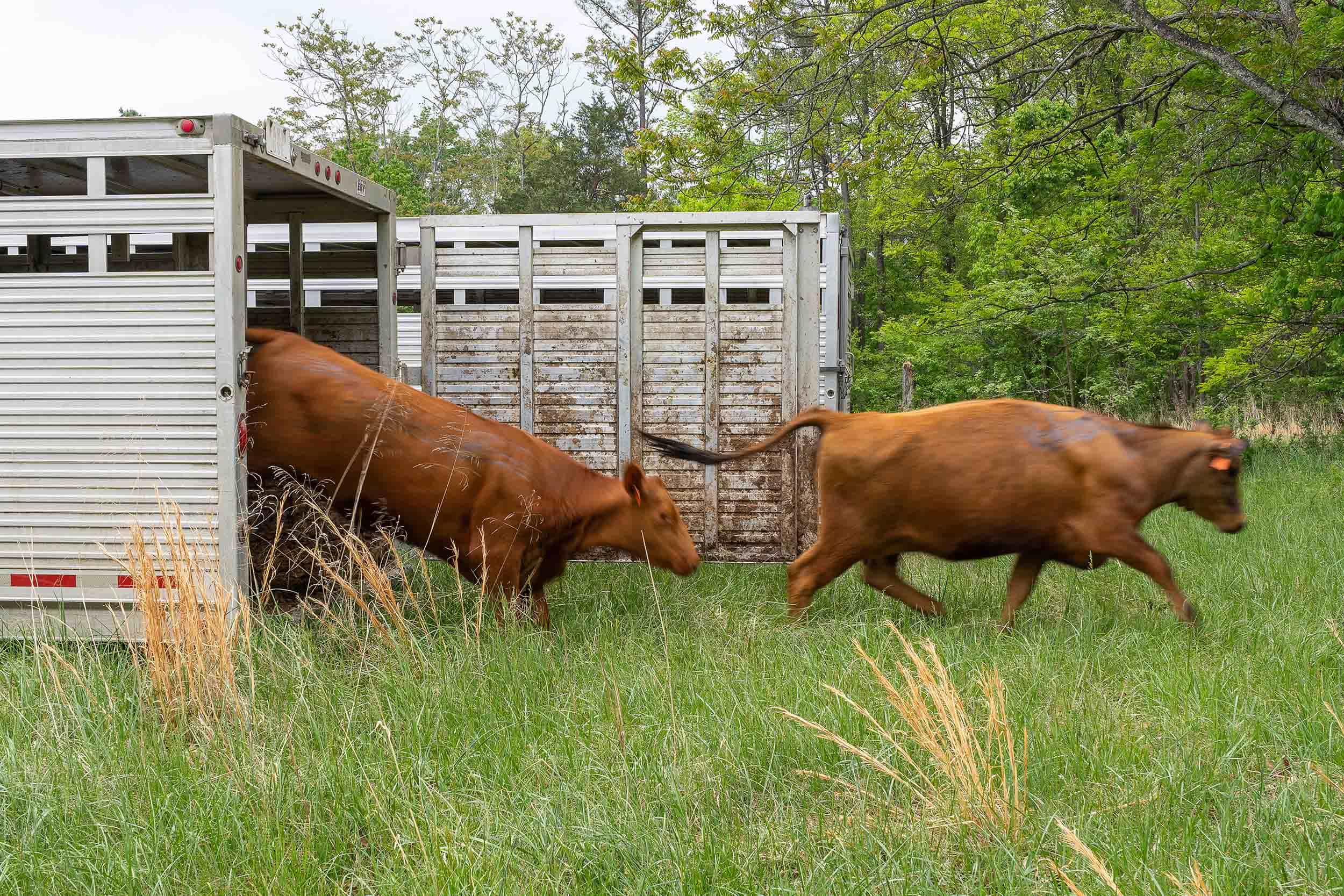
White, who began collaborating with Morven last year, has been preparing for the cattle’s arrival by installing fences and planting grass seeds. The cattle, transported from White’s farm in Louisa, quickly adapted to their new home. “They all got off the trailer, jogged for about a hundred feet, put their heads down and started grazing,” White recounted.
As the cattle graze, they not only nourish the soil with organic matter but also invite a host of beneficial organisms, from earthworms to microbial fungi and dung beetles, creating a complex ecosystem that supports diverse wildlife, including birds. “It’s a cool ecosystem that starts to develop,” White noted.
Read More Here
![Robert Harmon Celebrates 99th Birthday at UVA’s Homecomings Weekend[embed]https://www.youtube.com/watch?v=c_VPFnE8x-w[/embed]](https://realnewsfast.com/wp-content/uploads/2026/10/Robert-Harmon-Celebrates-99th-Birthday-at-UVAs-Homecomings-Weekendembedhttpswwwyoutubecomwatchvc_VPFnE8x-wembed-300x200.jpg "Robert Harmon Celebrates 99th Birthday at UVA’s Homecomings Weekend[embed]https://www.youtube.com/watch?v=c_VPFnE8x-w[/embed]")
![Environmental Opera “Auksalaq” Opens UVA’s Arts on the Hill Series[embed]https://www.youtube.com/watch?v=PjYuP9wh3Hw[/embed]](https://realnewsfast.com/wp-content/uploads/2026/10/Environmental-Opera-Auksalaq-Opens-UVAs-Arts-on-the-Hill-SeriesembedhttpswwwyoutubecomwatchvPjYuP9wh3Hwembed-300x200.jpg "Environmental Opera “Auksalaq” Opens UVA’s Arts on the Hill Series[embed]https://www.youtube.com/watch?v=PjYuP9wh3Hw[/embed]")
![New documentary explores Elizabeth Holmes’ final days before prison[embed]https://www.youtube.com/watch?v=GGJSRFWALTI[/embed]](https://realnewsfast.com/wp-content/uploads/2026/10/New-documentary-explores-Elizabeth-Holmes-final-days-before-prisonembedhttpswwwyoutubecomwatchvGGJSRFWALTIembed-300x200.jpg "New documentary explores Elizabeth Holmes’ final days before prison[embed]https://www.youtube.com/watch?v=GGJSRFWALTI[/embed]")