Exploring the Future of Retail Through Virtual Reality at the University of Arizona
In a groundbreaking approach to retail education, students at the University of Arizona are stepping beyond traditional classrooms and into the realm of extended reality. Nicole Gil-Lopez, a retailing and consumer science student, is gaining firsthand experience with how immersive technologies are reshaping the study of consumer behavior and retail management.
This semester, Gil-Lopez and her classmates are engaging with the University of Arizona’s innovative curriculum that integrates extended reality into merchandising studies. This technology, which encompasses virtual and augmented reality, allows students to interact with comprehensive computer simulations that reflect real-world retail environments, offering an unparalleled learning experience.
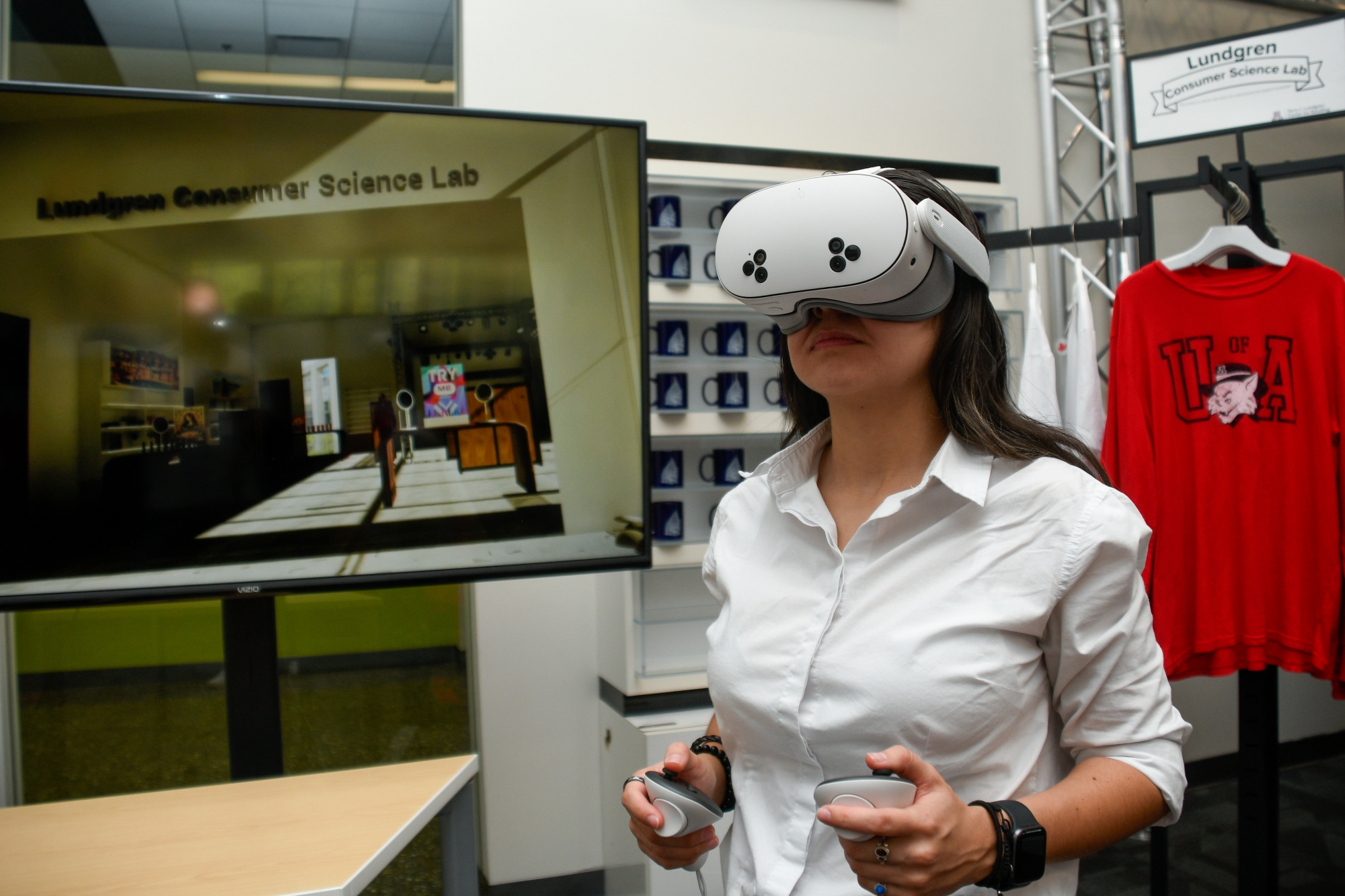
By donning a sophisticated headset, Gil-Lopez enters the Lundgren Consumer Science Lab’s virtual reality setup. This “digital twin” is an exact replica of the physical lab, enabling students to manipulate store layouts and analyze shopper behavior instantaneously. “Putting on the headset and visiting the digital twin for the first time was mind-blowing because of the amount of detail involved,” exclaimed Gil-Lopez, a senior majoring in retailing and consumer science.
Assistant Professor Soo Hyun Kim, who revamped his merchandising systems course to include this technology, sees it as a valuable opportunity for students to learn in a dynamic, interactive environment. “I saw an opportunity for students to learn in a three-dimensional, interactive environment,” Kim explained. “In order to complete certain projects in class, they visit virtual stores and investigate how shoppers move, what they buy and where they spend their time.”
From Brick to Click: Revolutionizing Retail Education
The Lundgren Consumer Science Lab, funded by a $5 million donation from former Macy’s executive chairman Terry Lundgren and his wife Tina, is at the forefront of this educational transformation. This facility combines immersive technology, data analytics, and cutting-edge research methods to prepare the next generation of retail professionals.
The lab’s physical space mirrors its digital counterpart, featuring advanced analytics technology, a touchless point-of-sale system, and areas for student entrepreneurship. Additionally, the Digital Makers Space & Creator Corner provides resources for students to create and showcase their products.
The creation of the lab’s digital twin, initiated in the summer of 2024, was overseen by the U of A’s AI Core program. This student-driven initiative utilized advanced technologies to meticulously reconstruct the lab within the Unreal Engine, a tool widely used in gaming and simulation.
Student and developer Guerra shared her enthusiasm for the project, stating, “When we first talked about digital twins and how they replicate real life, I realized how much I loved the idea of recreating entire spaces or specific moments in time.”
As the digital twin continues to evolve, it remains a cutting-edge platform for experimentation and education, offering students the chance to explore the integration of extended reality into business practices, without the need to physically be present in a location.
Read More Here