In a significant boost to quantum technology advancement, the U.S. Department of Energy has renewed a substantial $125 million grant to the Fermi National Accelerator Laboratory’s Superconducting Quantum Materials and Systems Center. The University of Arizona’s College of Engineering is set to be a pivotal partner in this initiative, focusing on advancing quantum computing capabilities over the coming five years.
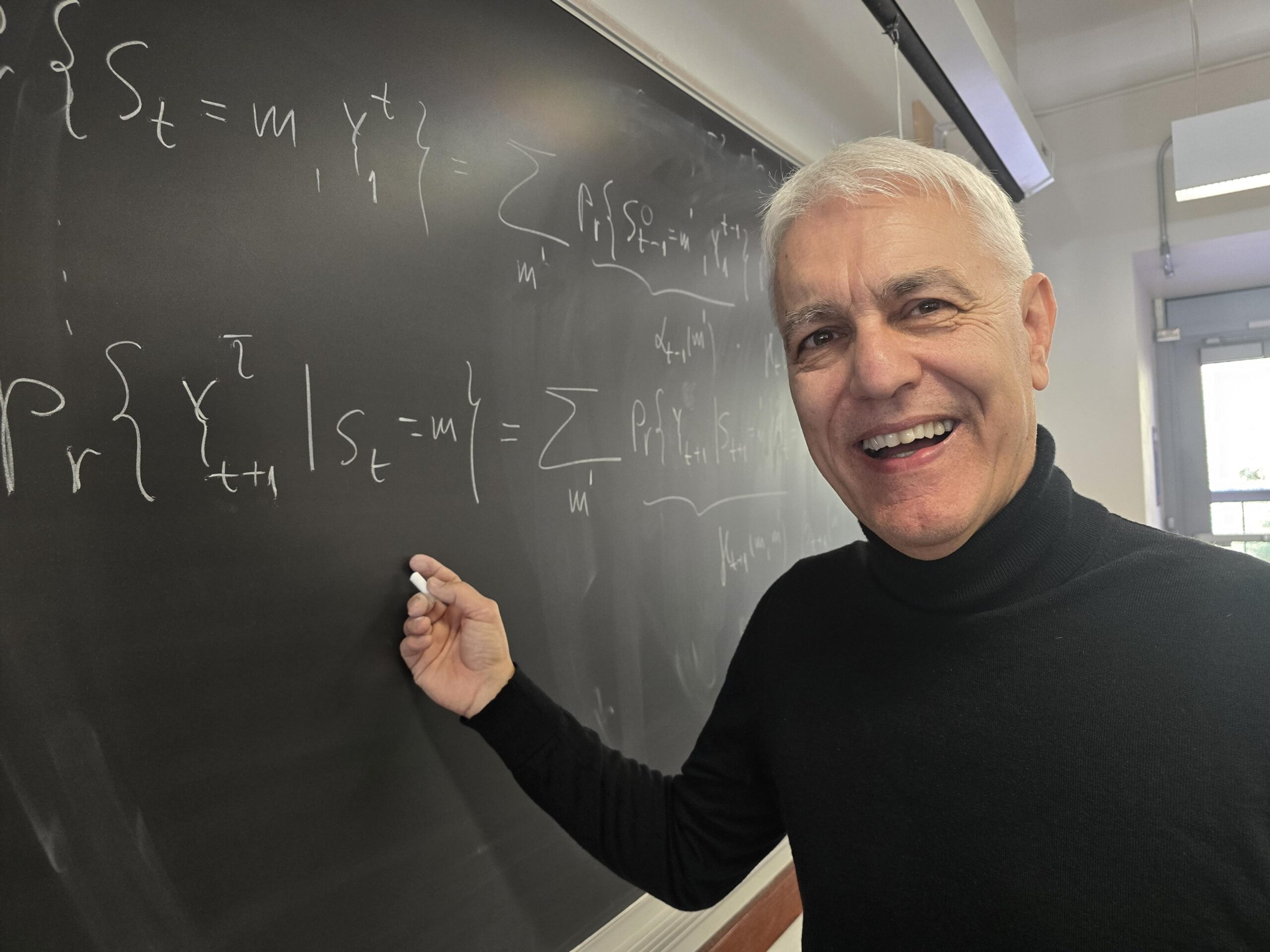
Leading the charge in error correction theory at Fermilab from the University of Arizona is Bane Vasić, who holds the Kenneth Von Behren Professorship in Electrical and Computer Engineering. He collaborates closely with assistant professor Narayanan Rengaswamy, assistant researcher professor Nithin Raveendran, and doctoral student Shantom Borah. Together, they are working on refining codes to minimize errors in quantum computing systems.
“This grant funding will help us enormously in developing and perfecting these systems,” expressed Vasić.
Quantum computing is anticipated to revolutionize various fields, including machine learning, drug development, data storage, agriculture, and cybersecurity.
Addressing Computational Errors
Quantum computers leverage the properties of subatomic particles, such as electrons, for rapid information storage and processing, which surpasses classical computers’ capabilities. Qubits, the fundamental units of quantum information, utilize superposition, allowing them to encode two values simultaneously, unlike classical bits that represent a single value. Additionally, through quantum entanglement, particles can be interconnected, meaning that measuring one influences the output of the other. These unique properties enable quantum computers to address complex problems at an unmatched speed.
However, qubits are inherently fragile and susceptible to environmental disturbances that can introduce errors before measurement. Reducing noise and correcting errors remain critical challenges in quantum computing.
As the director of the Error Correction Laboratory at the University of Arizona, Vasić, along with his team, is developing quantum low-density parity check (QLDPC) codes and decoding algorithms to detect and correct such errors. QLDPC codes decompose intricate error correction tasks into simpler steps and require fewer qubits than the widely used topological codes.
“We aim to develop a system that uses these QLDPC codes,” said Vasić. “And our team at the University of Arizona has unique expertise to bring them to reality and enable large-scale quantum computing.”
Collaborative Efforts in Quantum Advancement
Fermilab stands as a leading particle physics laboratory, offering a collaborative platform for center members to exchange knowledge and technologies. The University of Arizona is integral to these collaborative efforts.
“The SQMS brings together researchers from both the quantum physics and coding theory communities to forge a path towards the vision of universal quantum computing,” Vasić stated.
Read More Here