
Innovative Snake Robots Aid in Venezuelan Earthquake Rescue Operations
In a groundbreaking effort to assist in disaster-stricken areas, Carnegie Mellon University researchers deployed snake-like robots to help international rescue teams navigate the aftermath of two devastating earthquakes in Venezuela. These innovative robots, designed to mimic the movements of snakes, are providing crucial insights into inaccessible spaces within collapsed buildings.
The snake robots, developed at CMU’s Robotics Institute, feature a camera on the front, allowing rescue teams to peer into areas that are otherwise unreachable by humans. This technology aims to enhance the search and rescue missions by providing a new perspective on locating survivors.
Kimberly Elenberg, a member of the CMU team, remarked, “What struck me most was not a lack of interest in technology; it was the opposite. First responders were eager for tools that solve real problems without adding complexity.”
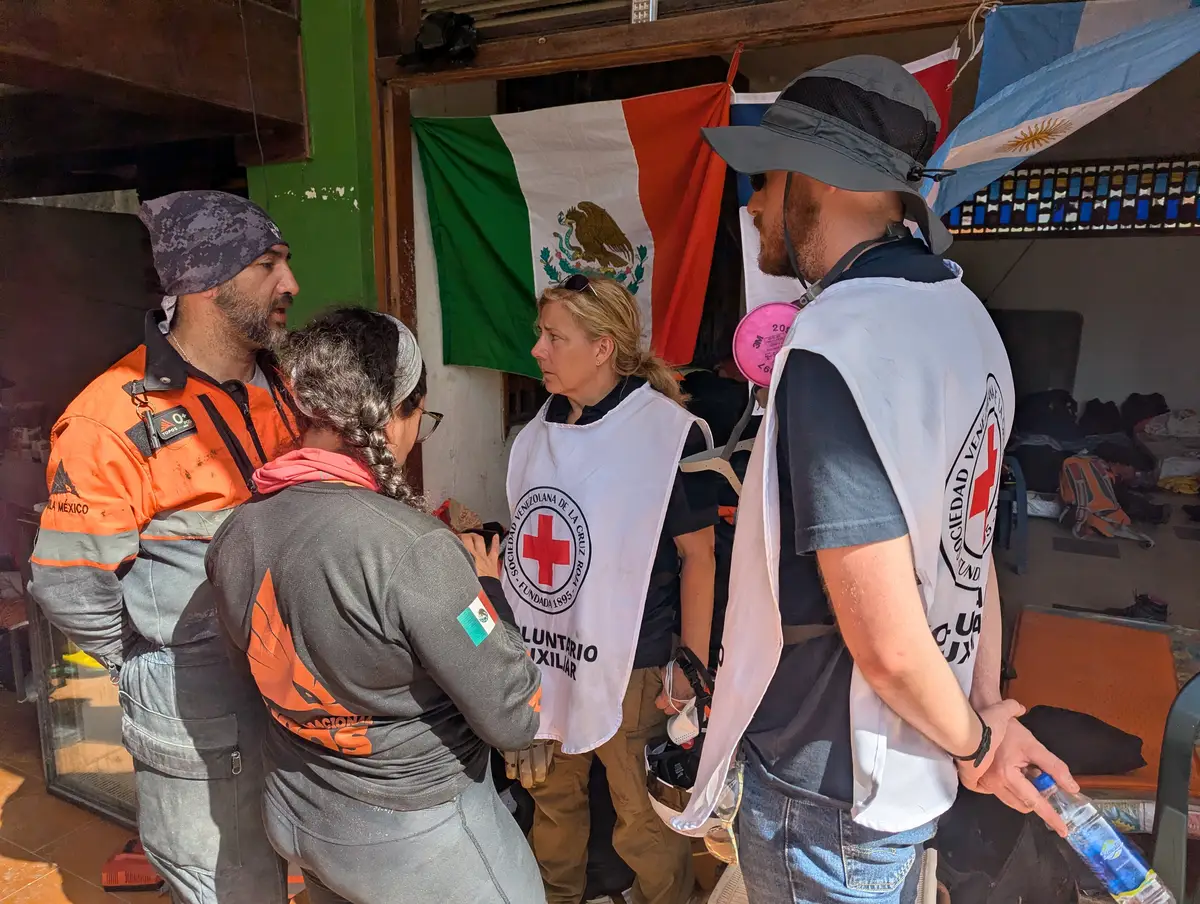
The earthquakes, which hit northern Venezuela on June 24, resulted in over 5,000 fatalities and left approximately 18,000 people homeless. CMU’s team collaborated with various international organizations, including the Venezuelan and Colombian Red Cross and Mexico’s Topos search and rescue team, to aid those affected in La Guaira, one of the hardest-hit areas.
Although the team did not discover any survivors during their three-day mission from June 30 to July 3, their efforts provided valuable information to ensure no individuals were trapped, offering reassurance to families with missing loved ones.

Professor Howie Choset, director of CMU’s Biorobotics Lab, was moved by the resilience of the Venezuelan people, stating, “The Venezuelan people are extraordinary. Despite unimaginable loss, they showed us remarkable kindness, resilience and gratitude.”
The effort to bring CMU’s snake robots to Venezuela was initiated by Beatriz Gonzalez, a Venezuelan living in Atlanta, who sought technological solutions to aid in search and rescue. Her research led her to the Biorobotics Lab’s previous work in the 2017 Mexico City earthquake, prompting her to reach out to Choset for assistance.
Within 24 hours of Gonzalez’s request, the CMU team was en route to Venezuela. Despite facing logistical challenges, language barriers, and equipment failures, the team persevered, with contributions from members fluent in Spanish and those experienced in disaster response.

The deployment highlighted the critical role of logistics, communication, and power in field operations, underscoring the need to adapt robotic designs to real-world conditions. Elenberg emphasized, “We have to stop designing robots for demonstrations and start designing them around the realities of the people who will depend on them.”
This mission not only showcased the potential of robotic technology in disaster scenarios but also revealed areas for further research and development to enhance the reliability and effectiveness of such systems in future deployments.

Choset praised his team’s dedication, stating, “What makes me proudest is my team. Their professionalism, technical excellence and willingness to leave everything behind on a moment’s notice filled me with pride.”
For more information about the Biorobotics Lab and its work, visit their website. To inquire about deploying snake robots in the field, contact Howie Choset.
Read More Here






Comments are closed.