In a world where salt is often taken for granted by humans, it remains a scarce and vital resource for wild herbivores, whose survival depends on finding enough of this essential nutrient. A recent study published in Nature Ecology and Evolution sheds light on how this necessity shapes the lives of some of the planet’s largest land animals, including elephants, giraffes, and rhinos.
Researchers from Northern Arizona University, along with international collaborators, have discovered that the presence and distribution of these megaherbivores are significantly influenced by the availability of sodium. It’s a challenge for these creatures to find regions where local vegetation provides sufficient salt to support their massive bodies.
“In Africa, sodium availability varies over a thousandfold in plants,” explained Andrew Abraham, the study’s lead author and a research associate at City University of New York, as well as an alumnus of NAU. “This means that in many areas, wild herbivores simply cannot get enough salt in their diet.”
While this issue affects all herbivores to some degree, it is especially pronounced among the largest species. The study corroborates earlier findings that suggest a correlation between body size and sodium deficiency, using a novel methodology to arrive at similar conclusions.
Herbivores’ Quest for Sodium
By integrating high-resolution maps of plant sodium levels with data on animal dung and population density, the researchers linked regions scarce in salt to a decline in megaherbivore numbers. Dung analysis provides insights into whether these animals receive adequate sodium, revealing a direct connection between salt availability and herbivore distribution.
Beyond mere survival, the lack of salt influences the behaviors of these animals. Abraham noted, “In Kenya, elephants enter caves to consume the sodium-rich rocks and in the Congo rainforest, they dig for salt in riverbeds.” Additionally, gorillas compete for the saltiest foods, while other species like rhinos, wildebeests, and zebras are drawn to salt pans across diverse regions.
This investigation also offers a fresh perspective on the scarcity of megaherbivores in certain areas.
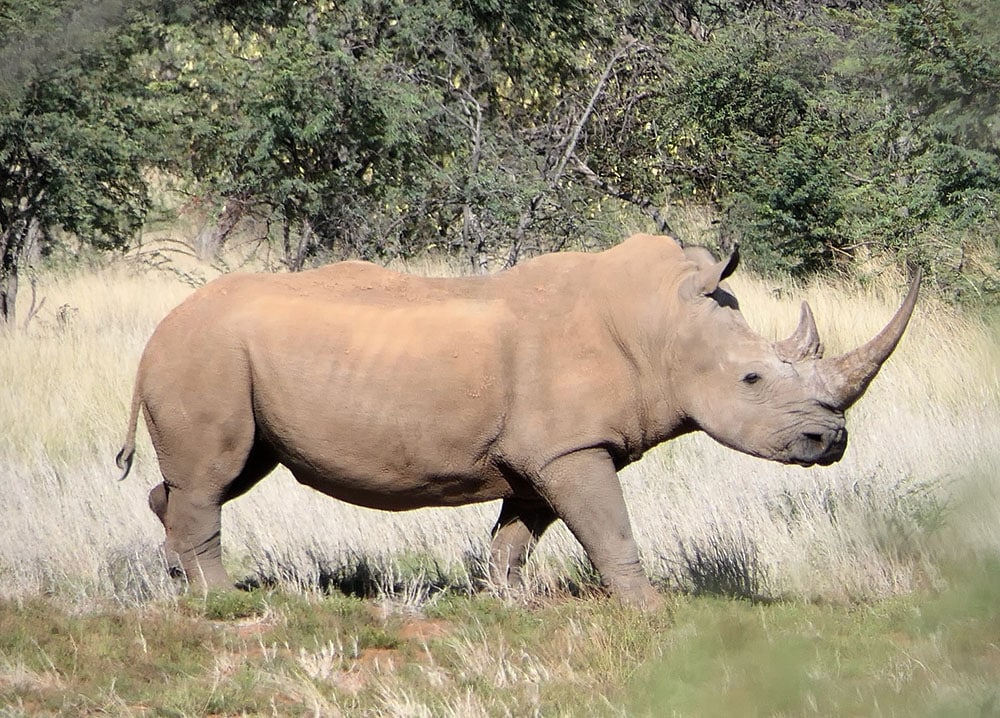
“West Africa is a very productive region, but there aren’t many megaherbivores there,” stated Chris Doughty, a professor of ecoinformatics at NAU. “We think that a lack of sodium, likely combined with other factors such as overhunting and soil infertility, plays an important role in limiting their numbers.”
The study also highlights conservation challenges, as many protected areas are in low-sodium regions. Human activities, such as borehole pumping and road salting, have inadvertently created sodium hotspots, potentially leading animals to conflict with humans in their pursuit of salt.
Abraham warned, “If animals can’t get enough sodium in their natural habitats, they may come into conflict with people on their quest to satisfy their salt hunger.”
Read More Here