
The Lasting Impact of Hurricane Katrina on U.S. Hurricane Preparedness
Two decades have passed since Hurricane Katrina unleashed its fury on the southeastern United States, leaving a trail of destruction across Louisiana, Florida, Mississippi, Alabama, and other regions. This catastrophic event resulted in nearly 1,400 deaths, displaced over a million residents, and caused damages exceeding $125 billion.
Rob Traver, PhD., P.E., BC. WRE, F.EWRI, F.ASCE, a Professor of Civil and Environmental Engineering at Villanova University, played a crucial role in the investigation led by the U.S. Army Corps of Engineers (USACE) into the collapse of New Orleans’ Hurricane Protection System during Katrina. For his contributions, Dr. Traver received the Outstanding Civilian Service Medal. He shared insights on how the investigation’s revelations have shaped hurricane response strategies in the U.S. over the past 20 years.
Result of a levee breach at 17th Street in New Orleans.
Q: What was your role in the investigation of the failure of the New Orleans Hurricane Protection System?
Dr. Traver: In the wake of Hurricane Katrina, the USACE sought to understand the failures in New Orleans’ flood defenses. They collaborated with qualified researchers, including those from the American Society of Civil Engineers (ASCE), of which I am a long-time member. Our task was to ensure USACE posed the right questions to unravel the reasons behind the hurricane protection system’s failure. My team’s focus was on assessing the risk and reliability of New Orleans’ water resource system, beginning with revising the investigation questions to uncover why these systems failed.
Q: What was your experience like in New Orleans in the aftermath of the hurricane?
Dr. Traver: A few weeks post-Katrina, my team visited New Orleans, inspecting the sites under review and consulting with infrastructure experts. The aerial view of the devastation—entire neighborhoods obliterated—was staggering. Understanding the pre-storm missteps was heartbreaking, especially knowing that better infrastructure reviews could have saved lives.
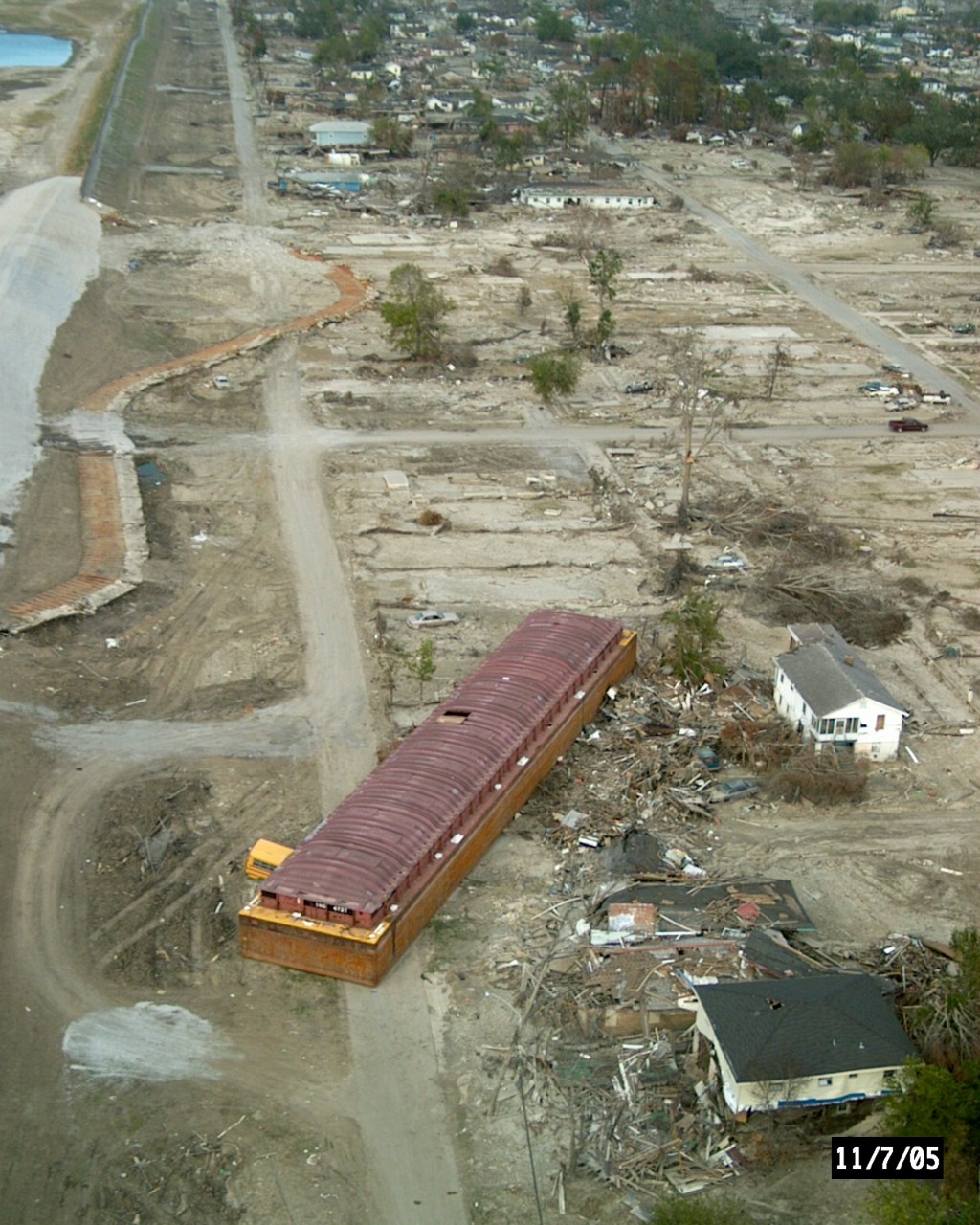
Aerial view of destruction after Hurricane Katrina.
Q: What were the findings of the ASCE and USACE investigation team?
Dr. Traver: Our investigation zeroed in on the levee system’s failure in New Orleans. The city’s pump stations, tasked with water removal post-rainfall, were poorly integrated with the levee system and inadequately designed for major storms. This lack of cohesion was a primary reason for the widespread flooding. Additionally, the levee designers failed to anticipate storms larger than their design capacity, like Katrina, and did not update the system with new meteorological data. In response, the city has since overhauled the levee infrastructure, informed by these findings.
Q: What did researchers, scientists and the general population learn from Katrina?
Dr. Traver: Lessons from past hurricanes have enabled us to rectify previous errors, reducing future risks in affected areas. However, my concern lies with cities unfamiliar with hurricanes, where the vulnerabilities of their preventative systems remain unknown. It is crucial for researchers to identify high-risk hurricane zones in the U.S., informing residents of their risks and necessary precautions, especially given the increasing severity of storms.
Read More Here