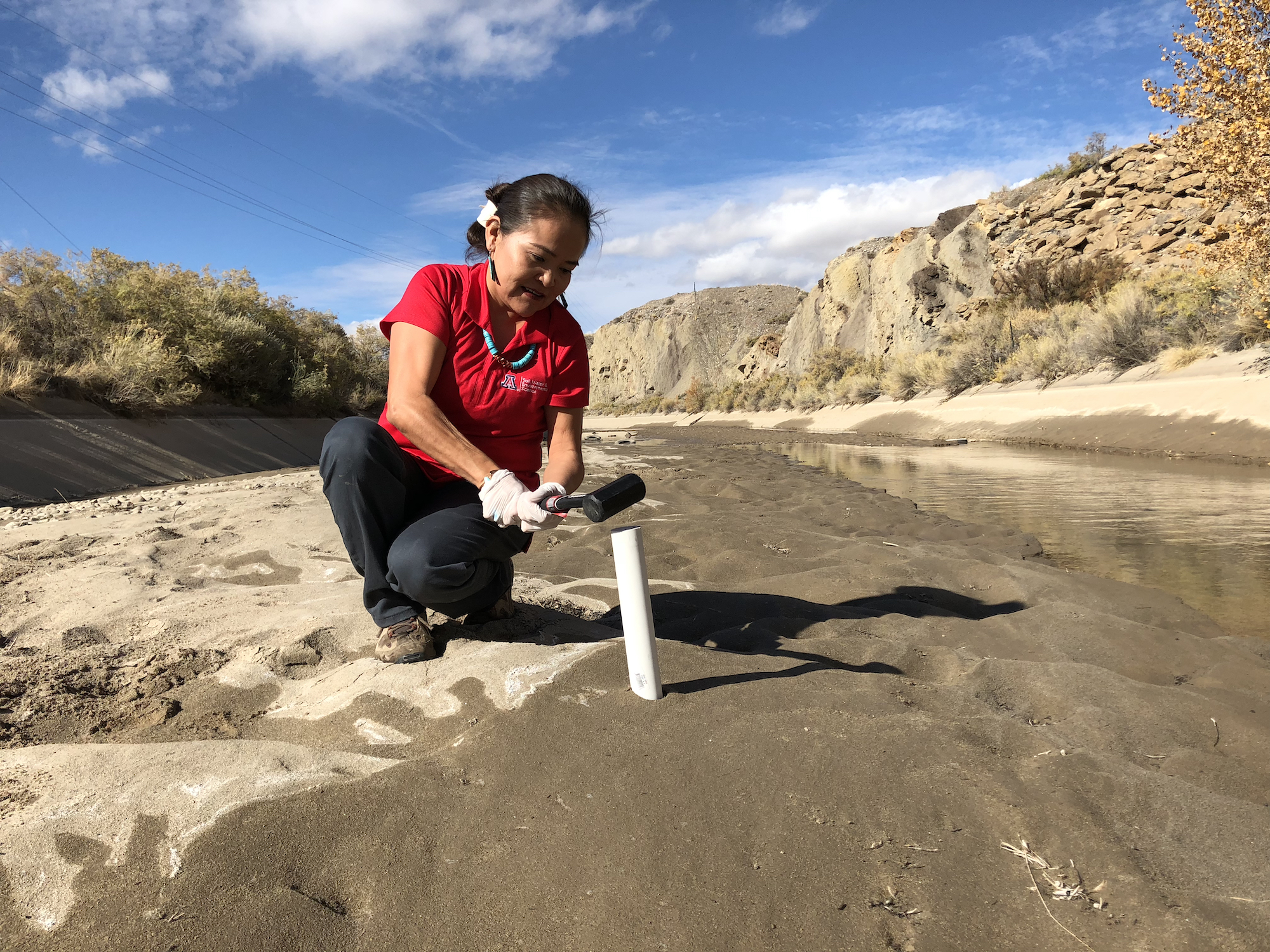
Karletta Chief, a distinguished Diné hydrologist, has reached a significant milestone as the first holder of the Agnese Nelms Haury Endowed Professorship in Indigenous Resilience. Chief directs the Indigenous Resilience Center at the University of Arizona, an institution committed to empowering Native American communities through sustainable environmental solutions.
This professorship was introduced by the center in collaboration with the Agnese Nelms Haury Program, both integral parts of the university’s Arizona Institute for Resilience. The announcement is a testament to the center’s growing impact, which has amassed over $28 million in funding since its inception in 2021.
The Haury Program, established in 2014 following a generous endowment from the late heiress Agnese Nelms Haury, aims to support initiatives that tackle the effects of climate change on the environment and various life forms. In recent years, the program has honed its focus on Indigenous resilience, underscoring its commitment to fostering partnerships and solutions that respect tribal knowledge and sovereignty.
Toni Massaro, the executive director of the Haury Program, emphasized the significance of the professorship in enhancing the university’s ability to attract and support leading experts in Indigenous environmental resilience. “This is a beautiful inflection point for the Haury Program, as we build upon our first 10 years and set our sights on addressing the environmental resilience challenges before us,” said Massaro, who also holds prestigious emerita positions at the James E. Rogers College of Law.
Chief’s pioneering work in hydrology, environmental justice, and her efforts in bridging trust with tribal communities have been pivotal. Her research and educational programs are designed to honor Indigenous knowledge while addressing critical issues related to water access, energy, and food security.
Chief expressed her gratitude, stating, “It is an honor to be the first recipient of this award. Having the professorship live within the Indigenous Resilience Center will allow us to support experts who are working with tribes based on the values of relationship, respect, reciprocity, and responsibility.”
Daniel Sestiaga Jr., the assistant director of the Indigenous Resilience Center, acknowledged the significance of this achievement, especially given the rarity of such professorships focused on Indigenous resilience in regions like the United States. “We are very thankful of the Agnese Nelms Haury Program for breaking down barriers and allowing Dr. Chief to hold this new professorship,” he remarked.
Read More Here