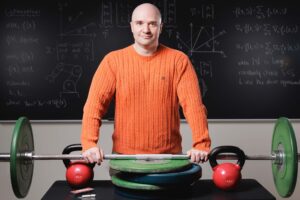
Carnegie Mellon University stands at the forefront of integrating mathematics with practical applications, thanks to the pioneering work of Irene Fonseca. Her research has sparked significant advancements in material science and image processing, highlighting the power of mathematical concepts to address real-world challenges.
As the Kavčić-Moura University Professor of Mathematics and head of the Center for Nonlinear Analysis (CNA), Fonseca’s work bridges the gap between theoretical mathematics and tangible problem-solving. Her investigations focus primarily on the behavior of advanced materials and the mathematical foundations of computer vision.
Enhancing Materials and Imaging through Mathematics
In the realm of materials science, Fonseca applies mathematical principles to help engineers and physicists understand how new materials will perform under stress. These insights are crucial for developing technologies like minimally invasive surgical tools and sustainable energy systems.
“That’s the beauty of math. It’s this abstraction where you’re not wedded to concepts or exact formulations,” Fonseca explained. “I get motivation from applications, and I bring them into the math context to try to formalize them.” Her approach allows for the optimization of materials before they are produced, saving resources and fostering innovative collaborations.
The common mathematical themes running through her work connect seemingly diverse challenges. Fonseca observed, “In materials, if there is a deformation, there is a blob that you need to deform, or in a sharp area, it might be a fracture in the material. In imaging, if there’s a blob, it could be a face and the sharper area could be the edge of a feature.” This analogy underscores the versatility and universality of mathematical tools across different domains.
Addressing Complex Problems with New Mathematical Tools
Traditional mathematical models often fall short when dealing with complex systems characterized by rapid changes or multiscale behaviors. Fonseca’s research is pivotal in developing advanced mathematical frameworks that can tackle these intricate issues, both in materials science and image processing.
Her innovative methods are instrumental in the evolution of next-generation medical equipment, flexible electronics, and energy-efficient technologies. By accounting for sudden changes and interactions at various scales, her work enables scientists to dissect problems previously deemed unsolvable.
Integrating Machine Learning with Mathematical Analysis
Recognizing the parallels between materials science and computer vision, Fonseca has crafted a toolkit that merges classical mathematics with modern machine-learning techniques. This hybrid approach is expanding research horizons and providing new avenues for understanding complex systems.
Fonseca is also a co-principal investigator for a National Science Foundation (NSF) research training group (RTG) at Carnegie Mellon. This initiative unites researchers from various disciplines and international partners to apply sophisticated mathematical models to solve cutting-edge scientific and technological challenges.
The upcoming Mathematics Outside of Mathematics (MOMA) seminar series, funded by the RTG grant, will further demonstrate the transformative power of mathematics. This monthly event will feature speakers who showcase how math drives innovation across industries.
Fonseca’s Impact and Leadership in Applied Mathematics
Fonseca’s influence extends well beyond her research achievements. She is a fellow of numerous prestigious organizations, including the American Mathematical Society and the European Academy of Sciences. Her contributions have earned her accolades such as a knighthood from Portugal and the Senior Prize from the International Society for the Interaction of Mechanics and Mathematics.
As a former president of the Society for Industrial and Applied Mathematics (SIAM), Fonseca has been instrumental in fostering collaboration between the mathematics community and industry. She continues to serve as a vice president of the American Mathematical Society, advocating for the role of mathematics in addressing contemporary issues.
Dedicated to mentoring the next generation of researchers, Fonseca has taught at Carnegie Mellon since 1987, guiding students who now excel in diverse scientific fields. “It is paramount to have graduate students and postdocs. It’s more important to me than publishing, being able to train them and help them on their paths of becoming even more excellent researchers,” she stated. “It’s very rewarding to me now that I see them as leaders in their own rights and having their own groups.”
Her mentorship and contributions to the mathematical community have been recognized with her election as a fellow of the American Association for the Advancement of Science (AAAS). Recently, she was honored with the University of Lisboa Prize for her significant impact on international mathematics and her dedication to scientific inquiry and education.
Read More Here