
Revolutionizing Drug Delivery: Harnessing Nature’s Own Systems
In a groundbreaking development, researchers at Carnegie Mellon University have unveiled an innovative method to transform naturally occurring cellular packages into precision drug carriers. These carriers have the potential to deliver cancer treatments directly to target cells, enhancing effectiveness while minimizing side effects.
Christopher Blum, a Ph.D. candidate in the Department of Chemistry, emphasized the importance of precision in cancer treatment. “Modern anti-cancer drugs are strong already. What we really need is precision. So, how do we deliver things to cells precisely? I believe that the best solution is the one that nature has already made for us,” he stated. The research findings were published in ACS Applied Bio Materials.
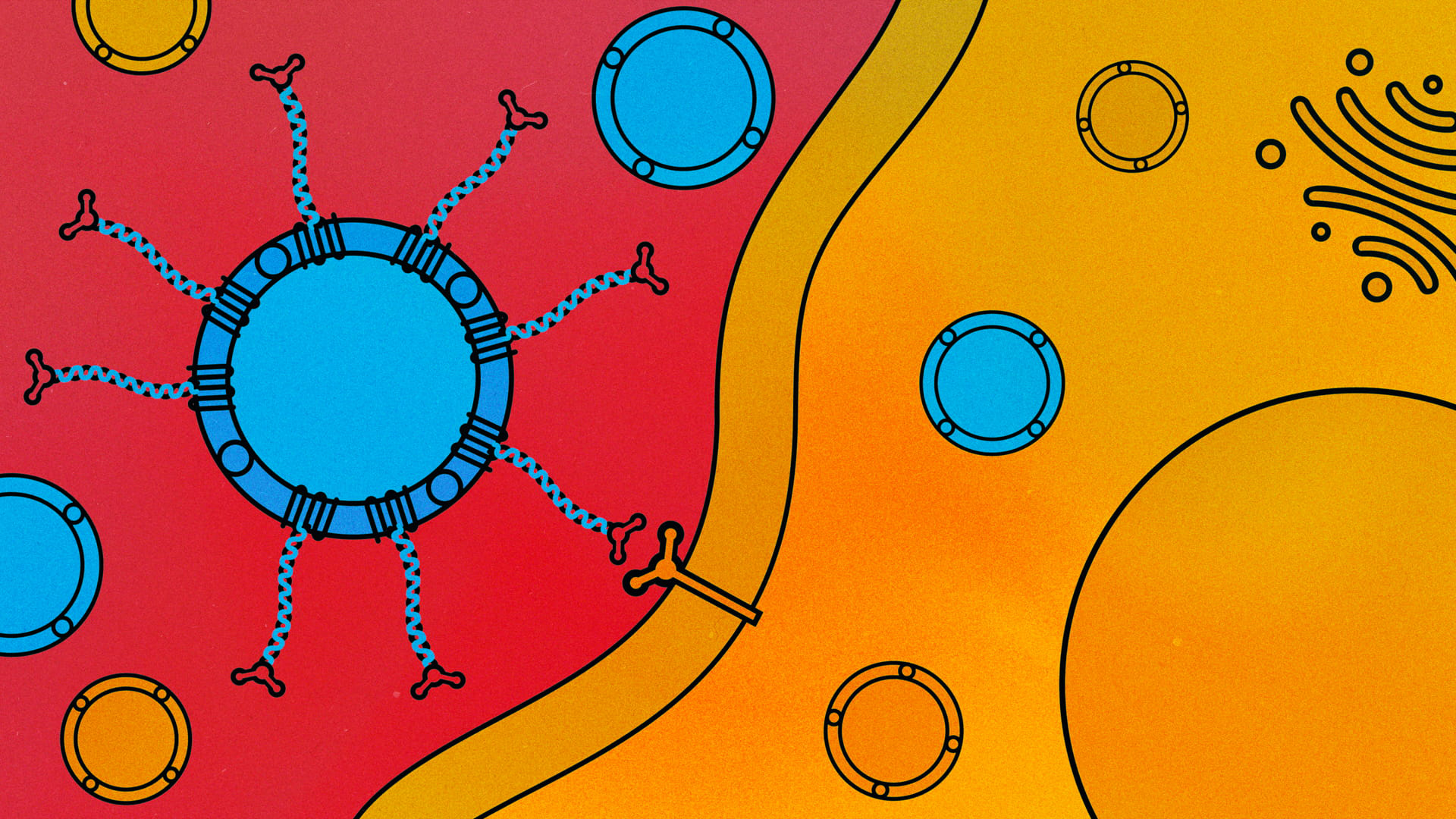
Cells naturally produce extracellular vesicles (EVs), which are small, bubble-like structures that transport proteins, nucleic acids, and other molecules throughout the body. These natural carriers have garnered interest as potential vehicles for drug delivery, particularly in treating cancer and other serious conditions.
However, engineering EVs for targeted drug delivery has posed significant challenges. They often get absorbed by a variety of cell types, which can lead to accumulation in non-target tissues, reducing their effectiveness. Additionally, the traditional methods of modifying EVs for directed delivery are expensive and complex.
The team at Carnegie Mellon has pioneered a solution with their EZON (Easy OligoNucleotide) EV modification platform. This system successfully tackles both issues by preventing EVs from attaching to incorrect cells and directing them to specific targets.
Associate Professor Subha Das from the Mellon College of Science noted, “EZON represents an advance in nanoscale surface engineering, and it has direct therapeutic relevance and broad applicability across EV sources and cargo types.” The simplicity of the EZON platform allows any researcher working with mammalian EVs to implement it using commercially available, unmodified oligonucleotides in just one afternoon.
The technology relies on a specially crafted DNA tether that serves dual purposes. One end acts as an anchor, attaching to proteins on the EV surface to prevent unwanted binding, while the other end functions as an address label, guiding the EV to specific cancer cells.
The adaptability of this approach is another significant advantage. By altering the DNA sequence, researchers can redirect EVs to various cell types, thus broadening the scope of this technology beyond just one form of cancer.
Blum expressed his enthusiasm for the platform’s versatility, stating, “I think for me, the exciting part is the flexibility of it. The design is modular, allowing you to choose which display strand works best for the job at hand. Not only does this open the pathway to a variety of different cancer treatments, but it also opens the door toward non-cancerous targets, letting you do things like treat immune diseases and more.”
The EZON platform stands out for its efficiency, reducing the EV-modification process to a few hours with readily accessible materials. It also significantly cuts costs compared to many existing EV-engineering methods while retaining the flexibility required for diverse therapeutic applications.
Blum and Das are optimistic that this technology will expedite the development of more precise treatments for cancer and other ailments, making EV-based therapies more accessible and affordable. Their research benefitted from collaborations with faculty across disciplines, including Biological Sciences and Biomedical Engineering, involving experts like Research Professor Phil Campbell, Associate Professor Tagbo Niepa, and Assistant Professors Elizabeth Ransey and Jonathan Henninger.
Read More Here






Comments are closed.