As global competition intensifies, the race to secure and expand power infrastructure that supports artificial intelligence and emerging technologies is more critical than ever. Researchers at Carnegie Mellon University have devised a strategic framework to fortify the United States’ energy grid while managing vulnerabilities in global supply chains.
Carnegie Mellon’s Strategic Framework
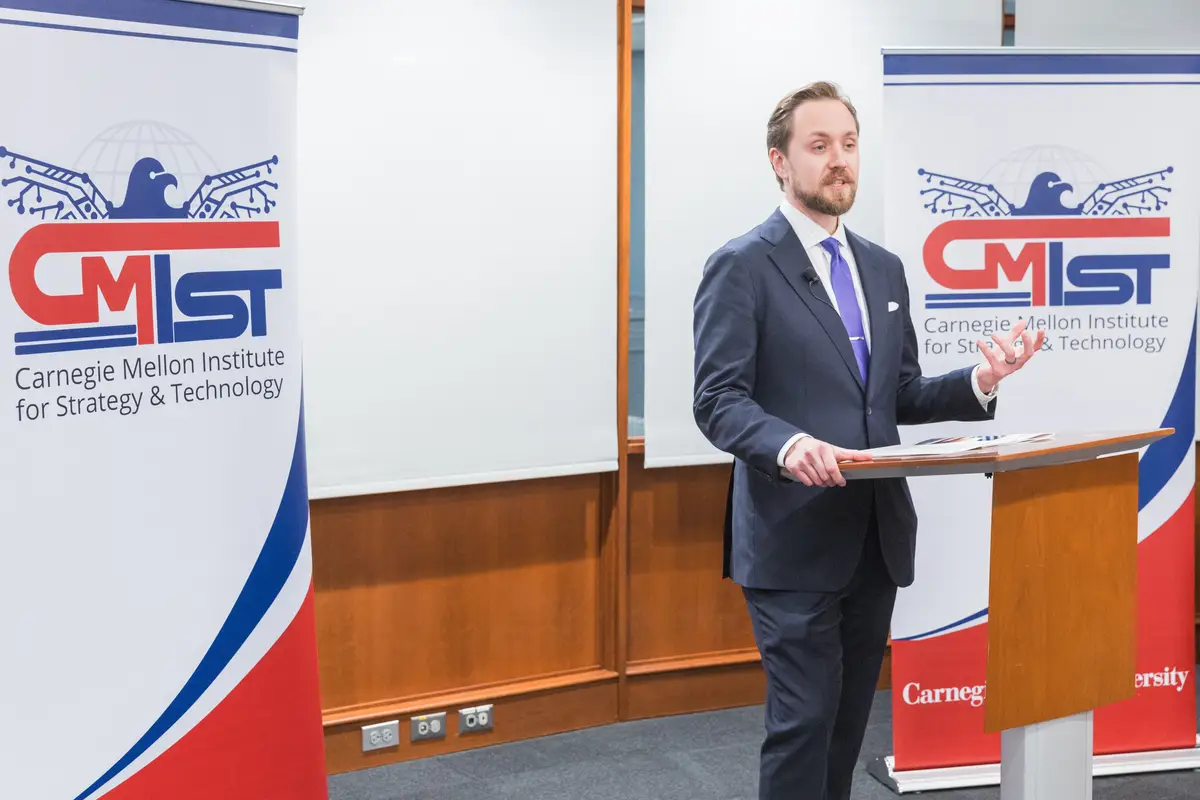
The framework, developed over two years by the Carnegie Mellon Institute for Strategy and Technology (CMIST), offers insights into how electricity and computing resources are pivotal in the geopolitical arena. As the U.S. expands its data centers and power grid, integrating security measures from the outset becomes a key priority.
Harry Krejsa, CMIST’s director of studies, describes the investment in new energy infrastructure as a “once-in-a-generation” opportunity to embed security within the grid, rather than retrofitting solutions later.
The technologies revolutionizing both military and economic fields, according to Krejsa, rely heavily on a shared industrial foundation comprising batteries, power electronics, electric motors, and embedded software.
Risk Management in Global Supply Chains
In collaboration with Phoebe Benich and Emma Stewart, Krejsa crafted a paper in partnership with the Foundation for Defense of Democracies. The research applies a defense industry strategy of prioritizing risks by separating critical “smart” components from basic “dumb” commodities.
The framework suggests that not all components require the same security level. For example, while batteries and solar panels are less risky, the smart software managing energy systems demands greater scrutiny. The “Moneyball” approach evaluates technologies based on urgency, risk mitigation potential, and competitive advantage for domestic industries.
The framework categorizes components into three policy tiers: stringent domestic control, sourcing from trusted allies, or managed global procurement. These classifications aim to maximize strategic gains while maintaining power reliability.
Influence and Adoption
Since its introduction, the framework has sparked interest across the U.S. government, with dissemination among the executive branch, Congress, and allied ambassadors. Industry leaders and tech companies are also exploring its applications for securing their sectors.
Krejsa emphasized the broader ambition of this initiative: “The nations that can build, power and secure this ‘electrotech’ foundation will hold the advantage across all of the technologies built on top of it, even as those same technologies put unprecedented capability into more hands than ever before — a paradox of concentrating foundations and diffusing power that CMIST is making a defining focus of its research.”
Read More Here