
In a world where technology constantly reshapes education, researchers are exploring the boundaries of effective learning. A recent study by Carnegie Mellon University’s Human-Computer Interaction Institute challenges the traditional view that reflection significantly enhances learning outcomes. The findings suggest that in certain contexts, practice alone may be more beneficial than the addition of reflective activities.
The Role of Practice in Learning
Carnegie Mellon researchers, including Paulo Carvalho and Michael Asher, have previously investigated methods to sustain student engagement in practice. Through “persuasive design” strategies, they encouraged students to persist despite initial failures. Carvalho notes, “When you get something wrong, a natural thing to do is to give up and move on to do something else. But if you don’t keep practicing, you don’t learn.”
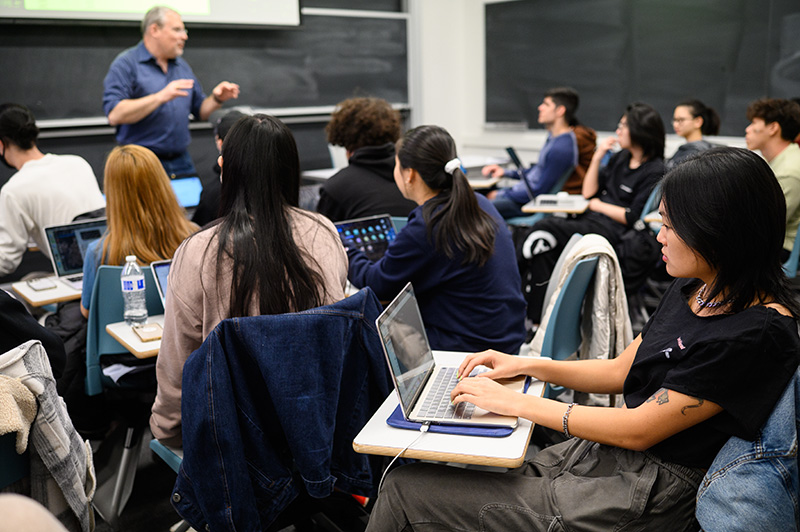
Their study employed an AI-based tool for teaching Python programming, providing immediate and personalized feedback. This approach mimics one-on-one instruction, allowing students to learn effectively through direct practice rather than traditional lectures.
Some students in the experiment progressed from one exercise to the next, while others were prompted to reflect on their mistakes by explaining what went wrong. The goal was to deepen learning through reflection.
Time Constraints and Learning Efficiency
Participants had a limited time of eight minutes to complete tasks, which revealed an interesting trade-off. Reflecting on mistakes consumed time that could have been spent on additional practice. Asher commented, “When time is limited, doing more problems, even without reflection, leads to better learning outcomes.”
Although reflection aids in understanding specific errors, it diminishes the opportunity to tackle new challenges and learn from them. Carvalho added, “At this stage, that time could instead be spent trying new things and learning new ways to solve problems.”
Intrinsic Motivation in Education
Carvalho highlights motivation as a key factor in learning. Enthusiasts learning an instrument or dance might be less deterred by setbacks due to intrinsic motivation. In contrast, students in a mandatory math class may find failures more discouraging.
“They’re just trying to get through the work, and so failure is more discouraging,” Carvalho explained. This presents a challenge for educators in maintaining student motivation.
Reevaluating Learning Methods
The study suggests that students often misconceive effective learning methods. Previous findings indicate that practice-first approaches might feel “unfair” to some, as students expect instruction before attempting problems. Carvalho noted, “This ‘unfair’ feeling is a known phenomenon where high-utility learning, like practice, feels harder and less smooth than lower-utility learning, like watching a video.”
Nevertheless, students who engaged actively in practice and learned from feedback outperformed their peers who relied on passive information intake. Asher, drawing from his experience as a math teacher, advised educators to integrate these insights into their teaching. “Don’t feel like you need to explain everything to your students before they start practicing,” he said. “Just jump in, let them make mistakes, and use those mistakes as your teaching moments.”
Carvalho and Asher will present these findings at the Learning @ Scale conference. Their paper, Benefit or Bottleneck? Assessing the Impact of Structured Reflection on Learning from AI-Driven Explanatory Feedback, is currently available as a preprint.
Read More Here




Comments are closed.