Arizona’s Emerging Role in the Expanding Space Economy
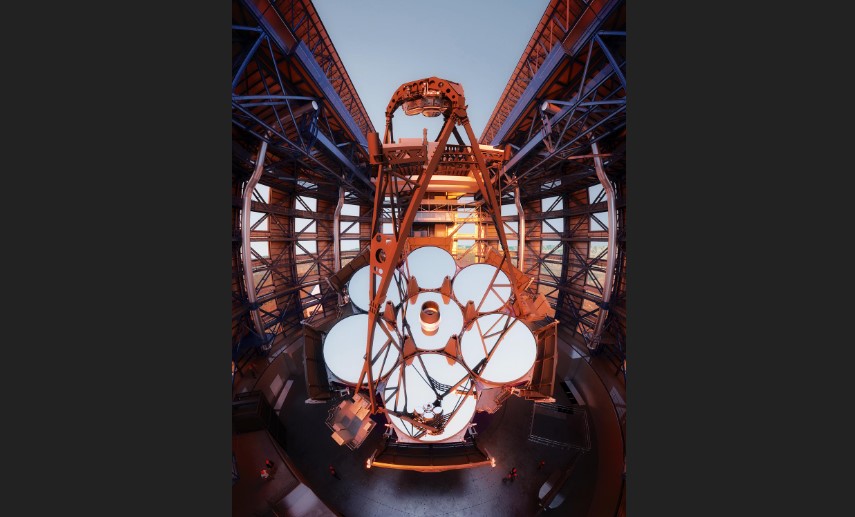
Every fall, the University of Arizona’s football stadium buzzes with the energy of fans eager for a Wildcats win. Yet, beneath the east stands, groundbreaking work is being done that stretches far beyond the confines of the Earth. The Richard F. Caris Mirror Laboratory at UArizona is crafting massive 27-foot mirrors that will one day power the world’s largest Earth-based telescope, the Giant Magellan Telescope.
This mirror lab is just one piece of Arizona’s vibrant space ecosystem. With a combination of university expertise, a thriving aerospace and defense industry, promising startups, and unique natural advantages, Arizona is ideally positioned to take advantage of the rapidly growing space economy.
Expanding Space Economy
The global space economy is growing at an unprecedented rate, reaching a record $469 billion in 2021, according to the Space Foundation. Projections by Morgan Stanley suggest that this industry could exceed $1 trillion by 2040.
Arizona is well-equipped to compete for new space investments. A 2018 Deloitte study highlighted the state’s strengths across six key areas of the space industry. Notably, Arizona is the only state with a significant presence in each category.
Industry Leaders and Local Expertise
Arizona’s appeal for space investments is further enhanced by the presence of major industry players like Lockheed Martin, Boeing, Honeywell Aerospace, and General Dynamics. Companies such as Raytheon Missile and Defense and Northrop Grumman Space Systems have significant operations in the state.
“We’re proud Arizona is home to one of Starliner’s landing locations. Arizona has all the ingredients to drive the future of space travel,” said Mark Gaspers of Boeing.
The University of Arizona and Arizona State University are at the forefront of space exploration. UArizona ranks fifth in NASA-funded activities and has played a vital role in projects like the James Webb Space Telescope. Meanwhile, ASU has been a key contributor to Mars missions and boasts a robust infrastructure for space research.
“Space is the next economic frontier,” said Jim Bell, a professor at ASU heavily involved in NASA missions.
Innovative Startups and Space Tourism
Arizona’s top talent and academic resources have also fueled a wave of innovative space startups. Katalyst Space Technologies in Flagstaff is pioneering modular spacecraft designs, while Tucson’s Paragon Space Development is working on next-generation space suits for NASA.
Space tourism is another rapidly growing sector in Arizona. Virgin Galactic plans to open a manufacturing facility in Mesa, which will create 400 aerospace jobs. Companies like Blue Origin and World View are also making strides in this area.
With its robust industrial ecosystem and leading space experts, Arizona is set to continue its leadership in space innovation.
Read the full article HERE.
Read More Here