As artificial intelligence (AI) continues to integrate into various sectors, from healthcare to everyday decision-making scenarios, researchers at Carnegie Mellon University (CMU) are investigating how AI can enhance human decision-making while maintaining the critical human elements of judgment, expertise, and accountability.
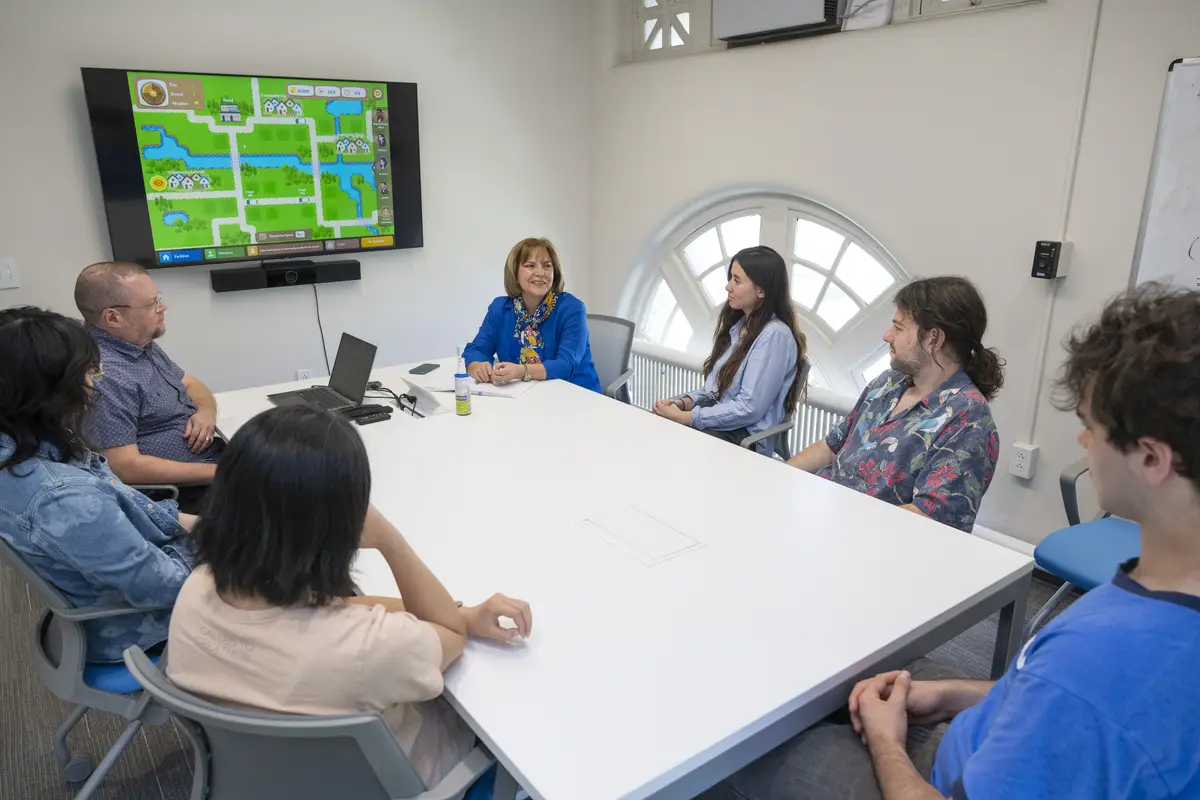
Cleotilde “Coty” Gonzalez, a professor in CMU’s Department of Social and Decision Sciences(opens in new window), emphasizes a shift towards a collaborative human-AI intelligence. Gonzalez states, “It’s what we can do together with AI that makes us smarter, more capable and more able to do things that we were not able to do before.”
Alongside Gonzalez, a team of researchers including Aarti Singh from the Machine Learning Department(opens in new window) and Anita Williams Woolley from the Tepper School of Business(opens in new window), have been examining “cognitive AI” through a series of scientific papers. These studies explore how such AI could function as a teammate to humans.
Defining Cognitive AI
Cognitive AI is distinct from generative AI models like ChatGPT, which create text based on patterns in human-generated data. It also differs from the hypothetical concept of artificial general intelligence seen in science fiction. Instead, cognitive AI draws from models of human cognition to work cooperatively with humans rather than replacing them.
“Everything I do is related to decision making, how humans make decisions,” explains Gonzalez, who also leads the Dynamic Decision Making Laboratory(opens in new window). Her work focuses on how experiences influence learning and decision-making, and the role technology plays in this process.
Cognitive AI systems initially may predict human decisions with only marginal accuracy, comparable to guessing. However, as they observe more decisions, they learn and improve significantly, sometimes achieving up to 95% accuracy in controlled environments.
Collaborative Human-AI Efforts
In healthcare, human radiologists and AI systems can work together to assess medical scans for cancer, minimizing the risk of false negatives. Aarti Singh emphasizes the importance of designing systems to accommodate the consequences of different errors. For example, AI might be used to highlight cases a radiologist might miss, rather than replacing human expertise.
In a 2022 study in The Lancet Digital Health(opens in new window), human radiologists working with AI showed a 2.6 percentage-point increase in detecting cancers, illustrating how even small improvements can have significant impacts at scale.
Furthermore, AI-human collaboration can be crucial in delivering healthcare information to resource-limited groups, ensuring those most at risk receive attention from healthcare workers rather than solely relying on AI for direct communication.
In organizational settings, AI can assist in identifying expertise, coordinating team efforts, and ensuring goal alignment. Anita Williams Woolley notes that AI can help identify the right experts and facilitate collaboration, while ensuring that team goals are clear and aligned, which is crucial for effective teamwork.
Challenges and Opportunities
Gonzalez and her co-researchers are aware of potential challenges with human-AI collaboration, such as the risk of over-reliance on AI like ChatGPT. Woolley highlights the importance of using AI wisely to enhance rather than weaken team dynamics.
Trust is a significant factor, as humans are often less forgiving of AI errors. Singh points to AI-driven cars as an example, where a single incident can heavily impact public trust, despite positive safety metrics.
Gonzalez advocates for AI systems that emphasize human-AI collaboration, stressing the importance of designing systems where roles are appropriately divided between humans and AI. “The important question is not whether humans or AI should decide alone, but how we design systems where they work together effectively and responsibly,” she notes.
Building AI with transparency, accountability, and collaboration in mind is crucial for success. As Gonzalez concludes, “We should not deny the power of technology or avoid integrating with it. What matters is creating systems that enhance human capability, reflect human values and help people and AI make better decisions together.”
Read More Here