
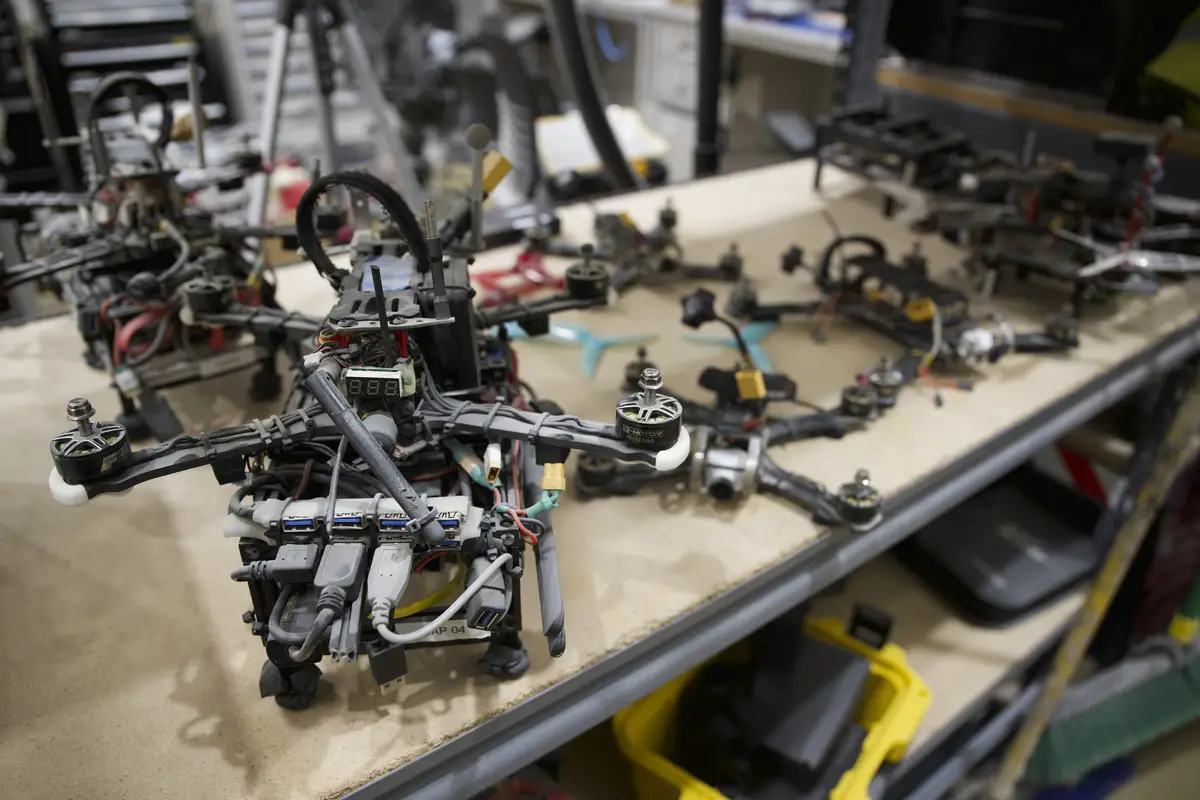
In the midst of chaos following natural disasters or mass casualty events, response teams often struggle to manage the risks involved. Carnegie Mellon University (CMU) is spearheading an initiative to use drone swarms, paired with AI systems, to mitigate these dangers and improve emergency response efforts.
Enhancing Emergency Response Through AI-Driven Drones
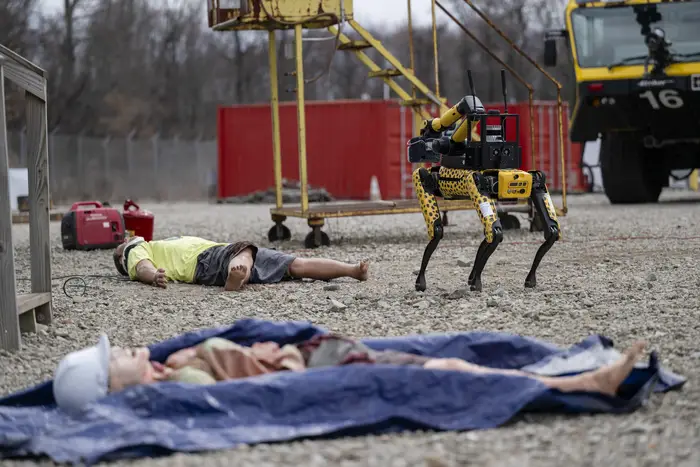
At the heart of CMU’s research is the development of AI systems that enable drone swarms to autonomously evaluate human vitals from a distance. This project is a part of the Defense Advanced Research Projects Agency’s (DARPA) Triage Challenge, which seeks to enhance emergency responses in critical scenarios.
Artur Dubrawski, Alumni Research Professor of Computer Science at CMU’s Robotics Institute, described the initiative: “Our goal is to identify who needs the most help and what kind of help they need.” By utilizing drone swarms, researchers can assess a victim from various angles, generating comprehensive data.
The team plans to use drones of different sizes and capabilities. Smaller drones can navigate confined spaces, while larger ones can carry substantial equipment like cameras. These drones can detect vital signs from a distance, even capturing slight facial color changes to estimate heart rates.
Dubrawski points out that although some technologies have existed for years, they faced limitations in real-world conditions, such as weather and visibility challenges. “Nothing we did in the lab worked as advertised in the field,” he stated. After two years of development, the team has devised robust AI methods that function effectively outside controlled environments.
Currently, the models can operate in complex settings, assessing individuals in darkness, smoke, or when partially obscured by debris. Dubrawski notes, “We’re still a few years away from deploying it, but we can make this work in the real world.”
Advancing Search and Rescue with Drone Technology
Systems scientist Wennie Tabib from CMU’s Resilient Intelligent Systems Lab envisions drones assisting in navigating hazardous environments like caves or earthquake rubble. “Cave rescues happen fairly rarely, but when it does happen it can be catastrophic,” Tabib explained, referencing the challenges faced during the Thai cave rescue.
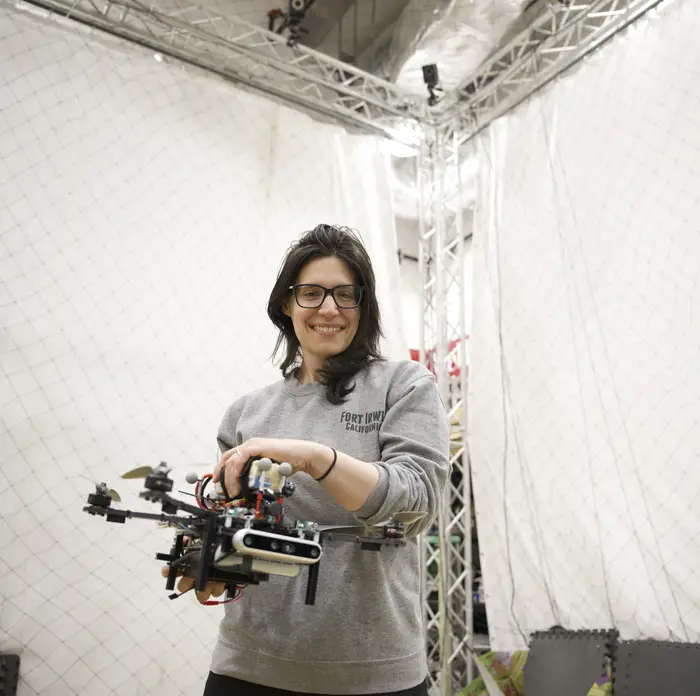
Time is critical in rescue missions, as survival rates drop significantly after 72 hours. Tabib envisions miniaturized drones that can rapidly map disaster scenarios, enhancing the speed and safety of search operations.
However, challenges such as drone size and battery life persist. Tabib’s team is working on reducing these limitations by making drones smaller and lighter. “The algorithms have to be very computationally efficient,” she remarked, emphasizing the need for quick and comprehensive searches.
Communication is another hurdle, as remote environments lack internet connectivity, requiring data to be stored locally for later retrieval. The team is also enhancing drones’ capabilities to map environments more intricately, including innovative techniques like inverting drones to capture ceiling images without increasing payload.
Tabib stressed the broader applications of drone technology beyond caves, highlighting the interest in using drones for flood rescues amid rising climate-related disasters. “We’ve seen entire towns go underwater… Having a swarm of drones that conduct an automated search for survivors is an efficient solution,” she said.
Collaboration is crucial to the success of these projects. Tabib acknowledges the collective efforts at CMU’s Robotics Institute and the National Robotics Engineering Center, saying, “We’re all driving toward the same vision. It’s definitely a team effort.”
Read More Here



Comments are closed.