Pittsburgh: A Hub for AI and Healthcare Innovation
Pittsburgh is poised to become a leader in the fusion of artificial intelligence and healthcare, as evidenced by the discussions at the 2025 Global Innovation Summit. Carnegie Mellon University (CMU) played a prominent role, with experts like Pradeep Ravikumar and Carl Kingsford contributing to the dialogue on AI’s integration into patient care.
“When you talk about AI making an impact of discovering a new drug, you need to talk with the physicians who have spent decades learning the ins and outs of that particular disease,” emphasized Kingsford, who is a Herbert A. Simon professor of computer science and director of the Center for Machine Learning and Health. He highlighted CMU’s computational biology Ph.D. program as a crucial intersection for advancing new therapies and treatments.
Ravikumar expressed optimism about the potential of generative AI in enhancing medical tools. “Gen AI has done really amazing things — listening to patient-doctor interactions and transcribing them so providers don’t have to, for example,” said Ravikumar, who is involved with the machine learning program at CMU’s School of Computer Science. He stressed the importance of tailoring AI models to meet doctors’ specific needs.
Innovative Approaches to Brain Health
Further discussions at the summit delved into how AI and machine learning can inform patient care, particularly in brain health. A diverse panel of experts shared insights into this complex field.
“We want to figure out how the body influences the brain and its cognitive function so we can understand how to optimize treatments,” stated Jana Kainerstorfer, a CMU professor of biomedical engineering. Her research includes studying dolphins to gain insights into brain function without continuous oxygen, aiming to apply these findings to human brain trauma care.
Kainerstorfer emphasized the need for advanced devices, such as improved ventilators, to enhance cognitive performance in humans. Meanwhile, Andrew Li from CMU pointed out the necessity for improved communication between medical professionals and AI models. “I think what’s missing right now is connecting the medical problems to the AI methods,” said Li, an assistant professor at the Tepper School of Business.
Financial Perspectives on Health Tech
A session dedicated to the financial implications of AI in health technology highlighted both challenges and opportunities for investors. Business leaders discussed the dynamic landscape and its economic potential.
“The speed of innovation is hastening so quickly, we are building the future economy with the companies we build today,” remarked Meredith Meyer Grelli, from CMU’s Swartz Center for Entrepreneurship. She urged the Pittsburgh region to embrace its strengths in machine learning, AI, and healthcare to drive future economic development.
Grelli advised startup founders to carefully consider potential investors’ philosophies and ensure alignment with their growth strategies before committing.
Pennsylvania’s Role in AI Innovation
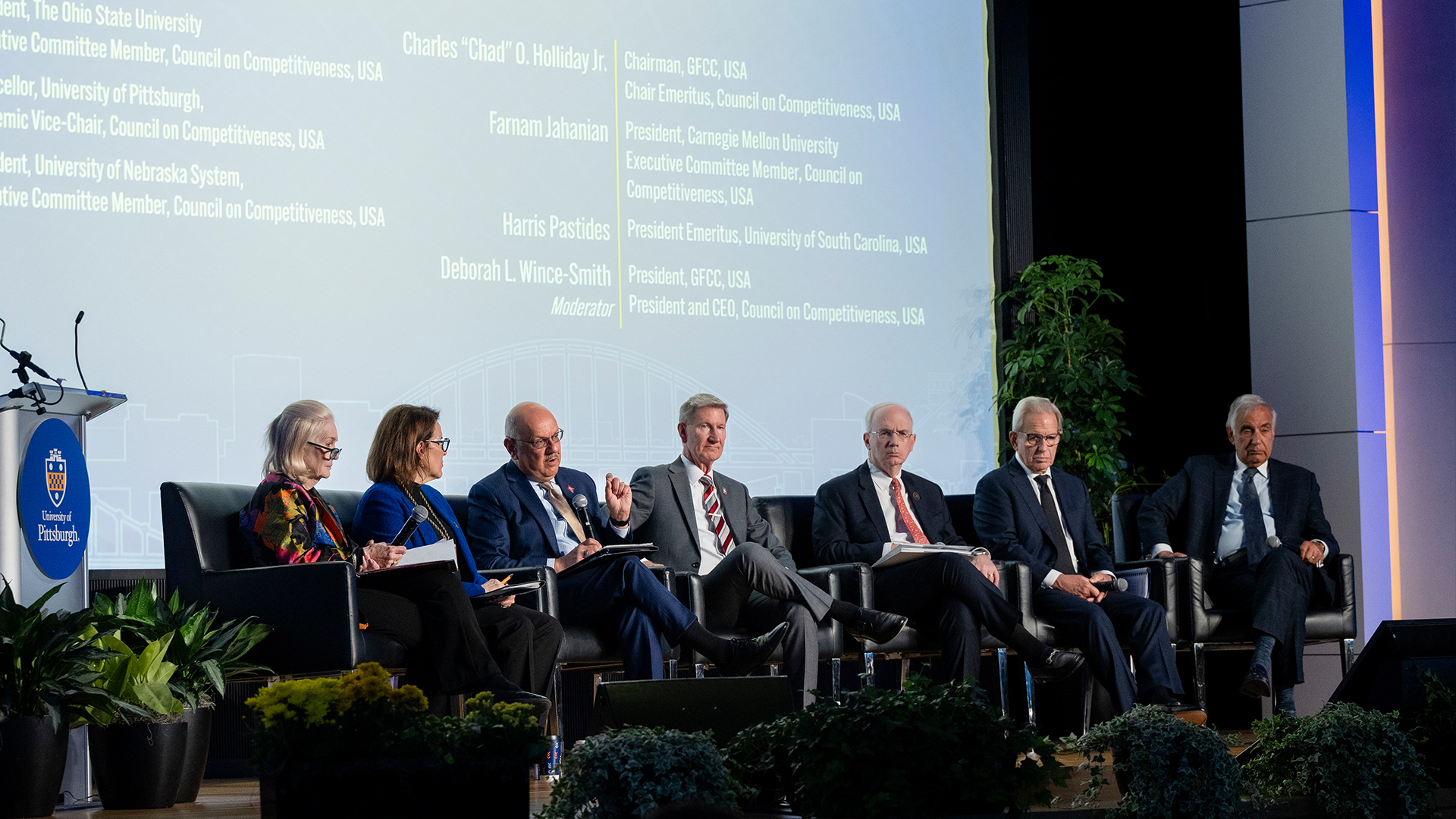
The summit was also marked by a keynote from Pennsylvania Governor Josh Shapiro, introduced by CMU President Farnam Jahanian, who praised the state’s commitment to innovation. “This event underscores the incredible value of place-based economic development and the transformative role of innovation ecosystems,” Jahanian noted.
Governor Shapiro highlighted Pennsylvania’s strategic advantages in leveraging AI for economic growth. “In government, in business, in academia, in health care, we cannot afford to fall behind and let others capitalize on artificial intelligence,” Shapiro asserted. He emphasized the state’s readiness to lead in AI advancements, supported by collaborations between institutions like CMU and the University of Pittsburgh.
Read More Here