In the quest to unravel the mysteries of the universe, artificial intelligence is proving to be an invaluable ally. At the forefront of this technological shift is Carnegie Mellon University, where a new program seeks to harness the power of AI, statistics, and astrophysics to push the boundaries of cosmological research.
The Keystone Astronomy & AI (KAAI) Visiting Fellows Program, backed by the Simons Foundation, is designed to propel the integration of AI into astronomical and cosmological studies. This ambitious initiative offers an international postdoctoral fellowship, encouraging a fusion of expertise across disciplines.
Selected KAAI Fellows will spend a month at the McWilliams Center for Cosmology & Astrophysics, where they’ll collaborate with dual mentors from astrophysics and AI/statistics. The program focuses on solving pivotal challenges at the crossroads of machine learning and astronomy. Each residency concludes with a practical workshop aimed at disseminating innovative software, datasets, and workflows to the wider scientific community.
Carnegie Mellon graduate students will also benefit from this initiative by working alongside visiting fellows, contributing to shared resources and gaining hands-on experience in applying AI to complex astrophysical problems.
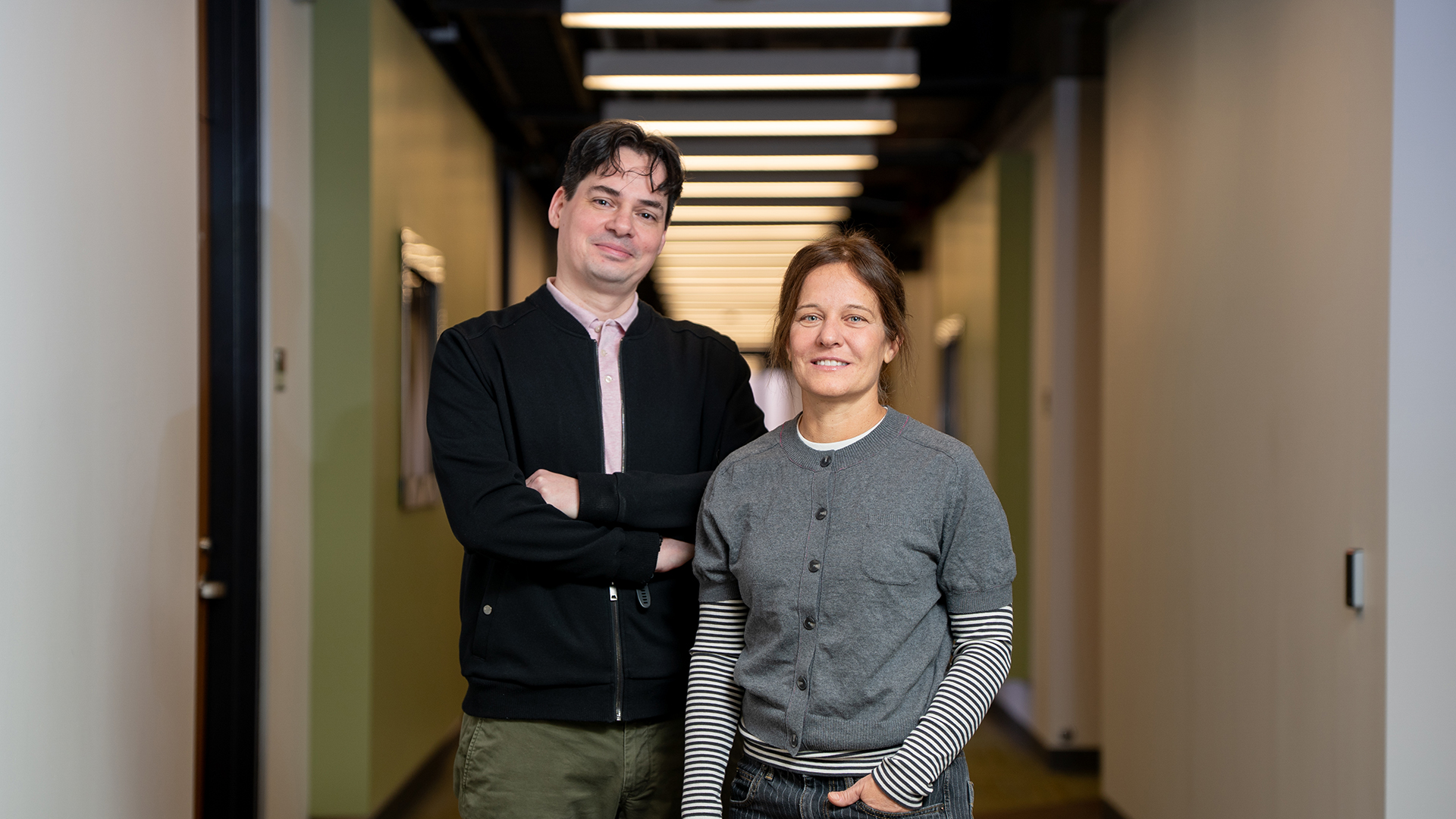
“AI is changing how we do science, and astronomy is where its impact will be felt first and fastest,” said Tiziana Di Matteo, director of the McWilliams Center and the program’s principal investigator. “With KAAI Fellows, we’re turning the McWilliams Center’s cross-disciplinary strength into a global training engine — bringing visiting scholars together with our machine-learning and astrophysics teams to develop methods that move the field and the way science is done.”
The program capitalizes on Carnegie Mellon’s collaborative environment, involving departments such as the Department of Physics, the School of Computer Science, the Department of Statistics & Data Science (SDS), and the Software Engineering Institute. Partnerships extend to the Pittsburgh Supercomputing Center and the University of Pittsburgh’s Department of Physics and Astronomy.
Central to KAAI’s success is the synergy among the McWilliams Center, the Department of Machine Learning, and the STAtistical Methods for the Physical Sciences Research Center (STAMPS). This collaboration fosters the development of data science tools essential for turning vast cosmic data into groundbreaking scientific discoveries.
Over the next three years, the program will host six visiting fellows for one-month residencies. Prospective fellows, whose projects merge AI with theoretical and computational astrophysics, will soon be able to apply. The dual mentorship approach is designed to foster a deep interdisciplinary partnership between domain experts and AI specialists.
Barnabás Póczos, an associate professor in Carnegie Mellon’s Department of Machine Learning, will lead as the program’s AI and machine learning director. He collaborates with faculty, researchers, and students to develop shared computational tools and resources.
“It is exciting to see how the newly developed machine-learning methods are transforming the way we approach science,” Póczos remarked. “In astrophysics particularly, these tools are reshaping how we explore vast and complex datasets, enabling us to extract subtle signals, identify rare and interesting events, accelerate scientific simulations and test physical theories at unprecedented scale. By augmenting human intuition with data-driven discovery, machine learning has the potential to dramatically accelerate our understanding of the universe and uncover phenomena that would otherwise remain hidden.”
Carnegie Mellon’s history of collaboration between its Machine Learning Department and the McWilliams Center has resulted in impactful research at the intersection of cosmology and AI, driving forward data-driven discoveries in physical sciences.
Upon completing the program, fellows will have real-world experience in applying AI to astrophysics and will establish lasting professional connections across disciplines.
Each KAAI Fellow will also co-organize a hands-on workshop, showcasing advanced AI techniques in astronomy. These workshops aim to accelerate the global adoption of innovative tools, fostering a network of researchers equipped to tackle fundamental questions about the universe.
“We’re working to develop a global community of international experts in subfields related to AI and astronomy,” Di Matteo stated. “Supported by Simons, the workshops will bring together experts from machine learning and astronomy to drive the field forward.”
Read More Here