
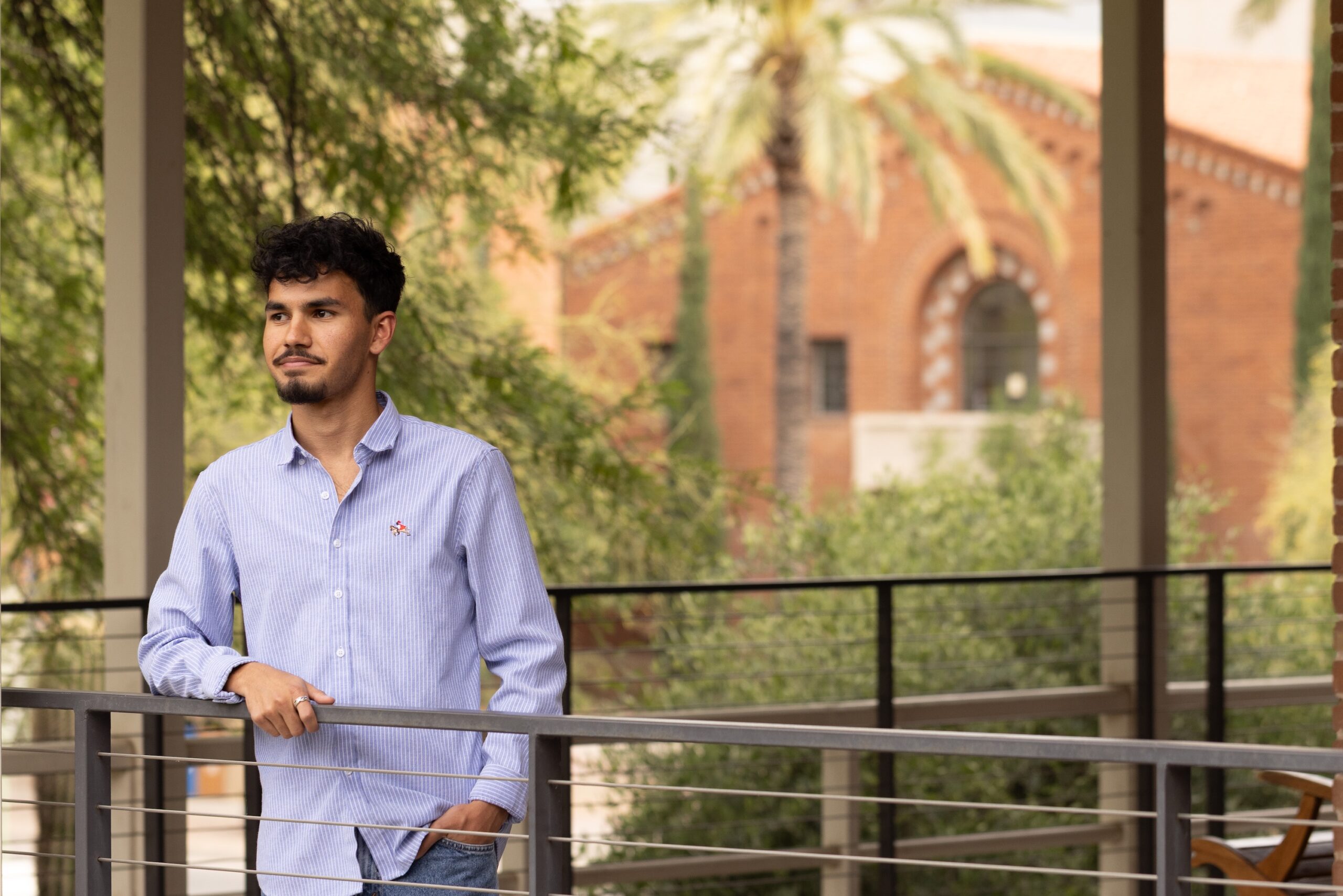
The Unconventional Journey of an Undergraduate: Aidan Rains
While the typical undergraduate experience might involve juggling classes and social activities, Aidan Rains stands out for his exceptional multitasking in the realm of academia. Graduating this May with a bachelor’s degree in psychology, Rains has carved a unique path, transitioning from research assistant to preceptor, and soon, to a peer mental health coach.
Initially setting his sights on psychiatry, Rains quickly realized his true interest lay not in the required chemistry and biology courses but in the clinical and counseling aspects of psychology. This realization led him to fully commit to psychology, shaping his undergraduate journey and future career.
A Pivotal Course
During his sophomore year, Rains enrolled in an unconventional clinical psychology course taught by Zach Cohen, an assistant professor of clinical psychology. This course, pivotal to his career, employed role-plays on real mental health topics like anxiety, depression, and trauma, emphasizing growth and feedback over perfectionism.
“If you’re passionate about something, make sure that people see that, and they’ll offer you opportunities. Reach out to professors. That’s what professors want to see – initiative and passion.” – Aidan Rains
Rains found the experience invaluable, noting, “Honestly, it’s something you don’t get until grad school, at least, from what I’ve heard.” His proactive approach led him to inquire about research opportunities with Cohen, who eventually created a research assistant position specifically for him.
From Student to Preceptor
After joining Cohen’s lab, Rains was invited to return to the clinical psychology course as a preceptor. In this role, he demonstrated role-plays, graded assignments, and offered feedback, finding fulfillment in seeing students grow in confidence and skill.
“At the start of the class, you’d see how almost shy some of these students were. But by the end, you’d see how much more confident they became, and how much more skilled they were in the role-plays,” Rains observed.
Becoming a Peer Mental Health Coach
Rains’s journey continued as he became part of a peer mental health coach program led by Julia Yarrington. After 12 weeks of training, he now works under the supervision of graduate students, ready to coach peers through coping strategies for anxiety and depression.
His role as a peer coach is part of a newly launched study at the University of Arkansas, highlighting the practical application of his skills. Reflecting on the training, Rains noted how he mirrored the growth he once saw in his own students.
Looking Ahead
Rains is set to graduate a year early, having strategically earned college credits in high school and taken additional courses to focus on his psychology studies. In August, he will begin a master’s program in clinical mental health counseling while continuing his work in the lab and taking on a clinical research assistant position in the College of Veterinary Medicine.
Words of Advice
For students looking to follow a similar path, Rains emphasizes the importance of initiative. “If you’re passionate about something, make sure that people see that, and they’ll offer you opportunities,” he advises. His conversation with Cohen opened doors to lab work, teaching roles, and coaching experiences, underscoring the value of reaching out and showcasing one’s passion.
Read More Here
![Arizona Innovation Challenge 2022: Apply Now Through August 31[embed]https://www.youtube.com/watch?v=V7vTUTILFno[/embed]](https://realnewsfast.com/wp-content/uploads/2026/05/Arizona-Innovation-Challenge-2022-Apply-Now-Through-August-31embedhttpswwwyoutubecomwatchvV7vTUTILFnoembed-300x180.png "Arizona Innovation Challenge 2022: Apply Now Through August 31[embed]https://www.youtube.com/watch?v=V7vTUTILFno[/embed]")






Comments are closed.