The Quest for Accurate Data in Flood Insurance: Insights from Bangladesh
In today’s era of technological advancements, the abundance of data from sensors and satellites is reshaping how we address challenges in various sectors. However, the pressing question remains: Are we selecting the right data and utilizing it effectively?
Researchers at the University of Arizona have delved into this question within the context of flood insurance, potentially transforming disaster response and recovery efforts.
A recent study in Earth’s Future simulated a flood insurance program in Bangladesh, comparing real-world flood datasets from five sources. The findings highlight that the data type chosen impacts the accuracy and speed of insurance payouts, as well as the certainty in projecting future payouts, which directly affects program costs.
Leading the study was Alex Saunders, a Ph.D. candidate from the University of Arizona’s School of Geography, Development & Environment, alongside Kevin Anchukaitis, director of the Laboratory of Tree-Ring Research, and several other experts from various institutions, including Virginia Tech and the Bangladesh University of Engineering and Technology.
Saunders believes their research could aid individuals in flood-prone regions globally by guiding insurance providers in selecting optimal data, thereby enhancing disaster response and financial protection.
“More and more floods are happening every year, and that brings with it an increase in the total damage they cause,” Saunders noted. “In the case of insurance, creating a more accurate tool that helps people receive more timely payouts could help them get through some of the worst times of their lives.”
Earth observational data, sourced from satellites and ground-based sensors, is increasingly vital for governments, nonprofits, and industries like agriculture and energy. This data supports sustainable resource management, environmental change predictions, and natural disaster responses.
For flood insurance, companies often use proxies—indirect indicators like rainfall levels or river height—to assess damage. These are combined into indices that trigger payouts when certain thresholds are met. Despite their growing use, Saunders pointed out that the data sources for these indices are rarely thoroughly tested.
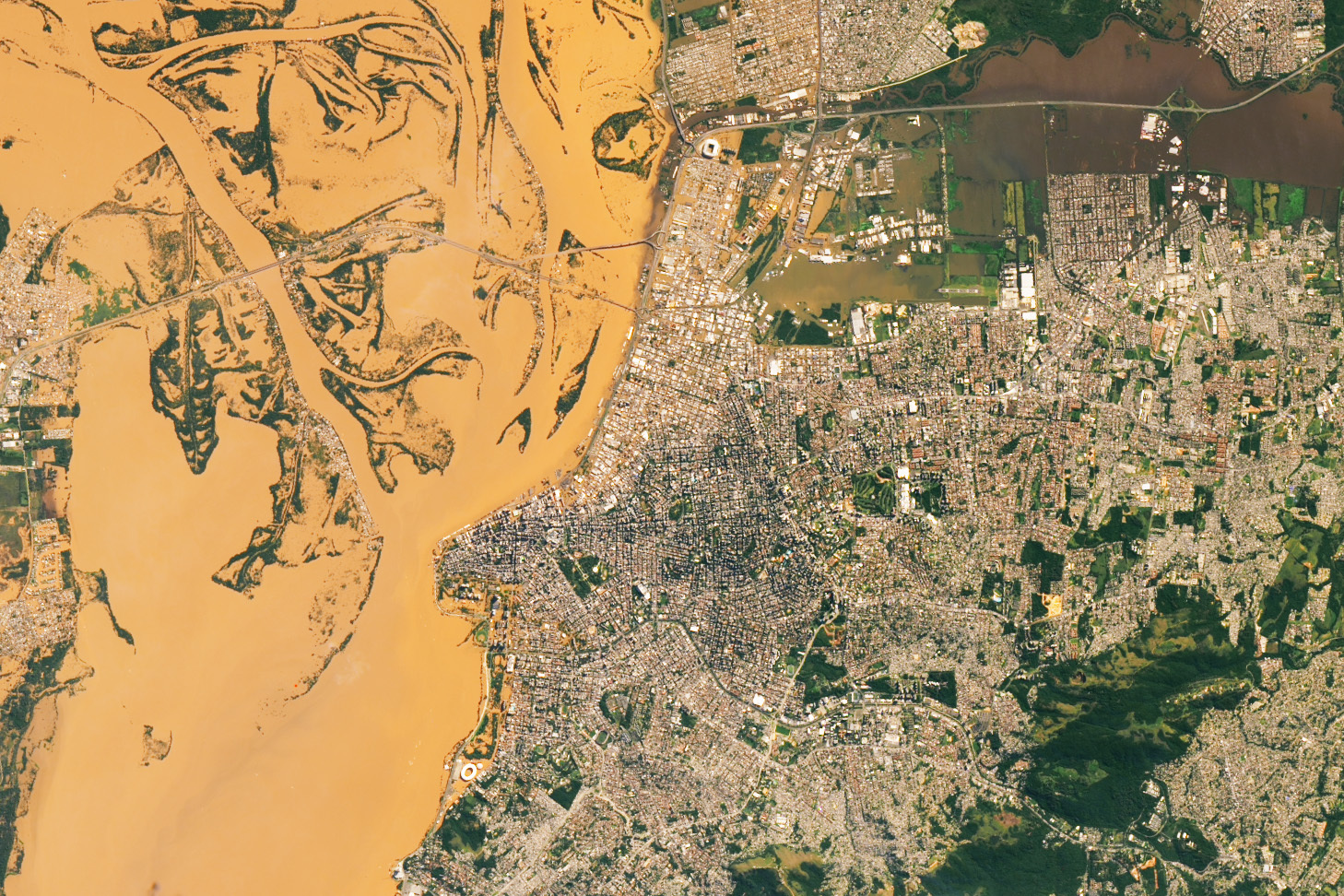
To tackle this, Saunders and his team analyzed data from Bangladesh’s monsoon seasons between 2004 and 2023. They evaluated rainfall, river levels, and flood maps from the national flood agency, along with two satellite data types. One method used traditional surface water readings, while the other employed an AI model tailored to track monsoon floods in Bangladesh. The AI model effectively tracked flood progression, unlike the traditional method, which faltered under heavy cloud cover.
The researchers assessed the five methods by examining 20 years of insurance triggers, payout speeds, and predictability. Their findings revealed no single dataset consistently outperformed others, though data choice influenced results. Combining or comparing multiple sources improved confidence in payout decisions.
“A stream gauge can tell us how high a river is, but that doesn’t automatically mean there’s flooding – or that people are nearby and at risk,” Saunders explained. “Satellites can show the surface of a whole region, but rainfall data can be just as useful, even though rain doesn’t always lead to floods if the water flows somewhere else. That’s why it can take multiple datasets to really understand floods.”
One of the study’s most notable findings was the AI-powered satellite model’s capacity to detect floods during persistent cloud cover. This approach triggered payouts about a week earlier on average than the traditional method and reduced payout uncertainty by more than 20%, potentially lowering insurance costs for customers.
Saunders advises that index-based flood insurance programs explore a wide range of data sources before implementation, utilize multiple indices to minimize missed or unnecessary payouts, and consider innovative technologies like AI for improved accuracy and timeliness.
“Insurance providers may be guided in their decision making based on what data is most easily available,” Saunders remarked. “But just because a specific data set is easily available or based on the newest technology, doesn’t mean it’s the right one for a given scenario. People should consider and compare the full range of available information to look for the best solutions.”
The urgency for more accurate insurance systems is evident. From 2000 to 2023, only 16% of the $1.77 trillion in global economic flood losses were insured, leaving the majority of costs to be absorbed by governments, businesses, and households. Accurate and timely information is crucial for effective relief and recovery in flood-impacted communities.
By leveraging various Earth observational data sources, Saunders emphasizes that governments, insurers, and organizations could make pivotal, life-changing decisions, provided the data is used judiciously.
Read More Here