Michigan Communities Benefit from $211,000 in Historic Preservation Grants
In a move to bolster local preservation efforts, the Michigan Strategic Fund has announced the allocation of $211,000 in grants to six communities across Michigan. The funding, provided through the federal Historic Preservation Fund’s Certified Local Government (CLG) program, is set to aid the cities of Flat Rock, Jackson, Lansing, Linden, Niles, and Pontiac in achieving their preservation and community planning objectives.
LANSING, Mich. – “Every year through the Certified Local Government grant program, SHPO is afforded the unique opportunity to be able to financially support local preservation efforts,” stated State Historic Preservation Officer Ryan M. Schumaker. “This grant funding in addition our larger CLG program provide key tools to help local communities preserve what makes them unique. We are pleased to support this year’s awardees as they continue to work to tell a more complete story of their communities.”
The Certified Local Government program, managed by the State Historic Preservation Office in collaboration with the National Park Service, is designed to promote historic preservation efforts at a grassroots level. Participation in this program opens doors for communities to receive specialized support and technical assistance.
Communities engaged in the CLG program are eligible for annual grants from the U.S. Department of the Interior, overseen by the SHPO, which can be applied to various preservation activities, including historic surveys, nominations for the National Register of Historic Places, and the rehabilitation of historic structures.
Grant Recipients and Their Projects
City of Flat Rock is utilizing the grant to employ a preservation consultant to develop comprehensive design guidelines for its future local historic district. This initiative is set to provide the necessary tools for guiding future preservation activities.
City of Jackson will collaborate with the National Alliance of Preservation Commissions to host a Commission Assistance and Mentoring Program (CAMP). This training will aim to enhance the city’s management of its historic districts. “The City of Jackson is excited to receive funding from SHPO as part of the CLG grant program,” expressed Cory Mays, the city’s grant coordinator.
City of Lansing plans to conduct a historic resource survey in the Espanore subdivision of the Westside Neighborhood. This survey aims to collect vital data about the area’s historic resources, aiding in future decision-making. Andy Fedewa, principal planner for the city, remarked on the significance of this survey for the community.
City of Linden will update its historic preservation design guidelines to align with current best practices, with a focus on clarity for commissioners, staff, and the public. City Clerk Kristyn Kanyak highlighted the impact this will have on supporting property and business owners in the historic district.
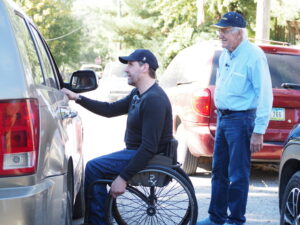
City of Niles intends to improve accessibility at the Fort St. Joseph Museum, enhancing its capacity to host educational programs. Christina H. Arseneau, director of the Niles History Center, expressed excitement about making the landmark more accessible.
City of Pontiac will create updated design guidelines for its downtown historic district to ensure alignment with preservation best practices. Lisa P. Campbell, director of strategic partnerships, emphasized the importance of these guidelines in protecting Pontiac’s historic character.
The Old Town Commercial Association in Lansing will prepare new design standards to support development and façade grant programs in the North Lansing Historic Commercial District. Executive Director James Lenon expressed gratitude for the grant, noting its role in preserving Old Town’s unique character.
For more information on the CLG program and funding opportunities, visit the Certified Local Government Program page.
Federal Credit
This material was produced with assistance from the Historic Preservation Fund, administered by the National Park Service, Department of the Interior under Grant Number P26AF00517. Any opinions, findings, and conclusions or recommendations expressed in this material are those of the author(s) and do not necessarily reflect the views of the Department of the Interior.
This program receives Federal financial assistance for identification and protection of historic properties. Under Title VI of the Civil Rights Acts of 1964, Section 504 of the Rehabilitation Act of 1973, and the Age Discrimination Act of 1975, as amended, the U.S. Department of the Interior prohibits discrimination on the basis of race, color, national origin, disability, or age in its federally assisted programs. Michigan law prohibits discrimination on the basis of religion, race, color, national origin, age, sex, marital status, or disability. If you believe you have been discriminated against in any program, activity, or facility as described above, or if you desire further information, please write to:
Chief, Office of Equal Opportunity Programs
United States Department of the Interior
National Park Service
1849 C Street, NW, MS-2740
Washington, DC 20240
About the State Historic Preservation Office
Focused on the historic preservation of culturally or archaeologically significant sites throughout the state, Michigan’s State Historic Preservation Office’s main function is to provide technical assistance to local communities and property owners in their efforts to identify, evaluate, designate, interpret and protect Michigan’s historic above- and below-ground resources. SHPO also administers an incentives program that includes state and federal tax credits and pass-through grants available to Certified Local Governments.
To learn more about the State Historic Preservation Office and the Certified Local Government program, visit https://www.miplace.org/historic-preservation/.
Read More Here