
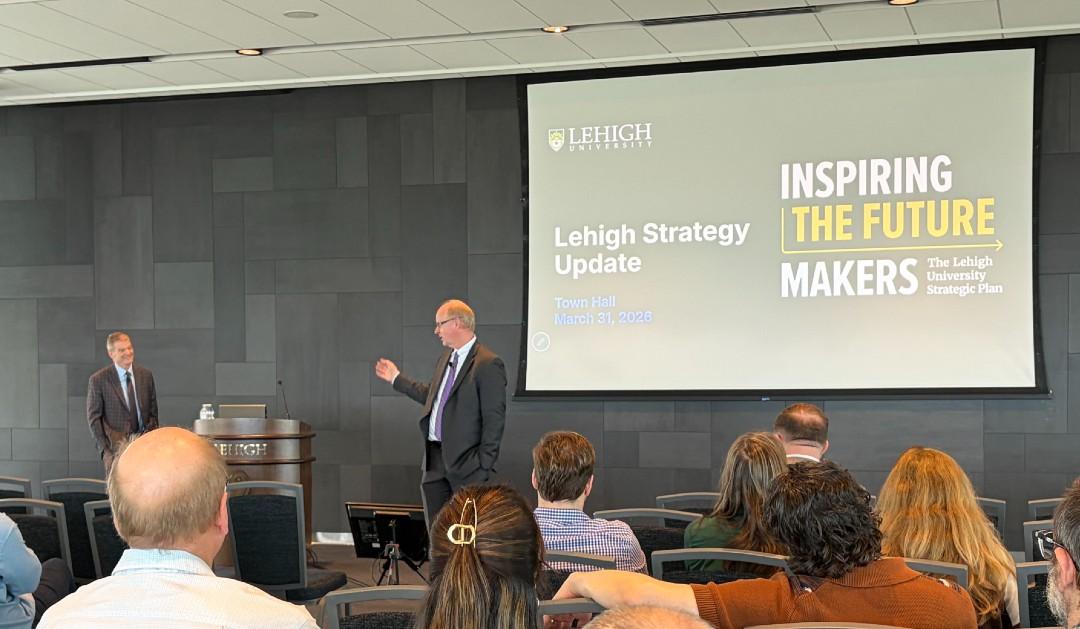
University Research Adapts to External Challenges
In an era of shifting priorities and financial uncertainties, research initiatives at the university demonstrate both resilience and adaptability. Provost Nathan Urban highlighted the institution’s efforts to maintain its research momentum. “The good news is we are submitting research proposals at a rate that would predict this year will be about the same or slightly ahead of last year,” he stated, acknowledging the proactive approach to new research opportunities.
Despite these efforts, Urban pointed out a downward trend in research expenditures, primarily due to delays in federal funding. He observed, “We are expecting that we will see a decline in research expenditures this year, not because proposals aren’t being submitted, but because decisions are slower and funding is not coming through at the same rate.” The university continues to align its goals with national priorities, with a particular focus on AI-driven research.
Successes have not been absent, as seen in the increase in National Academy memberships and the ongoing enhancement of research facilities.
AI’s Role in University Transformation
Artificial intelligence is playing a pivotal role in transforming university operations and academics. Urban discussed various initiatives to integrate AI across the university, from improving administrative tasks like contract reviews to enhancing student advising systems. New guiding principles have been established for the ethical use of AI.
Urban noted an interesting trend where students appear more advanced in utilizing AI than faculty, which has prompted investments in faculty training and curriculum redesign, including AI-focused transformation grants.
Innovative Education for the Future
Dom Packer, vice provost for educational innovation and assessment, emphasized the need for clear integration of new teaching methods and AI in classrooms. “Students should not live in a world of ambiguity about how and when and why these AI tools should be used in a given course,” Packer explained.
The unification of the Center for Innovation in Teaching and Learning with the Office of Educational Innovation and Assessment is aimed at providing comprehensive support for faculty. Packer highlighted the success of data-driven educational interventions and the growth of the FYRE (First-Year Rossin Engineering) program. The program’s goal is to involve students in engineering through hands-on and collaborative learning experiences, with plans to expand it to all first-year engineering students by 2028.
Anticipating the Future
As the university looks ahead, leaders emphasize the need for continued adaptability to technological advancements and changing external conditions. The Inspiring the Future Makers strategy is designed to be dynamic, relying on active engagement from the university community.
For more information, watch the Town Hall recording, explore Year Three Accomplishments, and check out the Future Maker Grants for opportunities to advance the Inspiring the Future Makers strategy.
Read More Here






Be First to Comment