A New Blueprint to Boost U.S. Semiconductor Industry Unveiled
PHOENIX, AZ (December 8, 2022) — In a move aimed at enhancing the United States’ position in the global semiconductor industry, a broad coalition of stakeholders from various sectors released a strategic plan designed to improve competitiveness and reinforce supply chain resilience.
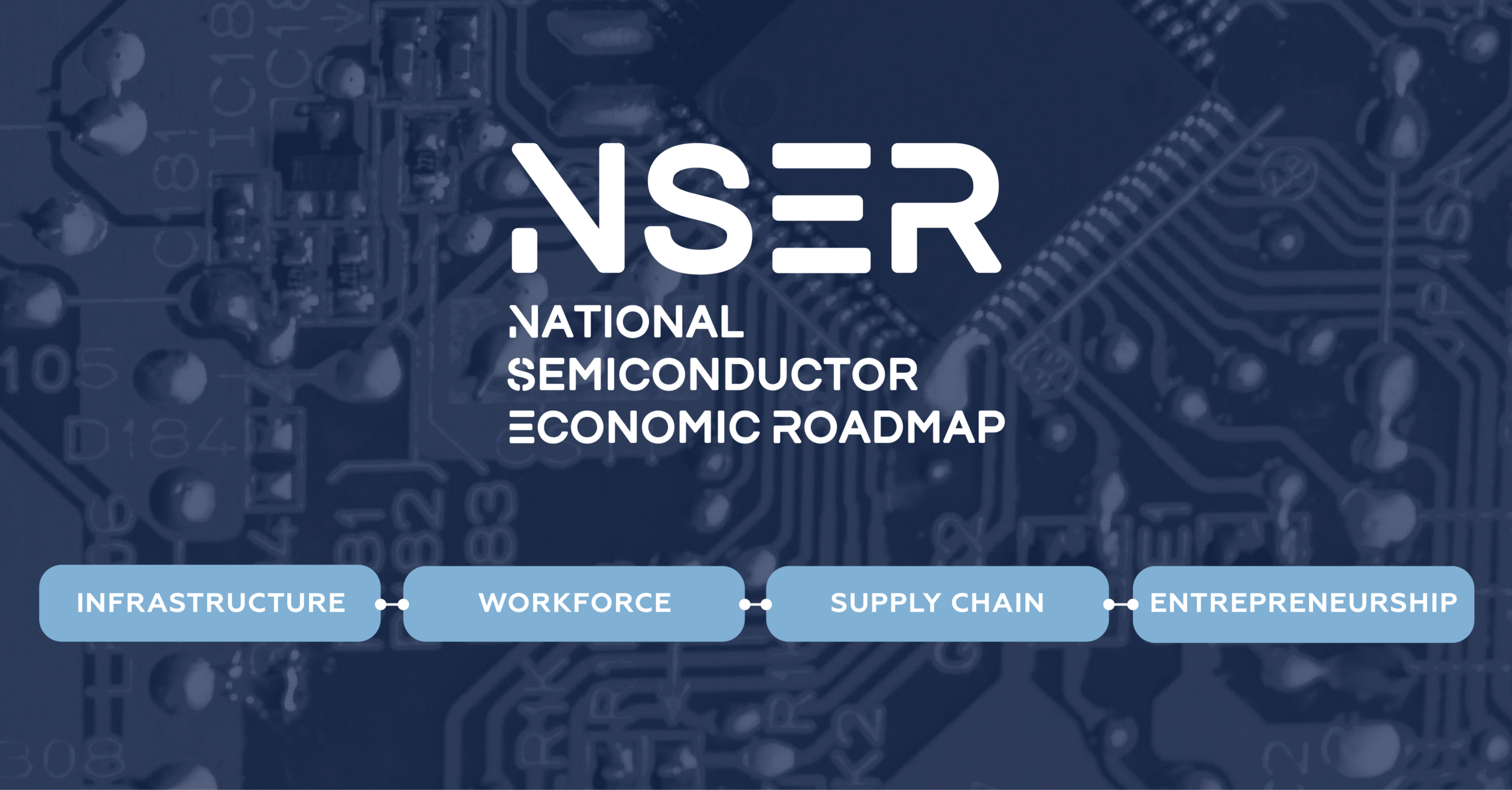
The National Semiconductor Economic Roadmap (NSER) outlines a comprehensive ten-year strategy focused on innovation in four key areas: infrastructure, supply chain, workforce, and entrepreneurship.
Arizona’s semiconductor ecosystem is becoming a center of U.S. advanced manufacturing, and Intel is proud to have our hand in driving the actions and investments within the state over the past 40 years to help advance the frontier of semiconductor innovation in the U.S.,
noted Tom Rucker, Vice President at Intel Corporation, Technology and Manufacturing Group. Intel applauds the publication of the National Semiconductor Economic Roadmap which will help schools and businesses align efforts to build a premier semiconductor workforce for the future in the Silicon Desert and beyond.
Initiated in September 2021, the roadmapping effort brought together over 50 stakeholder groups, including semiconductor firms, academic institutions, trade associations, and government entities. Numerous meetings were held, with executive and subcommittees formed to collect diverse inputs.
TSMC has been a trusted partner to semiconductor innovators for decades, and we are proud to contribute further to the U.S. microelectronics ecosystem through the NSER,
remarked Rick Cassidy, Chief Executive Officer and President, TSMC Arizona. As we bring our leading-edge semiconductor manufacturing processes to the United States, TSMC looks forward to supporting greater alignment among stakeholders including government, industry, and academia in key areas such as supply chain, infrastructure, workforce, and innovation.
At Samsung Semiconductor, Inc. we are committed to continuing to grow our manufacturing, R&D and workforce footprint in the United States,
stated President of Samsung Semiconductor, Inc., EVP of Samsung Electronics Co., Jae Jeong. Samsung has a long history of contributing to the U.S. manufacturing ecosystem, with $47 billion invested and 20,000 employees across the nation. We are excited to continue investing in local communities and support the expansion of the semiconductor talent pipeline. We welcome the opportunity to contribute to the National Semiconductor Economic Roadmap and look forward to its advancement.
As NXP works to accelerate the breakthroughs that advance our world throughout our operations in the United States, we look forward to doing our part to make the NSER’s innovation, supply chain, and manufacturing goals a reality,
commented Paul Hart, EVP and General Manager BL Radio Power, NXP Semiconductors. We applaud the ACA and fellow stakeholders for pulling this vision together – a vision that will attract the next generation of talent to participate in an industry that is enabling the future.
Our vision is to make the United States the world’s leading destination for semiconductor investments and innovation- and NSER is our roadmap to get there,
said Arizona Governor Doug Ducey. My thanks to all the partners across the country who contributed to this historic, industry-led effort. May it be just one of many steps we take together to bolster U.S. semiconductor competitiveness.
As Arizona’s experience has shown, states are on the front lines of semiconductor innovation,
explained Sandra Watson, President and CEO of the Arizona Commerce Authority. That’s why the ACA took the initiative to convene this first-of-its-kind, industry-led effort. I’m immensely grateful for the time and expertise our many partners have contributed to creating this robust, actionable plan.
The roadmap, developed in collaboration with Boston Consulting Group and the Arizona Commerce Authority, identifies several key findings:
- States equipped with the right infrastructure and business-friendly environments are vital to the roadmap’s success. Arizona, a hub for semiconductor production, has recently seen Intel and TSMC announce new facilities, bolstered by state-provided infrastructure and regulatory support.
- Meeting the demand for skilled labor remains a crucial challenge, with over 75% of industry leaders citing it as a top concern. Labor shortages threaten the industry’s ability to maintain current production levels and innovate.
- Projections indicate a potential decline in the U.S. share of semiconductor manufacturing from 11% to 8% by 2033. However, by adhering to the NSER, the U.S. could capture 18% to 30% of global industry investment and increase its global capacity share to 12% to 17% over the next decade.
The roadmap is part of a broader effort to capitalize on legislative initiatives like the CHIPS Act, which aims to revitalize American leadership in the semiconductor field. To learn more about NSER and explore the full document, click HERE.
Media Contact
Alyssa Tufts, Arizona Commerce Authority, [email protected]
Read More Here