In a community where pride and belonging run deep, trash has unexpectedly become a divisive issue. “One of the most interesting things that I’ve learned, not expecting this, is the connection people make with trash,” says Jackson. The team she leads is actively engaging with local residents to address this concern through a combination of walking audits and community-based research methods aimed at improving the community’s health and well-being.
Connecting Students and the Community
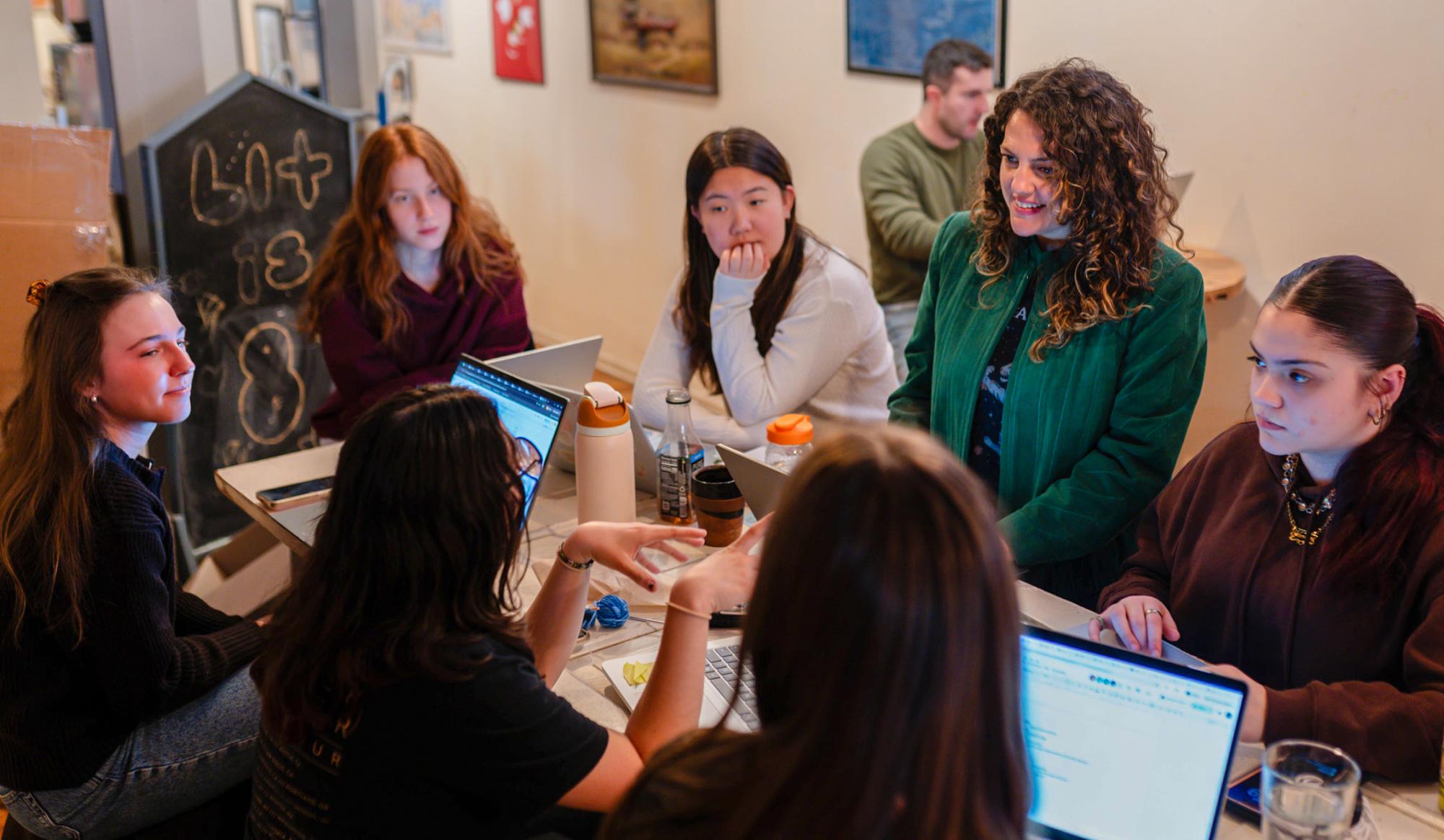
Jackson, a new addition to the College of Health at Lehigh, introduced Community-Based Participatory Research methods in her class during the spring of 2023. “The point of the class is to teach students how to do relational, reciprocal, equitable research in community,” she explains. Her goal aligns with the College’s mission to enhance local health outcomes through community collaboration.
To lay the groundwork, Jackson immersed herself in local meetings, including those of the SouthSide Task Force and Community Action Development Bethlehem. She quickly learned that while there was a strong sense of community, concerns about trash were prevalent. Jackson saw an opportunity to connect her students with the community to tackle these issues, resulting in a social impact fellowship and the expansion of her research agenda.
Students participated in community meetings and conducted over 60 interviews with Bethlehem residents. They discovered a strong interest in creating a map to show where trash accumulates, while also listening to residents’ experiences and the impact on their health. Policymakers were keen to understand residents’ feelings and explore creative solutions.
Creating a Map
The initial idea was to map trash hot spots, but the team reconsidered in order to adhere to principles of environmental justice. “There are areas in general where there’s more trash, but highlighting those spots turned out to be against our principles of environmental justice,” Jackson notes. Instead, the focus shifted to creating a map that highlights community efforts to improve neighborhoods.
Inspired by Guadalupe Martinez, known as Ms. Lupe, who actively engages her neighbors in clean-up efforts, the team realized the importance of fostering community connections. “She’s built a coalition of people,” Jackson observes. By encouraging neighborly interactions, residents could share resources and organize around common goals like trash collection.
High neighborhood turnover rates have led to residents feeling disconnected from each other, which in turn has exacerbated the trash problem. “Waste management is an interesting predicament,” Jackson explains, noting that while the city receives complaints, the lack of direct management limits their ability to respond effectively. Residents and city officials alike are frustrated and eager for realistic solutions.
Adopt a Spot Launched
This month, the team is launching the “B Beautiful” pilot program, which includes a new website featuring the “Adopt a Spot” map of South Bethlehem. This map allows residents to mark locations and propose projects, fostering a sense of ownership and community pride. “[It will be] an open map and allow people to go on and say, ‘This street means a lot to me…and I want to keep it clean,’ or ‘I want to build a free library there’ or something,” Jackson explains.
As ideas are uploaded, the team will connect interested volunteers through a communications app, facilitating neighborhood cleanups and other events. The team will also provide necessary tools and help connect volunteers to potential funding sources, if needed. In addition to ongoing research on systemic solutions, the team plans to publish the wealth of information gathered in collaboration with the city on their website, including mini reports on topics related to trash and the City of Bethlehem.
The “Adopt a Spot” initiative is set to officially launch at the annual Southside Clean Up on April 18 at Yosko Park.
Read More Here