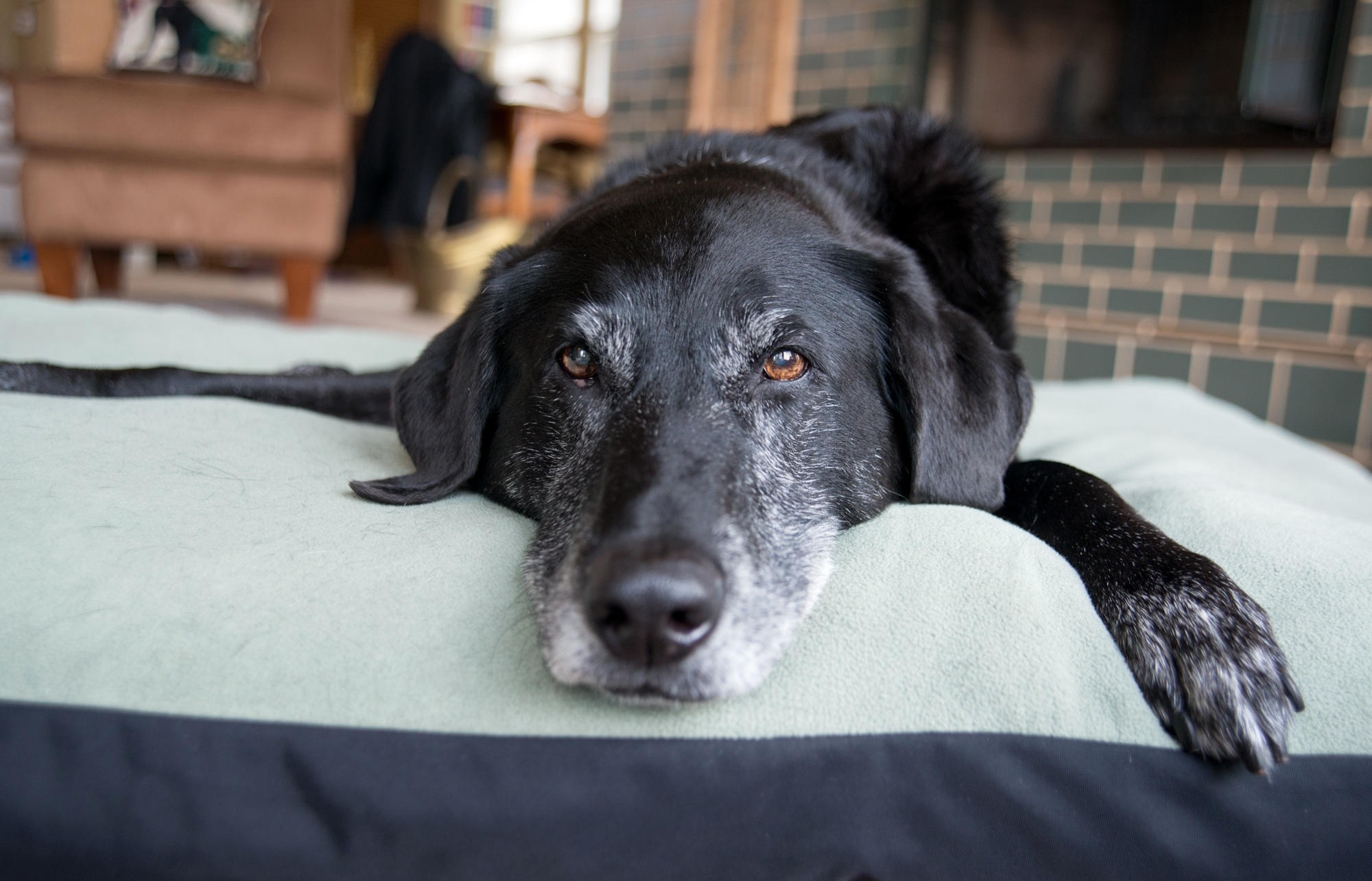
While it’s well-known that larger dog breeds have shorter lifespans compared to smaller breeds, a curious discovery by researchers at the University of the Arizona College of Veterinary Medicine reveals that the pace of brain aging does not differ between large and small dogs. This intriguing finding has prompted a deeper investigation into the biological factors influencing dog aging.
Exploring Canine Cognitive Aging
“Based on their different lifespans, you might expect large dogs like Great Danes to develop signs of dementia around 8 years old, but small dogs like Chihuahuas to have a later onset – somewhere in their teens,” explained Evan MacLean, associate professor of veterinary medicine. “But that’s not what we find. The implication is kind of interesting: It means that big dogs may just die before they acquire any kind of cognitive dysfunction.”
Evan MacLean and his team are embarking on a new study, the Study of IGF‑ 1, Neurocognitive Aging and Longevity (SIGNAL), to explore how the growth hormone IGF‑ 1 affects cognitive aging in dogs. Supported by the American Kennel Club Canine Health Foundation, the study will analyze 75 medium-sized dogs from the local community over a two-year period, measuring hormone levels and conducting cognitive assessments.
MacLean, who also leads the Arizona Canine Cognition Center, aims to gain insights that could extend to human cognitive aging. “Animals play a huge role in all kinds of medical research, but that often happens with mice kept in artificial laboratory conditions,” MacLean mentioned. “Companion dogs, on the other hand, are much more genetically diverse, share our world in very meaningful ways and receive high-quality medical care throughout their aging.”
Understanding IGF-1’s Role
The insulin-like growth factor 1 (IGF-1) is at the heart of this research. Large dogs often develop age-related diseases earlier, yet MacLean found no consistent pattern regarding cognitive decline. IGF-1, known to affect body size and potentially influence aging and cognitive health, is a focal point for the study. MacLean states, “Our hypothesis is that dogs with higher IGF-1 concentrations are going to perform better on our cognitive tasks.”
As MacLean prepares to launch the study, he is recruiting a diverse group of medium-sized dogs. The objective is to understand if IGF-1 could be preventing cognitive decline rather than contributing to it. The research team includes colleagues Emily Bray and Gene Alexander from the University of Arizona, and collaborators from Arizona State University, Colorado State University, and Tufts University.
Community Participation
The research team seeks assistance from the community, inviting owners of 10- to 13-year-old dogs weighing between 15 and 25 kilograms (33 to 55 pounds) to participate. Community members interested in the study can email the Arizona Canine Cognition Center for further information or enroll online.
Read More Here