The Nevada National Security Site Enhances Diagnostic Capabilities with Advanced mPDV-24 System
In an era where precision is paramount, the Nevada National Security Site (NNSS) has taken a significant step forward in its diagnostic methodologies. By upgrading to the 24-channel Multi Photonic Doppler Velocimetry (mPDV-24) system, NNSS continues to ensure the safety and reliability of the U.S. nuclear stockpile through more sophisticated research techniques.
The Joint Actinide Shock Physics Experimental Research (JASPER) facility at NNSS, a cornerstone in gathering plutonium performance data, has been reliant on Photonic Doppler Velocimetry (PDV) for two decades. Initially, JASPER employed a 16-channel PDV system, later upgraded to a 20-channel model. Now, with the introduction of the mPDV-24, the facility is poised to achieve unprecedented levels of data accuracy and operational efficiency.
According to Tyrel Otteson, NNSS Experimental Operations Manager, “This transition to the mPDV-24 system represents a significant leap forward in our diagnostic capabilities. By embracing this state-of-the-art technology, we’re not only achieving higher data quality and increased experimental flexibility, but also realizing substantial operational efficiencies through a reduced footprint and simplified operation.”
The mPDV-24 system introduces several enhancements, prominently featuring an increase in data recording channels from 20 to 24. This addition allows researchers to capture more detailed surface velocity measurements, improving the spatial resolution essential in experiments involving non-uniform shock fronts or deformations. Dr. Pat Ambrose from Lawrence Livermore National Laboratory highlights the importance of this capability for complex experiments.
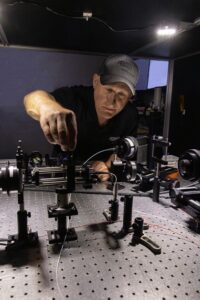
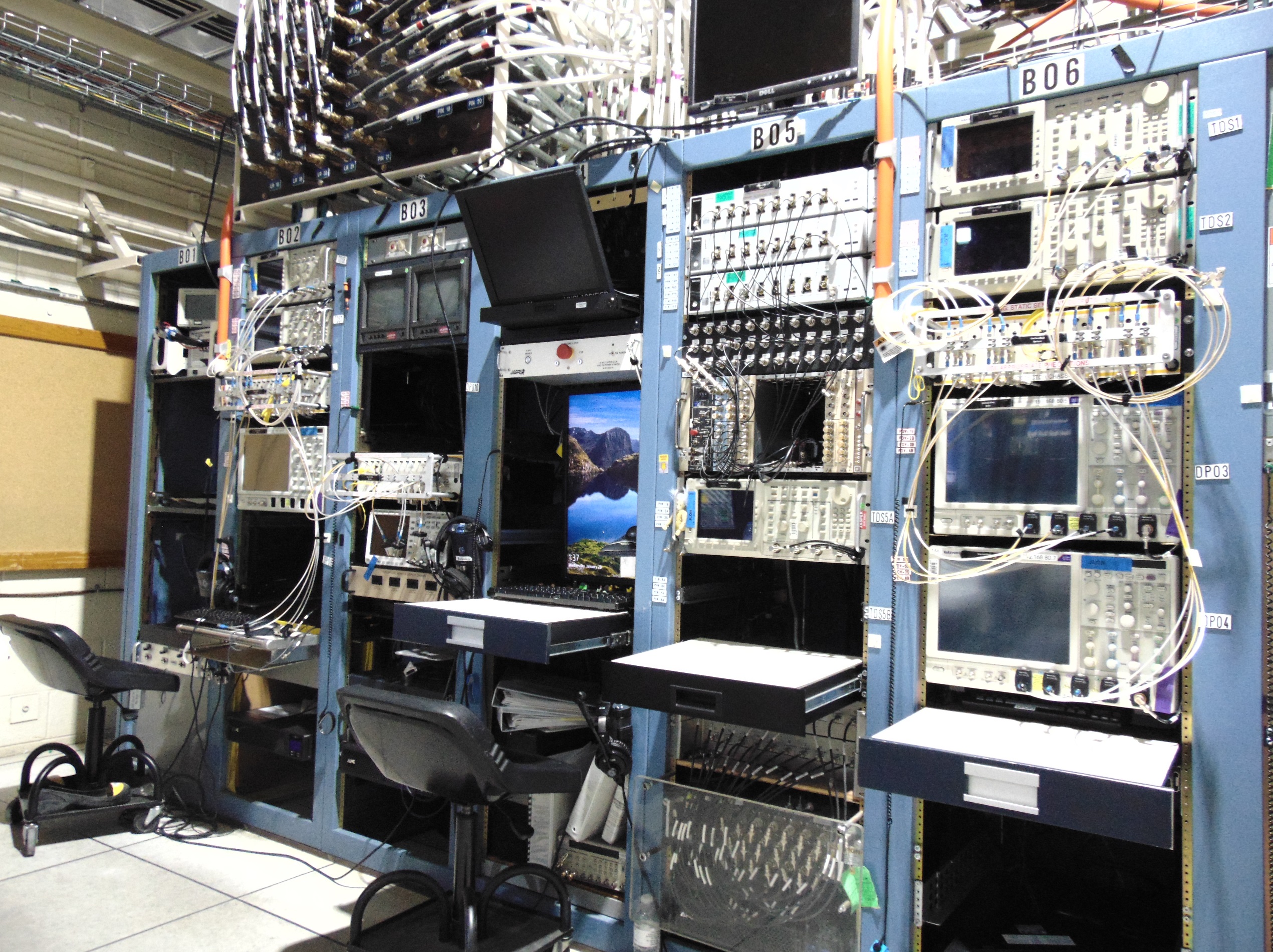
Furthermore, the mPDV-24 employs a time-multiplexing technique that permits one digitizer channel to manage six data channels, streamlining the system significantly. This advancement not only conserves physical space in the JASPER control room but also simplifies system maintenance and reduces calibration costs.
Beyond its operational efficiency, the mPDV-24 enhances the signal-to-noise ratio, leading to superior data quality and precision. This is crucial for the rigorous analyses conducted by NNSS scientists. Despite its enhanced capabilities, the mPDV-24 system is remarkably compact, occupying just a single equipment rack compared to the four racks required by its predecessor.
The mPDV-24 system marks a new era of research possibilities at NNSS, equipping scientists with the tools necessary to conduct more intricate and precise measurements, thus advancing the boundaries of nuclear research.
Read More Here