Unveiling Rapa Nui’s Secrets: A Digital Leap in Archaeology
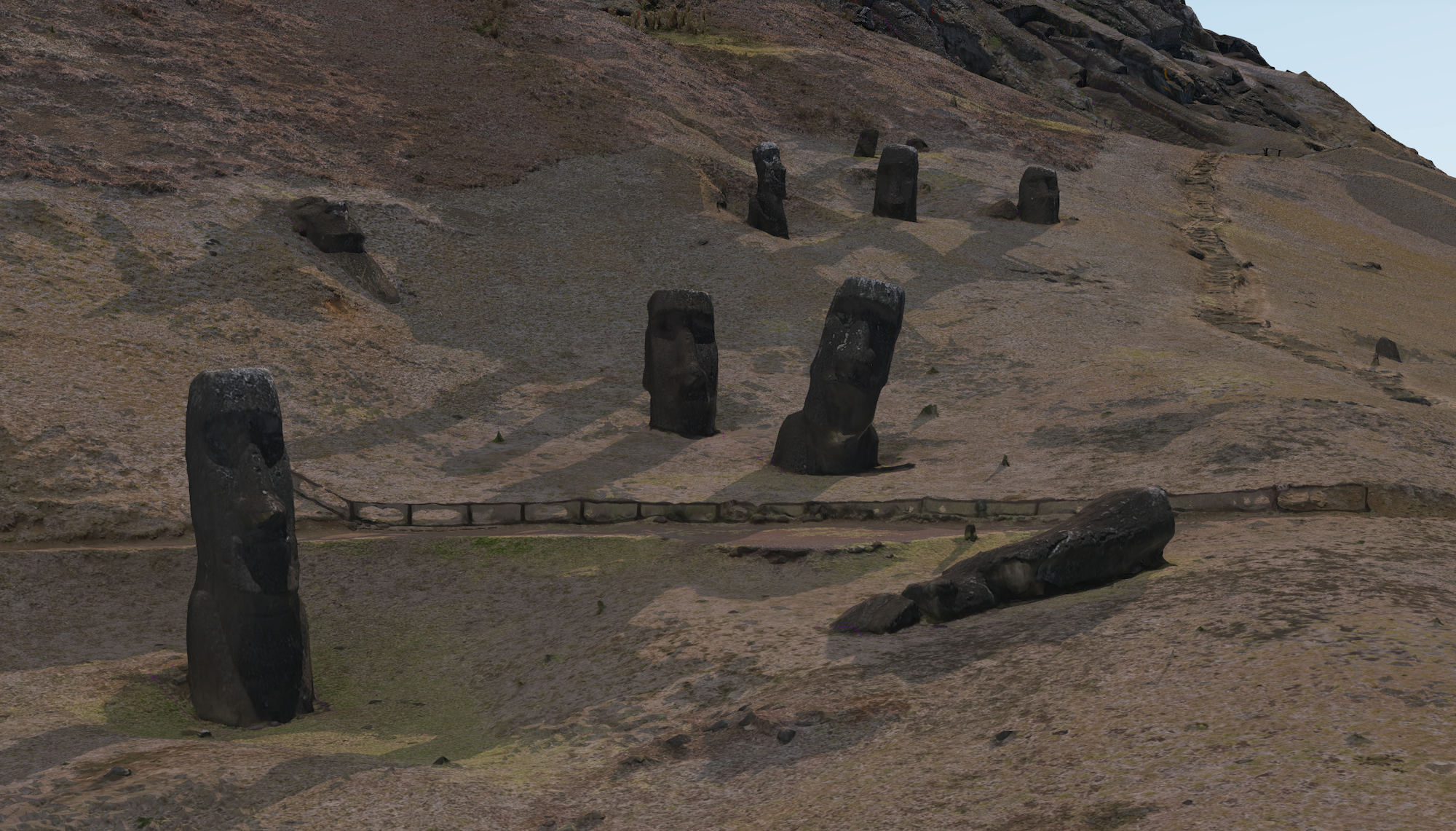
For over two decades, Terry Hunt has delved into the mysteries of Rapa Nui, or Easter Island, a place that fascinates both tourists and scholars. His extensive research has now culminated in an extraordinary digital achievement: an intricate 3D model of the island’s main quarry, Rano Raraku, where the iconic moai statues were crafted.
Hunt, a professor at the University of Arizona’s School of Anthropology, has transformed his fieldwork into a digital experience that allows anyone with internet access to explore the quarry in stunning detail. The model, which catalogs nearly 1,000 statues, includes data on their locations, sizes, and positions, offering a new perspective on how the Rapanui people created these monumental structures.
This digital reconstruction has already yielded significant discoveries. A recent study coauthored by Hunt and published in PLOS One suggests that the moai were likely built by various tribes or clans, each operating its own “workshop,” rather than under the command of a single ruler. This finding challenges traditional views of centralized leadership in ancient civilizations.
“In most cases for anthropologists, the rule has been that monumentality is kind of a good indicator of centralized control and centralized control implies hierarchy and social inequality,” Hunt explained, who also holds positions in the College of Social and Behavioral Sciences and the W.A. Franke Honors College.
Hunt’s analysis uncovered about 30 distinct workshops on the island, suggesting that authority may have resided within individual tribes, known as mata, each comprising around 100 individuals. “That means that the greatest authority was probably at the level of the tribe, the mata,” Hunt noted.
A Collaborative Archaeological Effort
The creation of the digital model was initiated at the request of Comunidad Indígena Ma’u Henua, the local organization managing the island’s national park and archaeological activities. This collaboration underscores the importance of cultural heritage and preservation.
Using drones, Hunt’s team captured over 11,000 images of the quarry, which were then compiled into a 3D model using advanced software. “Archeologists often say that a lot of what we do is not so much what the public thinks of as discovery, but it’s more like analysis and the realization of things like, for example, that we had 30 workshops,” Hunt remarked.
Caroline Keller, a junior in the School of Anthropology, contributed to the project by identifying moai in the images. Her involvement sparked an interest in geographical information systems (GIS), leading her to pursue it as a minor. “I really enjoyed just poring over the maps and outlining the different things,” Keller shared.
Similarly, Laryssa Shipley, a Ph.D. candidate in anthropology, joined the project due to its technological approach. Her background in Mediterranean and Near Eastern archaeology aligns with the methodological aspects of the Rapa Nui study. “Even though the Rapa Nui project differs in geographical and temporal scope with my own research, it actually is kind of normal for archaeologists to align themselves with projects that overlap with their interests methodologically,” Shipley stated.
Both Keller and Shipley played crucial roles in identifying features within the model, which have been shared with Comunidad Indígena Ma’u Henua to aid in local conservation efforts. Hunt emphasized the cultural significance of the moai, stating, “The moai are the embodiment of their ancestors. The Rapanui take that very seriously, and their preservation is a great concern for them. So, what we’re doing in working with them is engaging them.”
Read More Here