Artificial intelligence continues to transform various sectors, but a significant challenge remains: AI models often deliver incorrect answers with misplaced confidence. Now, an innovative approach by a University of Arizona astronomer could fundamentally alter how AI systems are trained to prevent such errors.
Associate Professor Peter Behroozi from Steward Observatory has devised a novel method to help AI recognize the reliability of its predictions, even in models comprising billions or trillions of parameters. His findings, detailed in a paper available on arXiv, promise to enhance AI’s decision-making accuracy across various fields.
The development of this method was backed by the National Science Foundation’s Early-concept Grants for Exploratory Research, aiding high-risk, high-reward research. With Behroozi’s paper now accessible, the accompanying code is publicly available, enabling global researchers to integrate this technique into their work.
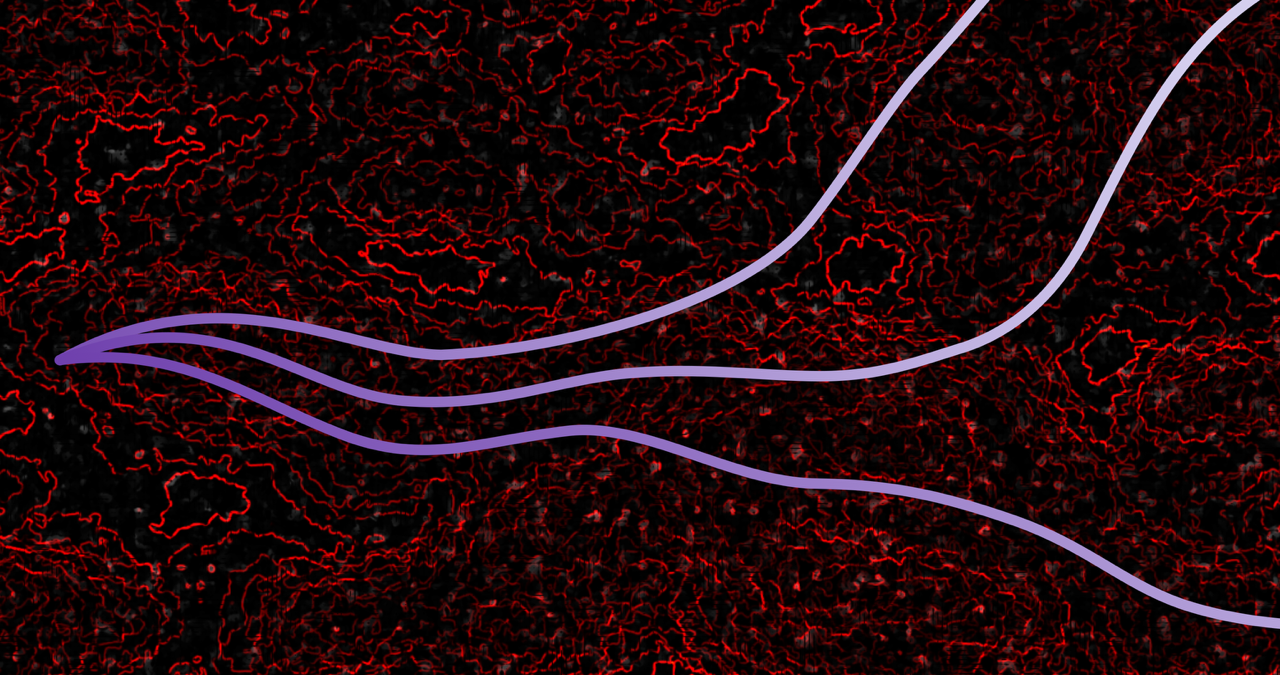
Behroozi’s method adapts ray tracing—a technique used in computer graphics to create realistic lighting effects—into a tool for navigating the complex mathematical landscapes where AI models function.
“Current AI models suffer from wrong-but-confident outputs,” Behroozi stated. “There are many examples of neural networks ‘hallucinating,’ or making up nonexistent facts, research papers, and books to back up their incorrect conclusions. This leads to real human suffering, including incorrect medical diagnoses, declined rental applications and facial recognition gone wrong.”
His journey toward this breakthrough began with galaxy formation research. As the creator of the Universe Machine, a computational tool designed to analyze telescope data to understand galaxy formation, Behroozi was faced with a challenge: existing methods were inadequate for the scale of modern data.
Behroozi’s inspiration came unexpectedly from a computational physics problem involving light’s behavior through Earth’s atmosphere, presented by an undergraduate student. This problem, which involved simulating light’s speed changes, sparked the idea to extend ray tracing to higher dimensions.
“Instead of doing this in three dimensions, I figured out how to make it work for a billion dimensions,” Behroozi said.
The technique incorporates Bayesian sampling, a method traditionally used for smaller models but too computationally intensive for today’s neural networks. By training thousands of models on the same data, Bayesian sampling explores diverse possible outcomes, offering a broader range of insights.
“What’s happening is that instead of consulting a single expert, you consult the whole range of experts,” Behroozi explained. “If it’s something the experts have never seen before, then you’ll get a whole range of answers. And you can tell from that that you shouldn’t be trusting whatever output is coming out.”
Behroozi’s approach is significantly faster than previous methods and paves the way for more dependable AI systems with fewer erroneous outputs. Its impact could be wide-ranging, benefiting sectors like medicine, finance, and autonomous vehicles by enabling AI to assess its own uncertainty.
“Suppose a doctor ordered a routine scan and decided that you needed to begin treatment for cancer immediately, even though you had no other symptoms,” Behroozi said. “Many people in this situation would seek a second opinion. The new method would have a similar effect: instead of the opinion of one AI doctor, it would give the range of plausible opinions.”
For scientists, this method provides a solution to a longstanding issue that affects trust in AI-driven research. AI is being deployed in drug design, weather forecasting, and more, but ‘wrong-but-confident’ outputs are still a major hurdle.
“This undermines public trust in scientific output like weather predictions and leads to hesitance among scientists to accept new discoveries that are based on AI models without separate and costly validation,” Behroozi wrote in his research summary.
For Behroozi himself, this technique could unlock new avenues in his research. Rather than merely simulating the universe, he aims to use this method to determine the actual initial conditions, effectively creating a historical account of cosmic formation.
“In the past, what we used to do was just make galaxies in a universe that looks nothing like our own,” he explained. “What this technique allows us to do is figure out what were the initial conditions of the actual universe.”
Read More Here