Exploring the Hidden Struggles of Cancer Recovery: The Case of Salivary Glands
While advancements in cancer treatments have brought hope to many, the aftermath for some survivors includes unexpected challenges. Kirsten Limesand, a professor at the School of Nutritional Sciences and Wellness in the College of Agriculture, Life and Environmental Sciences, is delving into one such challenge: the persistent dysfunction of salivary glands following radiation therapy.
“We’re getting better at treating cancer,” stated Limesand. “And yet patients are asking, ‘What’s my life going to be like on the other side?'” For individuals who have battled head and neck cancer, the end of treatment is not always the end of their struggles. Approximately 70% of these patients experience xerostomia, or chronic dry mouth, due to radiation’s collateral damage to healthy cells, including those in the salivary glands.
This seemingly minor condition significantly impacts various aspects of daily life, such as speech, eating, taste, sleep, digestion, and dental health. “Patients find me on the internet and send these incredibly distressing stories about how their lives have been disrupted. They’re grateful to be cancer-free, but they’re miserable,” Limesand shared. She is reminded of the vast number of individuals affected by this issue, even if she receives just one email a year.
Deciphering the Role of Immune Cells in Healing
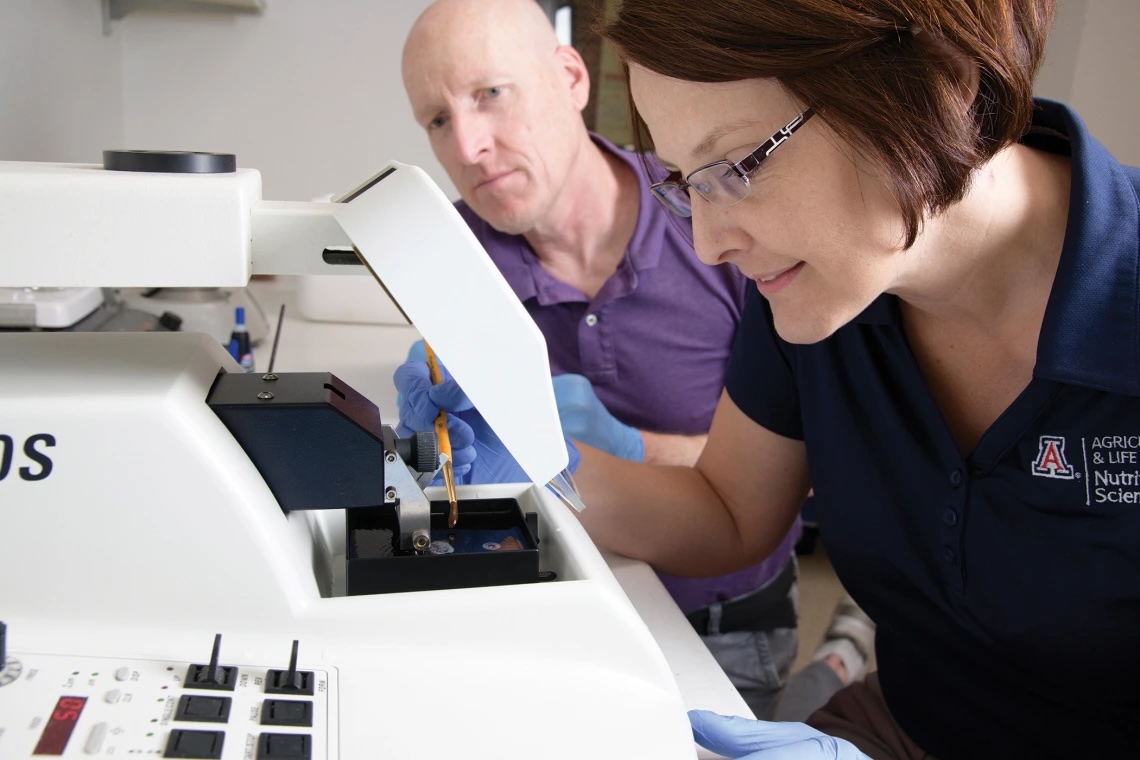
With the support of a $3.1 million grant from the National Institutes of Health, Limesand’s team is investigating the role of the immune system in salivary gland recovery post-radiation. The focus is on how immune cells might obstruct healing and whether altering their metabolism could restart the recovery process.
“Immunology and inflammation are kind of like the Goldilocks story. Too much is not good, too little is not good,” Limesand explained. Achieving the right balance is essential for the body’s healing mechanisms, which rely on the immune system’s ability to discern when to act and when to hold back.
Unraveling the “Traffic Jam” of Immune Cells
Limesand’s research has uncovered that certain immune cells can persist in the glands long after radiation treatment, with some aiding and others hindering the healing process. Particularly problematic are the double-positive T cells, typically found maturing in the thymus. Their presence in tissue suggests a regulatory breakdown.
“The Tregs [regulatory T cells] are trying to control the situation, but the double positive cells keep accumulating and exhibiting markers of activation,” Limesand observed. This accumulation creates a “traffic jam” that prevents proper healing. By identifying where these cells gather and the signals they emit, the team hopes to understand their interference and how regulatory T cells might restore order.
The Potential of Immunometabolism
The researchers suspect that immunometabolism, or how immune cells utilize energy, might be key to resolving the issue. “Immune cells make and secrete a cocktail of molecules that influence their surroundings, but the messages they send depend on their metabolic state,” Limesand noted. Recognizing when metabolic pathways are active can indicate whether cells are promoting or obstructing healing.
Intriguingly, the team has discovered that the diabetes medication metformin can restore function to irradiated salivary glands in their models. “Metformin is taken by millions of Americans for diabetes. We know it changes metabolism in certain cells, including immune cells. What’s fascinating is that when we give metformin to irradiated salivary glands in our model, they start to function again,” Limesand remarked. Identifying which immune cells benefit from this treatment is crucial.
Advancing Toward Precision Healing
Limesand envisions developing a roadmap to guide targeted therapies based on the immune landscape at various stages post-treatment. “We’ll be able to treat patients with more precision,” she said. Understanding the timing of therapeutic interventions could enhance recovery significantly.
This approach, termed precision healing, emphasizes reconstructing health rather than merely combating disease. With the team’s data being made available through open-access platforms, their findings could inspire novel research and unexpected breakthroughs in diverse fields.
“These technologies give us enormous data sets that scientists anywhere can use to ask new questions,” Limesand said. “Maybe someone studying a completely different disease will see something unexpected that changes everything. That’s the beauty of science, that serendipity is why we do what we do.”
A version of this story originally appeared on the College of Agriculture, Life and Environmental Sciences website.
Read More Here