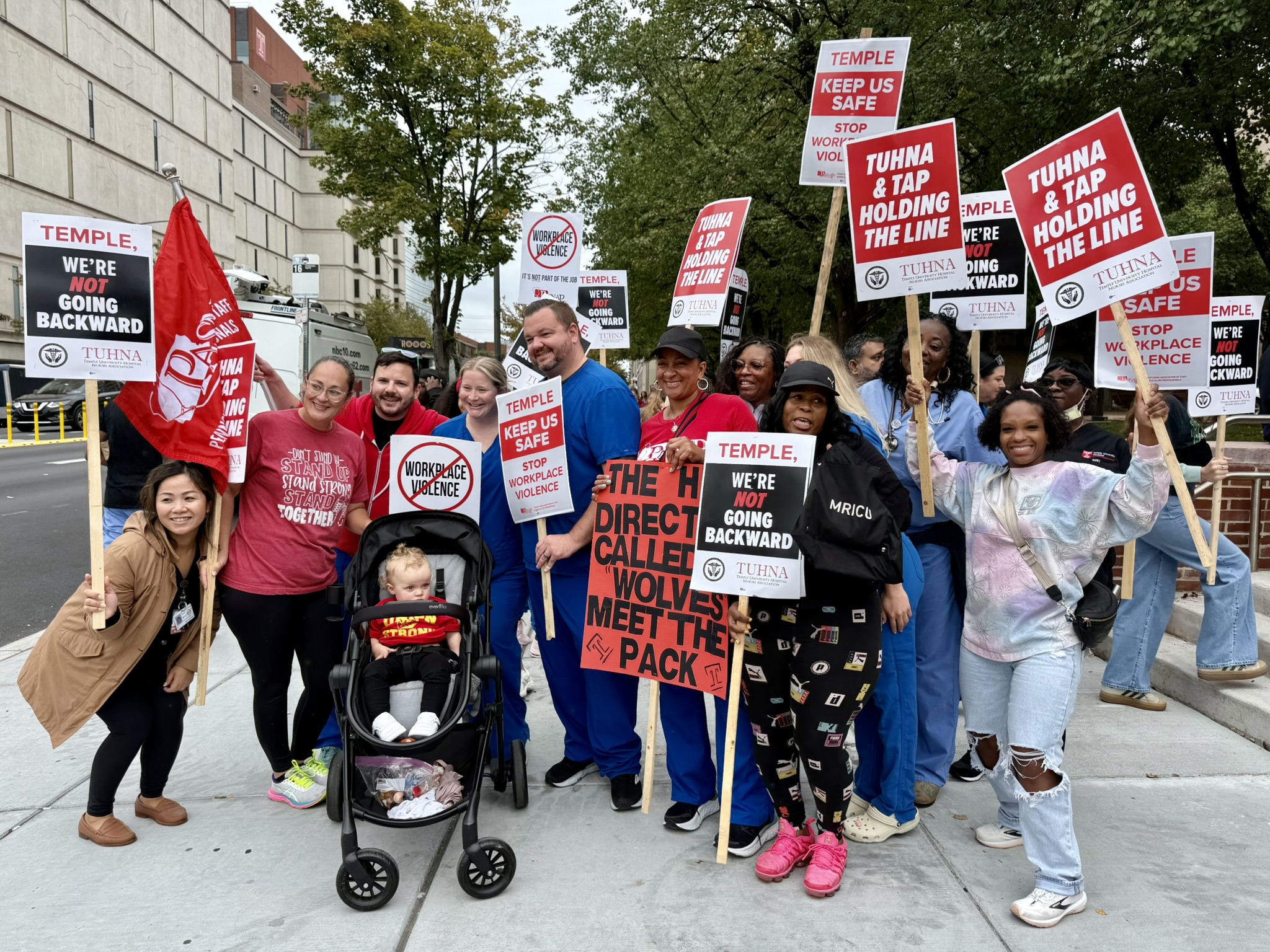
Nurses and Allied Health Professionals at Temple University Hospital Consider Strike Amid Contract Disputes
As the end of the month approaches, tensions rise at Temple University Hospital where nurses and allied health professionals have taken a significant step towards industrial action by voting to authorize a strike. This move comes in light of ongoing negotiations and concerns over proposed benefit cuts and safety issues.
The unions involved, the Temple University Hospital Nurses Association (TUHNA) and Temple University Hospital Allied Health Professionals (TAP), are part of the Pennsylvania Association of Staff Nurses and Allied Professionals (PASNAP). They’ve been actively negotiating with Temple University Hospital’s administration since July 8, according to Marty Harrison, president of TUHNA.
On September 10, union members, representing 2,600 nurses and allied professionals, organized a picket outside the hospital’s key facilities, including the Women and Families Hospital and Main Campus, to draw attention to their demands. Key among their concerns is an increase in workplace violence, which has been highlighted by a PASNAP press release dated September 8.
An internal survey conducted in August 2025 revealed that 84% of registered nurses at the Main Campus have witnessed workplace violence, while 79% feel unsafe at work. Additionally, 94% of the respondents believe that the administration has not implemented adequate security measures.
Temple University Hospital’s administration remains engaged in discussions. “The safety of our patients and staff is our top priority,” a TUH spokesperson stated in an email to The Temple News, emphasizing ongoing productive discussions with the union.
Concerns about security measures have led the unions to call for improvements in security protocols at Temple hospitals. Current systems, using Transportation Security Administration-like scanners, often mistakenly flag non-threatening items while failing to detect actual weapons, such as knives and guns.
The unions propose several safety initiatives, including having security or police officers check all private vehicles transporting patients to the emergency room, establishing new roles for behavioral health specialists trained in de-escalation, and enabling staff to lock down emergency department doors in case of threats.
Marty Harrison highlighted the importance of de-escalation roles: “The biggest [proposal] is that new position of people trained in behavioral and mental health that can de-escalate situations and get people back on track so we can continue to provide care for that person.”
To prevent future incidents of workplace violence, the unions also suggest formalizing the process of debriefing after security incidents. These meetings, involving affected staff, administration, and union representatives, aim to improve consistency and effectiveness across all hospital units.
Additionally, the unions have advocated for enhanced security and emergency services at Temple’s recently opened Women and Families Facility. They are calling for licensed security officers to be present 24/7 and for improved emergency labor and delivery care at the Main Campus.
Concern arises from the facility’s lack of an ambulance bay for emergency patients, with current plans placing only one labor and delivery nurse at the Main Campus emergency department temporarily. This arrangement has prompted union anxiety over the adequacy of maternal emergency care post the initial month.
In terms of benefits, TUH’s proposed changes could increase the cost of out-of-network care, compelling employees to use TUH services. This poses a challenge, particularly for those living outside Philadelphia, where local urgent care and emergency services are often provided by other institutions like the University of Pennsylvania or Thomas Jefferson University facilities.
Marty Harrison illustrated the potential impact with a specific case: “We had the example, for instance, of a nurse who just found out she was pregnant and when she called to get an OB appointment, the next available appointment would have been in her second trimester by that point.”
Read More Here