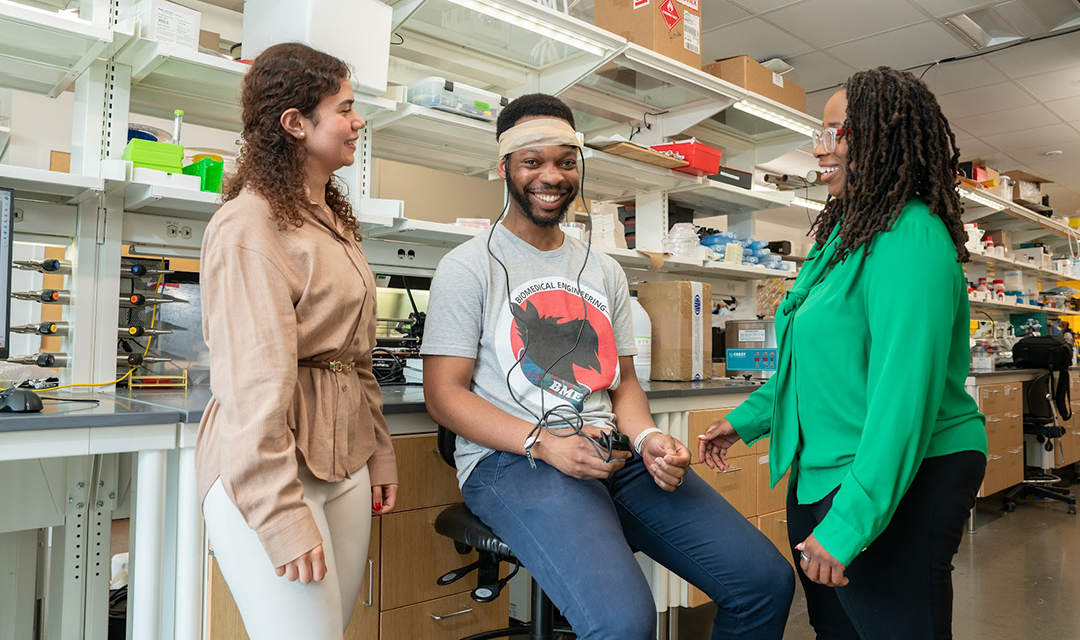
New Light-Based Technology Enhances Sickle Cell Disease Brain Monitoring
Researchers at Carnegie Mellon University and the University of Pittsburgh have developed an innovative, noninvasive technology using near-infrared spectroscopy (NIRS) to improve monitoring of sickle cell disease’s impact on the brain. This method promises earlier detection of complications by measuring blood and oxygen changes in small vessels, especially in regions heavily affected by the disease.
Sickle cell disease can impair small blood vessels in the brain as patients age, reducing blood flow and affecting cognitive functions like memory and thinking. Although the disease alters oxygen movement through the body, its effects on the brain remain underexplored.
A critical concern for sickle cell patients is cerebral autoregulation—how the brain maintains steady blood flow despite blood pressure changes. Current assessments focus on larger vessels using tools like arm cuffs or ultrasounds, which fall short in adults and fail to measure brain oxygen levels. Often, complications in the brain’s smallest vessels go unnoticed until significant damage occurs.
NIRS emerges as a promising screening tool for cerebral small vessel disease in adults with sickle cell disease. “Rather than looking only at the larger vessels in adults, our study focused on the hemodynamics associated with blood pressure changes in the smaller vessels, and what NIRS can reliably detect about blood and oxygen changes there,” explained Sossena Wood, assistant professor of biomedical engineering at Carnegie Mellon. “Unlike prior studies done on large vessel abnormalities or at rest, this one measured dynamic cerebral autoregulation and participants’ response during breathing, taking things a step further toward positive utility.”
This research is also foundational for international collaborations involving Wood’s group, Carnegie Mellon University in Africa, and the University of Pittsburgh Medical Center’s Adult Sickle Cell Program. In Nigeria, clinical trials with Lagos University Teaching Hospital use erythropoietin to enhance hemoglobin in patients, tracked by NIRS to observe blood and oxygen changes, showing improved oxygen levels post-dosage.
“The whole motivation is to show that NIRS is reliable and could do more than it’s currently utilized for,” Wood stated. “The sickle cell disease population is very young, and they’re getting older because of the therapies that are helping them live longer. As they age, there is a lot we are learning about the pathology of the disease and NIRS is a useful point of care screening tool in environments where sickle cell disease is most prevalent. I’m excited to be part of improving measurement tools for sickle cell disease progression and in turn, quality of life for those living with the disease.”
The research received funding from the National Institutes of Health and the University of Pittsburgh’s CTSI Research Across the Lifespan pilot program, with Jana Kainerstorfer, a Carnegie Mellon faculty member, contributing as a collaborator.
Read More Here