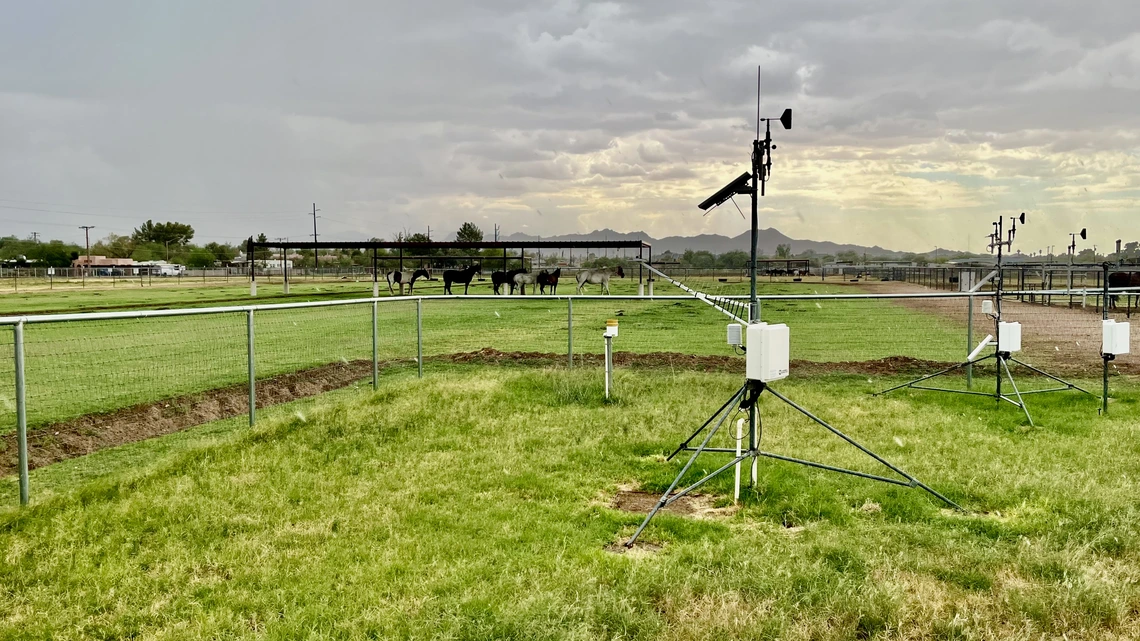
In Arizona, weather apps provide more than just daily forecasts; they tap into a rich vein of data supplied by the University of Arizona Cooperative Extension. This data plays a crucial role in understanding and predicting the region’s distinctive weather patterns.
The Arizona Meteorological Network (AZMet), managed by the university, consists of a series of weather stations located throughout southern Arizona. These stations contribute data to a wider database managed by the National Oceanographic and Atmospheric Administration (NOAA), as explained by AZMet Program Manager Jeremy Weiss.
“They grab it, and it goes into their national database and is available for weather forecasting,” Weiss stated.
On a more localized level, the data helps create detailed weather maps that users can access on their phones. According to Mike Crimmins, a climate specialist and environmental science professor, this granular information is vital for short-term forecasting, which plays a significant role in public safety.
“The Weather Service forecasts might be picking up on conditions that will lead to widespread, severe monsoon storms,” Crimmins noted. “Then the day that’s actually supposed to happen, the Weather Service is probably running some of these regional models to have the most up-to-date, accurate forecasts.”
Since its inception on January 1, 1987, AZMet has expanded to include 33 solar-powered stations. These stations measure various weather-related metrics, such as air and soil temperature, precipitation, and wind conditions.
Three years ago, AZMet joined the National Mesonet Program, a collaboration that brings together public, private, and academic entities. This partnership allows weather data from numerous organizations, including AZMet, to be aggregated by NOAA, which also provides funding, Weiss explained.
The data collected is invaluable to several sectors, namely agriculture, public safety, and urban planning. Agricultural users, for instance, rely on this information for monitoring conditions affecting crops and livestock. Cotton farmers use it to manage heat stress, while vineyards and other growers track temperature indicators like chill hours and freeze durations.
Weiss highlighted the importance of wind data, noting that “current wind conditions are important for growers, because regulations don’t allow spraying of certain chemicals in high winds.”
In urban settings, cities like Phoenix and Payson utilize these weather stations to optimize turf irrigation. Firefighters also benefit from the high-resolution data, which helps them assess on-the-ground conditions during wildfires.
The data supports two main types of forecasts: numerical and statistical. Numerical models focus on short-term predictions, while statistical models are used for longer-term forecasts, providing insights into seasonal weather patterns.
“Those models are coarser, because we can’t definitively say, there’s going to be 2 inches of rain by July 25th at a particular spot at that time scale. It’s more like, ‘Statistically there’s a better chance of it being wetter than drier,'” Crimmins explained.
Crimmins applies these statistical models to assist stakeholders, such as farmers and ranchers, in planning for future weather events over weeks or even months.
Regarding the 2025 monsoon season, predictions remain uncertain. When the season commenced on June 15, models suggested equal chances for below-average, average, and above-average rainfall, Crimmins said.
“So if you want to be optimistic, then that opens up the opportunity for average to above average precipitation. I think that’s the way the whole monsoon is going to go. You’re going to have to look out the window,” he commented.
A version of this article originally appeared on the U of A Cooperative Extension website.
Read More Here