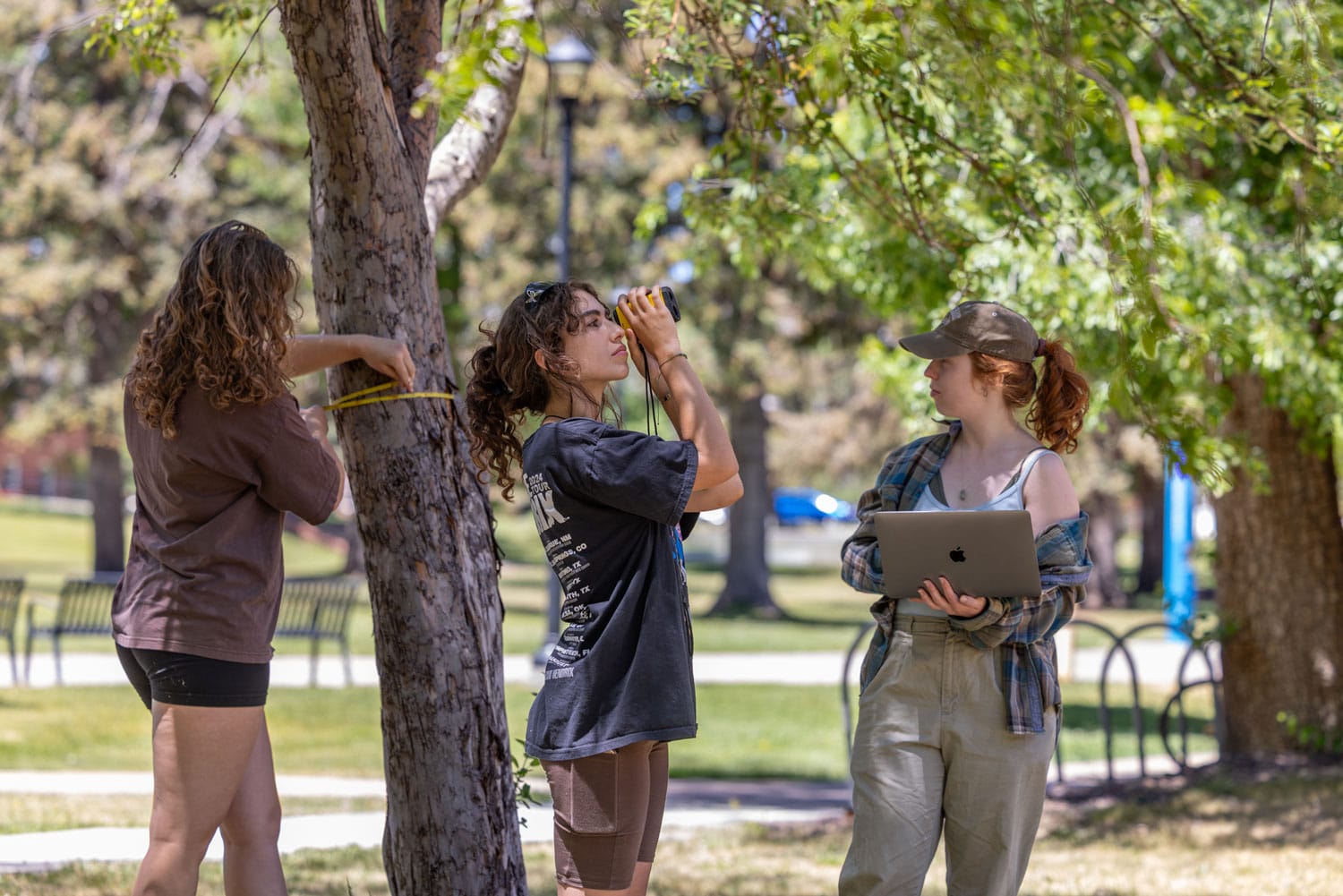
The vibrant tree canopy is a defining feature of Northern Arizona University’s Flagstaff campus. Whether it’s the abundant ponderosa pines or the diverse mix of global species in the North Quad, the trees are a cherished part of campus life. This summer, the university is embarking on an ambitious project to catalog every tree on campus, collecting data on their health, species, and carbon sequestration capabilities. This initiative could make NAU the first American university to complete such a comprehensive tree inventory.
The project, which involves students, faculty, and staff, is not just about maintaining the campus’s natural beauty. It offers extensive research opportunities across various disciplines and supports NAU’s sustainability goals by highlighting the trees’ role in carbon sequestration. The findings will also serve as a guide for other institutions aiming to build sustainable and livable communities.
“NAU has been designated an official Tree Campus by the Arbor Day Foundation for 12 years based on the size of our tree canopy and the way we care for it, and it’s a major source of pride,” said Erik Nielsen, the university’s chief sustainability officer. The tree survey is a strategic effort to enhance the campus’s environmental benefits, which include cooling buildings and improving air quality.
Ripple Effects
Supported by a grant from the Arizona Department of Forestry & Fire Management and additional funds from the NAU Office of Sustainability, the initiative was conceived by the Landscape and Water Action Team. This group consists of members from various NAU departments, all dedicated to sustainability. “Trees can be excellent for stormwater mitigation, which is a big priority for the City of Flagstaff,” said Jim Allen, a professor in the School of Forestry.
Under the guidance of Taylor Joyal, an associate teaching professor specializing in experiential learning, the project began with students from his Spring 2025 capstone course. This summer, students like Estella Percarpio, Sophie Radder, and Leah Kisto are continuing the work, gaining valuable field experience that prepares them for careers in conservation and climate resiliency.
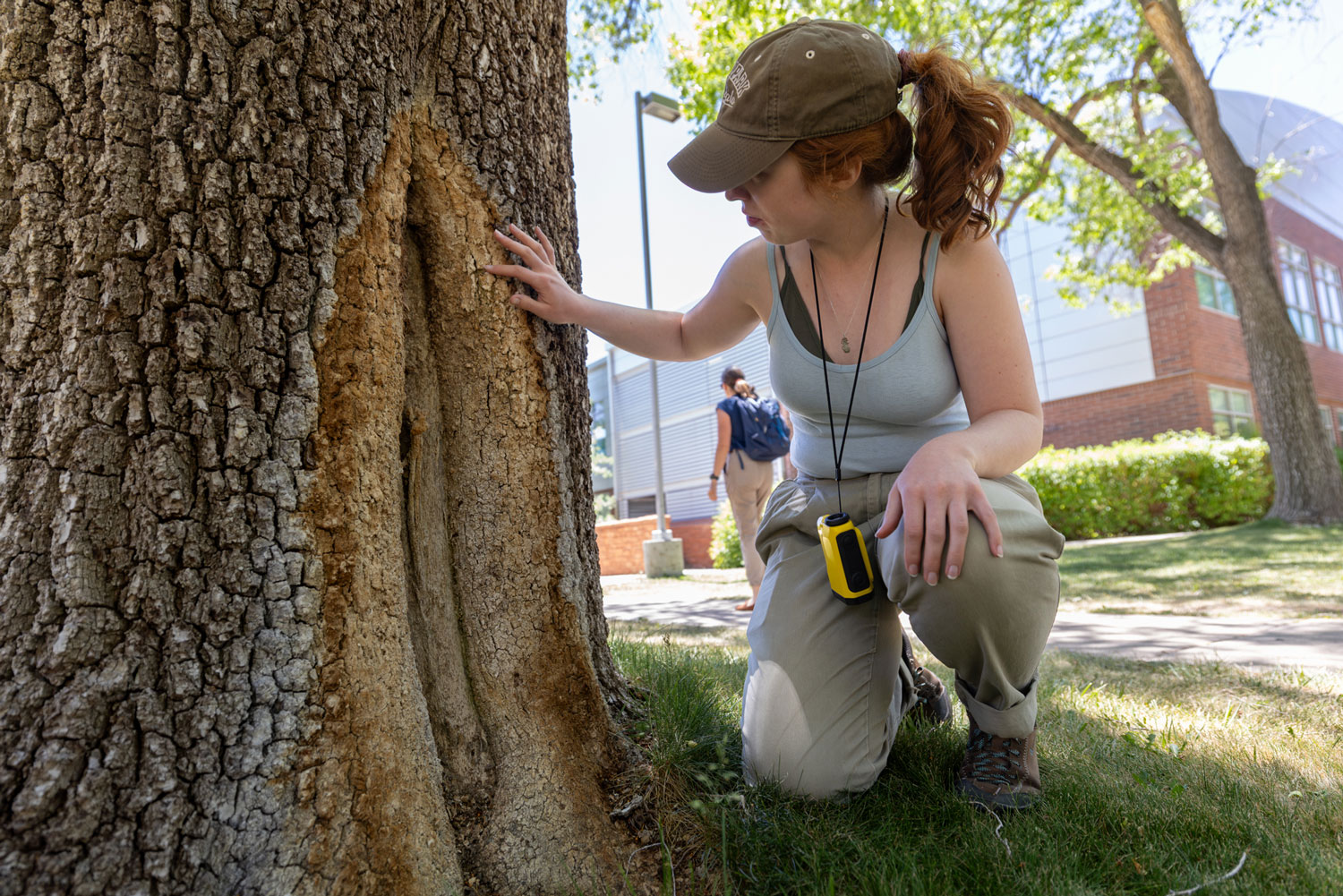
“I’m looking to do work in climate resiliency,” Percarpio noted, emphasizing the importance of understanding carbon sequestration’s role in mitigating climate change. She chose NAU for its blend of natural and social sciences, recognizing that environmental issues require a multifaceted approach.
“No one really thinks about university campuses as habitats for wildlife like birds and insects…but people can and should.”
For instance, the Siberian elm in the North Quad, although visually appealing, suffers from “slime flux,” a bacterial issue, and has dead branches that pose risks to students. Such challenges underscore the importance of understanding the social and environmental dimensions of campus forestry.
Endless Possibilities
Despite the issues posed by invasive species like the Siberian elm, they offer significant research opportunities. “There’s a whole swath of environmental and social topics that can build off this inventory and use the NAU campus as a living laboratory,” Joyal said. The project could lead to innovations in student mental health studies, tree planting strategies, and more.
Nielsen highlighted that the tree map will aid in practical campus maintenance and improvement. It will help identify trees needing care to prevent accidental damage and assess areas where more shade is needed. The long-term vision includes transforming grassy areas into vibrant gardens with native species adapted to Arizona’s climate.
“No one really thinks about university campuses as habitats for wildlife like birds and insects, or as important contributors to mitigating the urban heat island effect in cities, but people can and should,” Nielsen remarked.
Trees’ roles in combating climate change are vital, and NAU aims to achieve carbon neutrality by 2030. “To get to carbon neutrality, you don’t just calculate your greenhouse gas emissions and reduce them—you also need to calculate your carbon sinks,” Nielsen explained. The tree inventory is a step toward understanding and maximizing these natural carbon offsets.
Moreover, the project could inspire similar efforts at other universities. “We haven’t heard of any other universities that are doing this—assessing above-ground carbon sequestration and other ecosystem services,” Joyal said. “We could serve as an example of an inventory project for other universities to do, not only for the benefit of campus but also for the benefit of students. When they graduate, they take that practical training into jobs in cities, or jobs in consulting, and they create more climate-resilient societies.”
Read More Here