
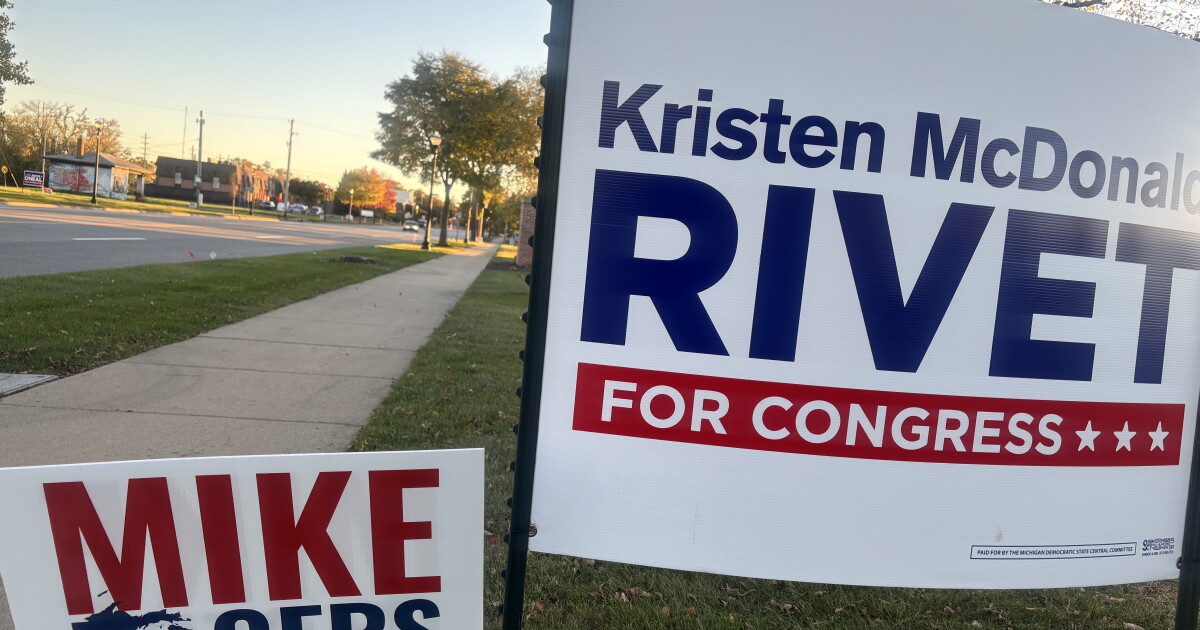
Election Day is just weeks away in Michigan, and both major parties are pulling out all the stops to make sure their supporters actually show up to vote. With control of the governor’s mansion and a U.S. Senate seat on the line, the final stretch of the 2026 midterm election is shaping up as a high-stakes test of which party can best mobilize voters across the state.
Over the weekend of October 18, Republicans and Democrats each held separate get-out-the-vote events, drawing hundreds of supporters and featuring their top candidates for statewide office. Both parties made clear that voter turnout — not just persuasion — will be the deciding factor in the final days of the campaign.
Republicans Rally at Birch Run Racetrack
About 100 Republicans gathered Saturday at a race track in Birch Run, where prominent Republican Linda Lee Tarver opened the event with a prayer that set a distinctive tone for the gathering.
“Let the people’s hearts be softened to the Republican Party, not because we are perfect, but we have perfect policies that honor you, Father.”
Republican gubernatorial candidate John James urged his supporters to leave nothing on the table in the race’s final days, framing the election as a defining moment for the state’s future.
“Michigan voters are going to make a decision that is going to define this state for the next generation and beyond.”
James has been a central figure in the Michigan governor’s race, and his appearance at the Birch Run event underscored how seriously Republicans are taking voter mobilization in these final weeks. Earlier this week, he and Democratic opponent Jocelyn Benson squared off in their second gubernatorial debate, where rising gas prices and education policy took center stage, according to reporting by Tracy Samilton.
Democrats Pack a Detroit Union Hall
On Sunday, Democrats hosted their own turnout event in Detroit, drawing a crowd of roughly 300 people — many of them union members — to a union hall. Democratic candidate for governor Jocelyn Benson kept her message tightly focused on economic issues that resonate with working families, particularly jobs, health care, child care, and housing.
“One job will ensure you can have health care. You can pay for child care. You can pay for housing and everything else. That’s the Michigan I am fighting for…and will fight for as your next governor.”
Congressional candidate Donovan McKinney also addressed the crowd, firing up supporters with a direct call to action at the polls.
“When we fight, we win. And damn it, we’re going to win on November third.”
Where Voter Turnout Stands Right Now
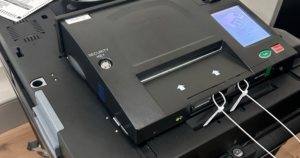
As both parties work furiously to mobilize their bases, early voting data offers a snapshot of where participation stands. According to the Michigan Secretary of State, 679,316 registered voters — about 9.2% of the total — had already cast ballots as of Sunday, October 18. Election Day itself falls on November 3.
For voters who haven’t yet cast their ballot, resources on how to register and vote in the 2026 elections — compiled by Hansi Lo Wang, Benjamin Swasey, and Brent Jones — cover deadlines and options for registering online, in person, or by mail across all U.S. states and territories.
The Michigan governor’s race is not the only high-profile contest on the ballot. Republican U.S. Senate candidate Mike Rogers recently opened his first Detroit field office, signaling a push into traditionally Democratic territory. Meanwhile, a separate and unusual legal question has emerged on the judicial side: two Michigan Supreme Court candidates on the ballot have been found ineligible to serve if elected, raising questions about what happens to voters who cast ballots for them — a story reported by Doug Tribou and Caoilinn Goss.
Other issues making news in Michigan’s political landscape include a coalition pushing for paid family and medical leave, a No Kings rally at the Capitol focused on early voting access, and a new campaign targeting drivers who fail to stop for school buses. On the labor front, a prolonged nurses strike at Henry Ford Genesys has finally ended, and stubborn wildfires continue to burn in Michigan’s Upper Peninsula.
Reporting for this story was contributed by Steve Carmody of Michigan Public. Additional context and coverage can be found through Michigan Public‘s Politics & Government section. Follow Michigan Public on YouTube, Bluesky, and LinkedIn. For questions or feedback, visit their contact page. Public documents and FCC applications are available on their site, along with their privacy and terms of use policy and contest rules. Tune in to Michigan Public Hourly News for the latest updates. Career opportunities are listed on their Work with Us page, and public documents are available upon request. Share this story on LinkedIn and follow MPRN for ongoing coverage of Michigan’s midterm races.


Comments are closed.