
When a former president tells supporters to “pretend” he’s on the ballot, it raises a genuine question about what drives voters to the polls — and what that means for the health of democratic participation. Voter motivation is one of the most powerful forces in any election, and understanding how political figures shape that motivation matters for anyone who cares about fair and representative outcomes.
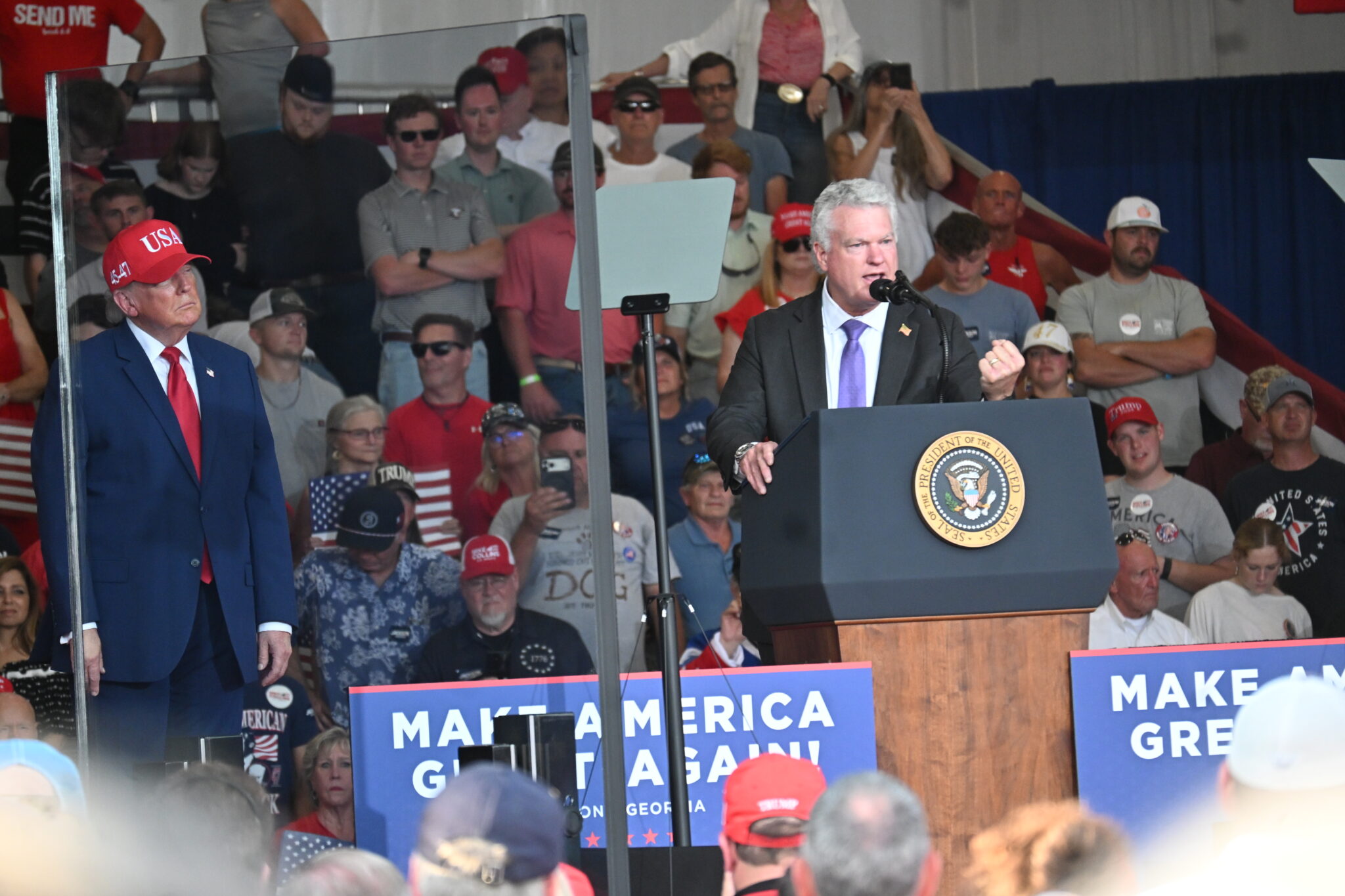
President Donald Trump made that strategy explicit during a recent campaign stop in Georgia, where he urged his supporters to treat the state’s down-ballot Republican candidates as stand-ins for himself. The message was straightforward: cast your vote for these candidates as if you were voting for Trump directly.
A Referendum Strategy
Trump’s approach — framing midterm and statewide races as a personal referendum — is a calculated effort to transfer his political energy to candidates who depend on high Republican turnout to win. Georgia, a state that has become one of the most closely watched electoral battlegrounds in the country, is a key target. Reporting from Georgia Recorder by journalists Ross Williams and Alander Rocha, published through States Newsroom, documented Trump’s appearance alongside Georgia Republicans as part of this effort.
The stakes of that strategy are real for Georgia voters. Whether Trump’s presence proves to be a lifeline or an anchor for the GOP candidates he seeks to boost is a question that cuts to the heart of how national political figures influence local races — and, by extension, who ends up holding offices that directly affect voters’ daily lives.
Why These Races Matter for Georgia Voters
The offices on Georgia’s ballot are not abstract. The lieutenant governor, for example, plays a direct role in state governance, and that race has grown increasingly competitive. Candidates in Georgia’s lieutenant governor’s race have been sparring over public safety, healthcare, and Trump’s influence — a mix of policy and political identity that reflects how closely intertwined governance and electoral politics have become in the state. Reporting by Maya Homan for Georgia Recorder captures how that contest is taking shape.
State-level offices matter for election administration, too. Decisions made by Georgia’s elected officials have shaped everything from voter roll management to how polling places are resourced — all of which affect whether eligible voters can participate easily and whether their votes are counted accurately. When voters head to the polls, they are choosing the people who will oversee those systems.
The Senate Race and the Money Behind It
Georgia’s U.S. Senate race is drawing enormous financial resources. Senator Jon Ossoff recently reported raising another $33 million for the final stretch of his Senate reelection campaign, as documented by Ross Williams, Ignacio Perez, and Alander Rocha. That level of fundraising reflects both the national attention Georgia receives and the scale of resources being deployed to influence how Georgians vote.
For everyday voters, high-dollar campaigns can raise legitimate questions about whose voices are being amplified and whether the democratic process is working as intended — where every eligible citizen’s vote carries equal weight, regardless of how much money surrounds a race.
What Voters Can Do
Regardless of how political figures try to shape the electorate’s motivation, the most direct power in any election remains with individual voters. Georgians who want to make sure their voice is counted can register to vote, find their polling place, find their state legislator, and reach out directly to their U.S. representative or U.S. senator on issues that matter to them.
Trump’s “pretend I’m on the ballot” message is ultimately a reminder that elections are won or lost on participation. Public trust in democratic institutions depends not just on how elections are administered, but on whether voters feel genuinely motivated — by the issues, the candidates, and their own stake in the outcome — to show up and make their choice.











Comments are closed.