
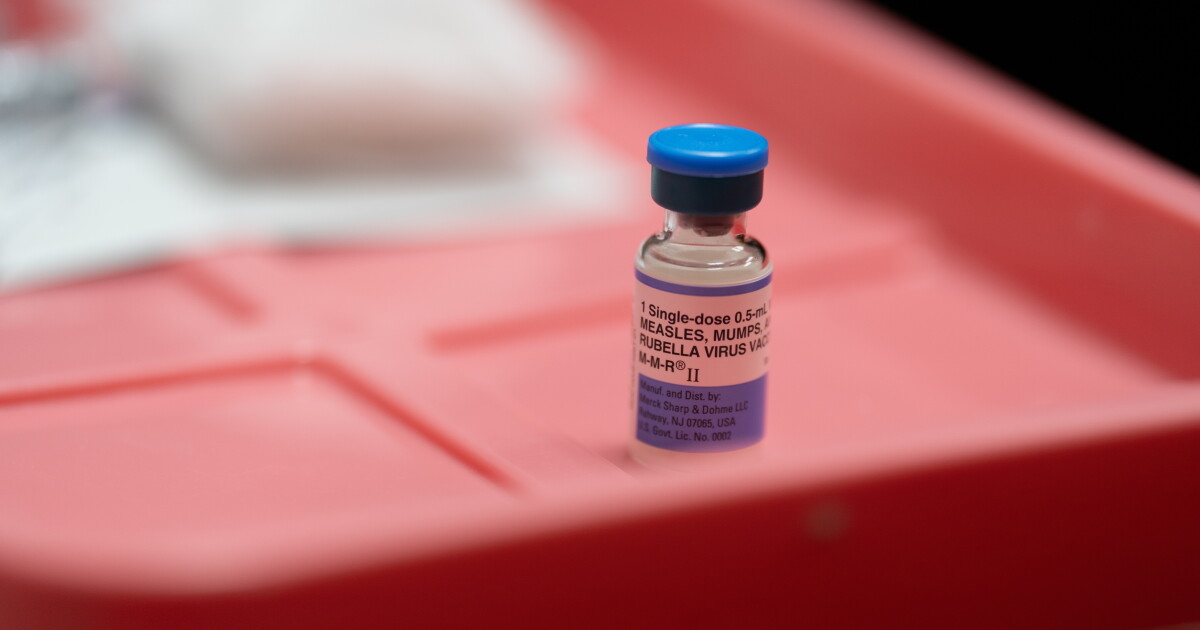
A disease once considered eliminated from the United States is now spreading through two states, leaving families anxious, public health officials scrambling, and local journalists working hard to separate fact from fear. The measles outbreak sweeping Pennsylvania and New York has grown severe enough that New York Gov. Kathy Hochul declared a state disaster emergency — a stark sign of just how serious this public health crisis has become.
New York has recorded more than 100 confirmed cases, while Pennsylvania has surpassed 1,000 official cases — with five confirmed deaths and a sixth death in Franklin County reported by media this week. For families in the region, this isn’t a distant health story — it’s happening in their communities, in their children’s schools, and in their neighbors’ homes.
To understand how reporters are navigating this crisis on the ground, WSKG’s Celia Clarke sat down with two journalists covering the outbreak from the inside: Natalie Abruzzo, WSKG’s Elmira/Corning reporter tracking cases in New York’s Steuben County, and Lydia McFarlane, WVIA’s healthcare reporter covering the outbreak across northeast and central Pennsylvania. Their conversation sheds light on what families need to know — and what remains frustratingly unclear.
Where the Numbers Come From
For families trying to understand their risk, reliable data is everything. Both reporters say they’ve learned to rely on official dashboards rather than press releases, which have become increasingly scarce.
In Pennsylvania, McFarlane has been closely monitoring the state’s Department of Health measles dashboard, which updates every Monday, Wednesday, and Friday at 2 p.m. In New York’s Steuben County, local officials have taken a different approach entirely. As Natalie Abruzzo explains, the county has stepped back from issuing press releases in favor of a daily online update.
Abruzzo described the shift:
“Steuben County has decided not to produce any more press releases. They are only producing a dashboard on the Steuben County Public Health website that they update every day at 3:30 p.m., and they are [also] leading people to check out the statewide dashboard.”
For parents and caregivers trying to assess risk in real time, knowing where to look — and when those numbers are updated — can make a real difference.
Who Is Getting Sick?
One question on every family’s mind is simple: who is most at risk? The answer emerging from both states points clearly to vaccination status. The vast majority of people getting sick are unvaccinated.
In Pennsylvania, the state’s Department of Health has reported that less than 1 percent of people who are fully vaccinated with the MMR vaccine have contracted measles during this outbreak. Vaccines are proving highly effective. McFarlane noted that a little more than 30 percent of those infected are 18 or younger — a reminder that children’s health and school attendance are directly on the line.
McFarlane put it plainly:
“What the state’s trying to get across is that the majority of people getting sick are unvaccinated.”
In New York, officials in Steuben and Chemung counties have similarly confirmed that cases are concentrated among unvaccinated residents. However, detailed demographic information — including ages, geographic locations, and hospitalization data — is being withheld, with officials citing patient privacy protections under HIPAA law.
Abruzzo described the limits reporters face when trying to get information that could help families:
“There is very little information being released by the local health departments. In Steuben and Chemung counties, officials stated that cases are in unvaccinated residents, but no other demographic details such as geographic location, age, gender, or hospitalizations will be released due to what officials say are patient privacy protections.”
Privacy vs. Public Need
The tension between patient privacy and the public’s right to know is real — and both reporters say they understand it. In small, rural communities where identifying someone’s illness could expose their identity, health officials are being especially cautious.
Abruzzo explained the delicate balance:
“Unless there’s a possible exposure in what would be considered a high traffic area such as an airport, a shopping center, or even a performance venue, patient privacy is paramount. And even then, the details are limited in scope. Public health officials are mindful to not divulge anything identifiable, especially in low population rural areas such as in the Southern Tier here.”
McFarlane agreed that vaccination status — not personal identity — is ultimately what matters most for public health communication:
“I would say though the most relevant information in this situation is if the people getting sick are vaccinated or not, not necessarily their identity or if they’re part of a certain group.”
What Reporters Still Want to Know
Both journalists say there are deeper stories still waiting to be told — stories that could help families and policymakers understand how this outbreak took hold and how to prevent the next one.
Abruzzo is focused on the patterns driving vaccine hesitancy among school-age children in New York’s Southern Tier. She noted that New York state law is unambiguous: children attending daycare, pre-K, or grades K through 12 must have all required vaccine doses — including the MMR — to attend or remain in school. Yet hesitancy persists, raising serious questions about how communities and schools are implementing those requirements.
McFarlane wants to dig into the data behind the spread. She said:
“I would love to do a deep dive on the state’s vaccination rates by county and also by school district to see how they’re correlating with infections. And I’d also love to delve more into the reason why vaccination rates are dropping and vaccine hesitancy rising, especially with one as vetted as the MMR vaccine.”
Those are questions that matter deeply for American families. As this outbreak continues to grow, understanding why vaccination rates are declining — and which communities are most vulnerable — could be the difference between containing the crisis and watching it spread further.
For ongoing coverage, you can read about the sixth measles-related death in Franklin County, learn what to do if you’re unsure about your measles immunity status, and explore how politics have complicated Pennsylvania’s public health response. You can also read about how RFK Jr.’s vaccine injury initiative has worried health experts, and how Pennsylvania measles deaths ignited a clash over vaccination claims.
Earlier coverage tracked the outbreak’s deadly toll: Pennsylvania confirmed an unvaccinated woman died from measles-related complications, four measles-associated deaths were reported in September, and two unvaccinated Pennsylvanians died as the outbreak was still gaining momentum. Political bickering followed those early deaths, even as Governor Shapiro was fielding questions about measles at public events. You can also read the latest overview of the Pennsylvania outbreak and the original conversation on measles coverage from our partners at WSKG.







Comments are closed.