In a groundbreaking initiative, the University of Iowa is spearheading research to create a novel computational approach for predicting the crystallization of pharmaceutical compounds into tablet form. This advancement is crucial in the process of delivering new medications to patients.
The research tackles a persistent issue within drug development: foreseeing how a new pharmaceutical compound will transition into a solid state. When a new drug molecule is discovered, it must be transformed into a stable dosage form, such as a tablet. However, these compounds often crystallize in various forms, known as polymorphs, each possessing distinct properties that can influence the drug’s absorption in the body.
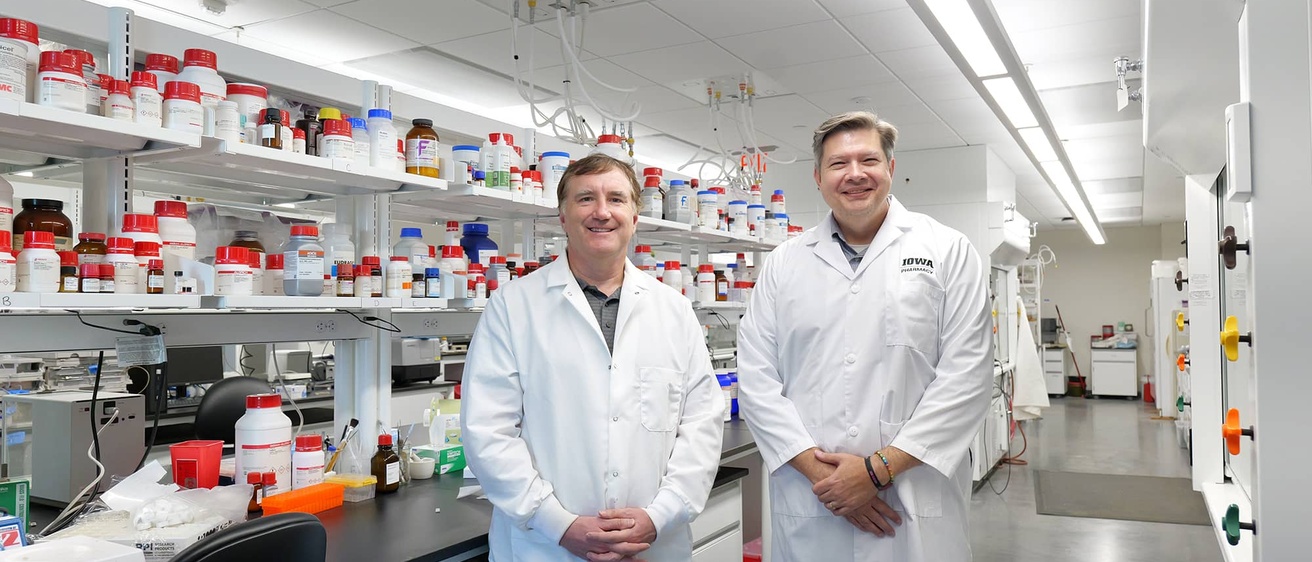
“These different crystal forms can have a dramatic impact on the effectiveness of a medicine,” explained Michael Schnieders, the principal investigator and a professor of biomedical engineering. “A tablet, for example, could spontaneously change into a less soluble crystal form and pass through the body. Our goal is to predict these outcomes before they happen.”
The research team is set to construct a new framework that merges mathematical modeling, artificial intelligence, and experimental validation to directly predict molecular crystal structures from a compound’s chemical makeup.
Lewis Stevens, a co-investigator and associate professor at the College of Pharmacy, is tasked with experimentally validating the predicted crystal structures and their stability. “The ability to reliably predict crystal structure will significantly accelerate the design of new materials for specific, on-demand applications in defense, energy, agriculture, and healthcare—and at a fraction of the current computational cost,” said Stevens.
The project is supported by a four-year, $2 million grant from the National Science Foundation. The team includes collaborators from New York University and the University of California, Riverside, and will utilize a high-performance computing cluster provided by the University of Iowa Information Technology Services Research Services. This resource, known as the Argon HPC cluster, will facilitate extensive calculations and simulations.
Melissa Lawrence, associate director of research services, noted: “As research increasingly depends on computational methods and AI-enabled discovery, resources like Argon help ensure Iowa researchers have the tools necessary to tackle ambitious scientific challenges and remain competitive on the national stage.”
The implications of this research extend to pharmaceutical manufacturing and technology transfer, as highlighted by Schnieders, who is also a faculty affiliate of the Iowa Technology Institute. The anticipated advancements could bolster UI Pharmaceuticals, the University of Iowa’s contract research organization, in its collaboration with pharmaceutical firms to develop and produce drug formulations. Enhanced predictions of crystal forms are expected to decrease both the time and financial investment required for new therapeutic development.
Read More Here